




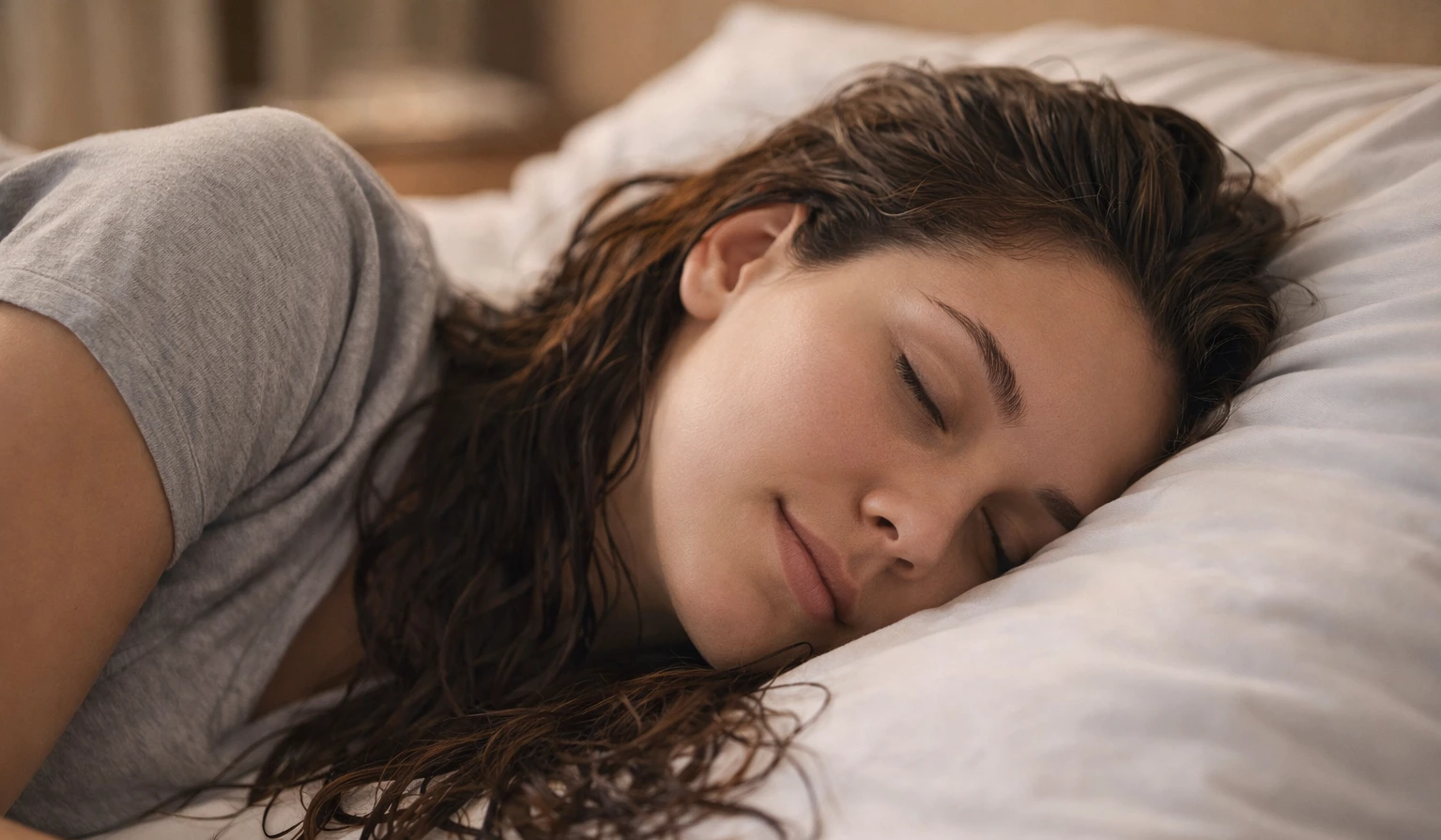
Many people like to shower at night. It feels relaxing and helps wash away the day’s sweat and dust.
But after the shower, some people go straight to bed with wet or slightly damp hair. It often feels harmless and convenient.
Hair experts say this habit may affect your hair and scalp more than you think. Wet hair behaves very differently from dry hair.
When you sleep with damp strands, your hair rubs against the pillow for hours. At the same time, the scalp stays moist for a long time.
Dermatologists say this mix of moisture and friction can slowly affect hair strength and scalp comfort.
Understanding what happens overnight can help you protect your hair in simple ways.
What Happens to Your Hair and Scalp If You Sleep With Wet Hair?
Sleeping with wet hair is not always dangerous, but it can cause problems over time.
Hair strands become weaker when they are wet. When your head moves during sleep, friction against the pillow may cause breakage.
Moisture can also stay on the scalp for many hours. This damp environment may increase irritation or dandruff for some people.
Experts say the habit is usually not harmful once in a while, but doing it regularly may affect hair health.
Why Hair Is More Fragile When It’s Wet
Hair strands change slightly when they absorb water.
Moisture causes the hair shaft’s outer layer to expand slightly, making the strands more vulnerable. This makes the hair stretch more easily.
Because of this stretching, the strand becomes weaker and easier to damage.
Think of wet hair like a soft rubber band. It can stretch easily, but it can also snap if pulled too much.
When you sleep with wet hair, your head moves many times during the night. The constant rubbing against the pillow can stress the hair strands.
Over time, this stress may lead to small breaks in the hair.
What Happens to Your Hair When You Sleep With Wet Hair
Increased Hair Breakage
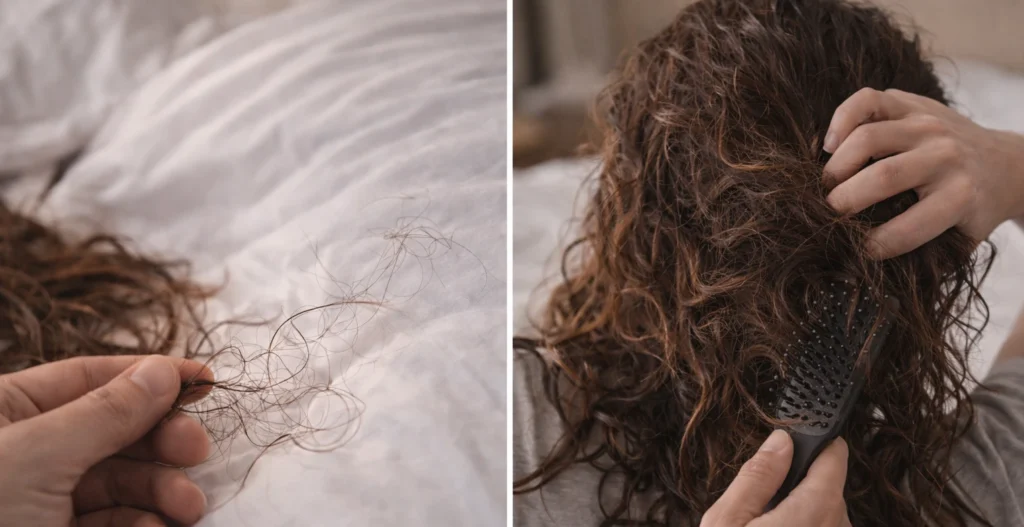
Wet hair does not handle pressure well. As you turn and move during sleep, strands rub against the pillow. This friction can weaken the hair shaft.
The result may be small broken strands that make hair look thinner or uneven. People with long hair or chemically treated hair may notice breakage more easily.
Frizz and Tangling
Wet hair can dry in strange shapes while you sleep. When strands dry while twisted or pressed against the pillow, they may become tangled.
In the morning, hair may feel rough or frizzy. Brushing tangled hair can cause even more breakage. Curly or wavy hair types may notice this problem more often.
Rough Hair Texture Over Time
When wet hair rubs against fabric every night, the surface of the hair can slowly wear down. This can make hair feel rough or less smooth.
Over time, strands may lose some shine and softness. While this change is gradual, people who sleep with wet hair often may notice dull or dry-looking hair.
What Happens to Your Scalp Overnight
Hair health is closely connected to scalp health. When the scalp stays damp for many hours, it may create conditions that are not ideal for the skin.
Damp Scalp Environment
A wet scalp holds moisture longer than dry skin. When your head rests on a pillow, airflow is limited. This means the scalp may stay damp for several hours.
A warm and moist environment can make the scalp feel uncomfortable for some people.
Possible Irritation or Itching
Moisture can sometimes irritate sensitive scalp skin. Some people may notice mild itching or discomfort the next day.
This does not happen to everyone, but people with sensitive skin may notice it more easily. If the scalp is already dry or irritated, sleeping with wet hair may make the feeling worse.
Higher Chance of Dandruff
Dandruff can have many causes, including scalp dryness and certain natural microbes. A damp scalp may sometimes disturb the balance of the scalp environment.
For some people, this may lead to flaking or dandruff over time. Keeping the scalp dry and clean often helps maintain better scalp comfort.
Can Sleeping With Wet Hair Cause Hair Loss?
Many people worry that sleeping with wet hair will cause hair loss. Experts say this habit does not directly stop hair growth. Hair grows from the root inside the scalp, and moisture on the strands does not affect that process.
However, repeated breakage can make hair look thinner.
When strands break easily, the hair may appear less full even though growth continues normally. So the concern is usually hair breakage, not true hair loss.
Other Problems People May Notice
Sleeping with wet hair may also cause small issues that affect comfort or hygiene.
Scalp Discomfort
A damp pillow and wet scalp can sometimes feel uncomfortable during sleep. Some people may wake up with a cool or sticky feeling on the scalp.
This may disturb sleep quality for light sleepers.
Pillow Moisture and Hygiene
Wet hair can transfer moisture to your pillowcase. Over time, damp pillow fabric may collect sweat, oils, and dirt more easily.
Washing pillowcases regularly helps keep the sleeping environment cleaner.
Skin Breakouts Near the Hairline
Some people notice small breakouts near the forehead or hairline. This may happen when moisture, hair products, and pillow friction mix together.
Keeping hair clean and dry before sleep can reduce this risk.
When Sleeping With Wet Hair May Be Less Harmful
Not every situation causes problems. Sometimes sleeping with slightly damp hair may have less impact. If hair is only a little damp instead of soaking wet, it may dry faster during the night.
Protective hairstyles, like a loose braid, may also reduce tangling. Using breathable pillowcases can help reduce friction and improve airflow.
While these steps may lower risk, experts still suggest drying hair as much as possible before sleep.
Expert Tips to Protect Your Hair at Night
If you often shower in the evening, a few small habits can help protect your hair. Try to dry your hair at least partially before going to bed.
A microfiber towel can absorb water quickly without rough rubbing. Avoid aggressive towel drying, which can also cause breakage.
Using a satin or silk pillowcase may reduce friction while you sleep. These smoother fabrics allow hair to glide instead of rubbing against rough cotton.
It also helps to keep the scalp mostly dry before resting your head on the pillow. These small changes can make a big difference in long-term hair health.
What to Do If You Shower at Night
Many people prefer nighttime showers because they save time in the morning. If this is part of your routine, a simple hair care habit can help protect your strands.
First, gently squeeze out extra water after washing your hair. Next, wrap the hair in a soft towel for a few minutes to absorb moisture.
Let your hair air dry for a while before going to bed.
Avoid tight ponytails or buns when hair is wet. Tight styles can increase stress on fragile strands. Loose styles allow hair to dry more naturally overnight.
Common Myths About Sleeping With Wet Hair
Many beliefs about wet hair have been shared for years, but not all of them are true.
Myth: Wet Hair Can Cause a Cold
One common myth says that going to bed with wet hair can give you a cold. Colds are caused by viruses, not by damp hair. Sleeping with wet hair may feel uncomfortable, but it does not cause illness.
Myth: Wet Hair Permanently Damages Hair
Another myth says wet hair instantly ruins your hair forever. In reality, the effects are usually gradual.
Occasional nights with wet hair will not permanently damage your strands. Problems usually appear when the habit happens frequently without proper care.
Key Things to Remember
• Wet hair is weaker than dry hair
• Friction against the pillow may lead to breakage
• A damp scalp can sometimes cause irritation
• Tangling and frizz may appear after sleeping on wet hair
• Simple habits can protect hair health
• Drying hair partially before sleep is often helpful
Healthy hair usually comes from small daily habits.
Drying your hair gently, protecting the scalp, and reducing friction during sleep can all help keep strands strong.
Even simple changes like using a soft towel or allowing hair to air dry longer can make a difference over time.
Nighttime routines may seem small, but they play a role in how your hair looks and feels each day.
Expert Insights From Dermatologists and Hair Specialists

Hair specialists explain that hair becomes much more delicate when it is wet. During sleep, even small movements of the head can cause strands to rub against the pillow, which may increase the risk of hair breakage.

Dermatologists also point out that a damp scalp can stay warm and moist for several hours while you sleep. For people with sensitive skin, this kind of environment may sometimes lead to itching or small flakes on the scalp.

Because of this, many hair professionals recommend allowing the hair to dry at least partly before going to bed. Letting the strands and scalp dry naturally can help reduce stress on fragile hair.
FAQs:
Is going to bed with a little moisture in your hair harmful?
Hair that is only slightly damp usually causes fewer problems than hair that is dripping wet. When there is less water in the strands, they tend to dry faster during the night and face less friction from the pillow. Even so, hair experts often recommend letting your hair dry as much as possible before lying down to reduce stress on the strands.
What should I do if I usually wash my hair at night?
If nighttime showers are part of your routine, try to remove excess water with a soft towel first. After that, allow the hair to air dry for a while before sleep. A silk or satin pillowcase can also help reduce rubbing that may damage hair strands.
Why does hair sometimes look messy or frizzy in the morning?
When hair dries while you move during sleep, strands can bend or twist in different directions. This may cause tangles or uneven shapes. As a result, the hair may appear frizzy or rough when you wake up.
Can sleeping with wet hair lead to dandruff?
Wet hair itself does not directly create dandruff. However, a scalp that stays damp for many hours may sometimes disturb the scalp’s natural balance. In certain people, this may lead to mild flaking or itching.
Does wet hair cause faster hair loss?
Sleeping with wet hair does not stop hair from growing. Hair growth happens below the scalp surface. However, wet strands are weaker and may snap more easily, which can make the hair appear thinner over time.
Disclaimer: This article is for informational purposes only and does not replace professional medical advice. Always consult a qualified dermatologist or healthcare professional for personal concerns.






Leave a comment