



For a few weeks, you feel more tired than usual. Not the kind of exhaustion that comes after a late night, but a low, steady tiredness that doesn’t fully go away. You assume it’s stress. Work has been busy. Life has been full. You drink an extra cup of coffee in the morning. Maybe two. But the fatigue lingers.
You start noticing other small things. Climbing stairs feels harder. Your head feels heavy by mid-afternoon. You tell yourself you just need better sleep, or a vacation. For many people, this is how iron deficiency begins—not with dramatic symptoms, but with subtle changes that are easy to explain away.
Iron deficiency is one of the most common nutrient deficiencies worldwide, yet it often goes unnoticed for months. The reason is simple: the body adapts quietly, and the early signs don’t always feel serious.
How Iron Supports Your Body’s Daily Work
Iron plays a central role in helping your body function normally. It is a key part of hemoglobin, a protein inside red blood cells that carries oxygen from your lungs to the rest of your body. Every cell depends on that oxygen to produce energy.
When iron levels are healthy, oxygen moves efficiently through your bloodstream. Your muscles get what they need to work. Your brain stays alert. Your heart doesn’t have to overcompensate.
When iron levels drop, this delivery system becomes less effective. Less oxygen reaches tissues, and your body has to work harder to meet even basic demands. This is why iron deficiency often shows up as fatigue first—and why the symptoms can feel vague rather than clearly medical.
What Happens Inside the Body When Iron Is Low
Red blood cells act like delivery vehicles. Their job is to pick up oxygen in the lungs and drop it off throughout the body. Iron is what allows hemoglobin to bind to oxygen and release it where it’s needed.
When iron is in short supply, the body can’t produce enough healthy red blood cells. The ones that are made may be smaller or carry less oxygen. As a result, organs and muscles receive less fuel.
To compensate, the heart may pump faster. Breathing may feel slightly more labored during activity. Energy production slows. None of this happens overnight. It develops gradually, which is why many people don’t realize what’s happening until symptoms interfere with daily life.
The Early Signs People Often Notice
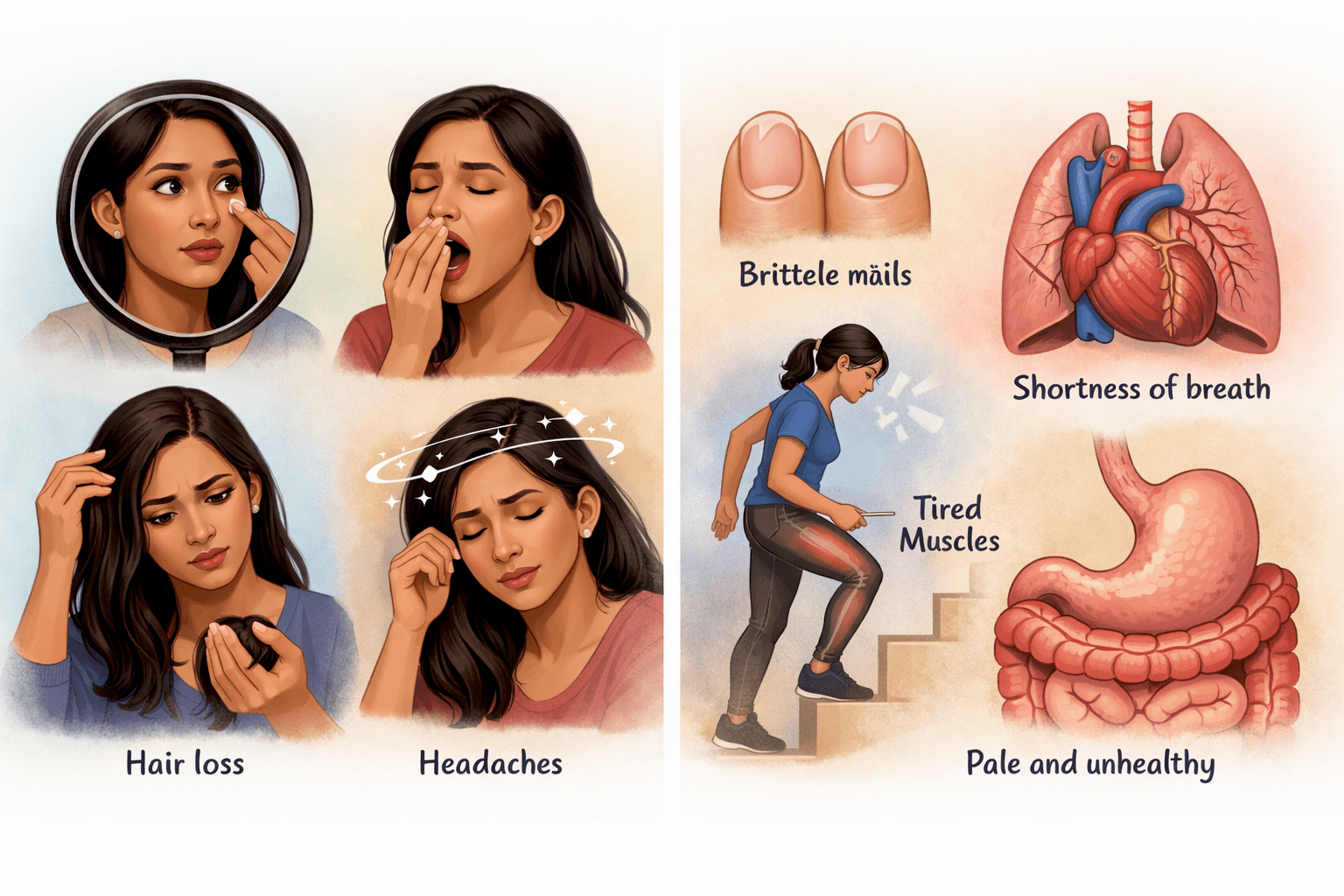
One of the first signs is persistent fatigue. This isn’t the tiredness that improves with rest. It’s a constant feeling of low energy that makes simple tasks feel more demanding. Even after a full night’s sleep, you may wake up feeling unrefreshed.
Weakness during everyday activities often follows. Carrying groceries, walking uphill, or standing for long periods may suddenly feel harder. Muscles rely heavily on oxygen, and when supply drops, endurance drops with it.
Changes in skin tone can also occur. Some people notice their skin looks paler or duller than usual. This happens because fewer red blood cells are circulating near the surface of the skin.
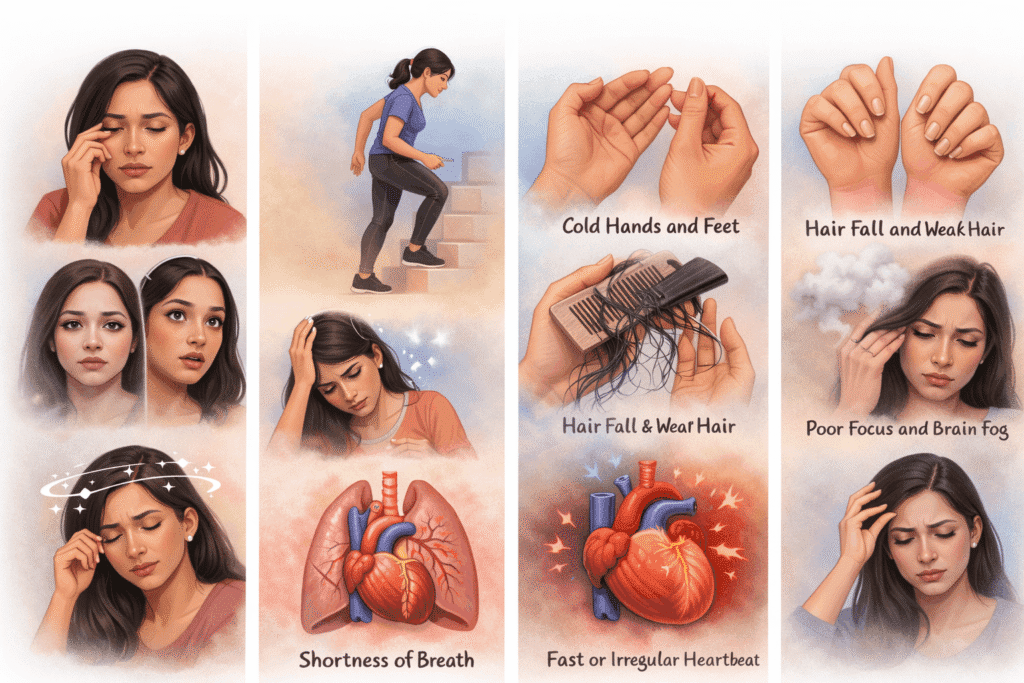
Feeling cold more easily, especially in the hands and feet, is another subtle sign. When oxygen delivery is limited, the body prioritizes vital organs, sometimes reducing blood flow to extremities.
Headaches or lightheadedness may appear as the brain receives less oxygen than it’s used to. Some people notice mild dizziness when standing up quickly or after exertion.
Shortness of breath during physical activity can also be an early signal. Tasks that once felt easy may leave you slightly winded—not because your lungs are weak, but because oxygen transport is less efficient.
Less Obvious Signs That Often Come as a Surprise
Iron deficiency doesn’t affect only energy levels. Over time, it can show up in places people don’t immediately connect to nutrition.
Nails may become brittle or thin. In more pronounced cases, they can develop a spoon-like shape, curving upward rather than lying flat. Nails grow from rapidly dividing cells, which are sensitive to nutrient shortages.
Hair thinning is another common concern. Iron supports healthy hair growth, and when levels are low, hair may shed more easily or grow more slowly.
Changes in the tongue can also occur. Some people notice soreness, swelling, or a smooth appearance. Cracks at the corners of the mouth may develop as well, reflecting changes in skin and tissue repair.
Restless legs, especially at night, have been linked to low iron levels in some individuals. This can interfere with sleep, which then worsens daytime fatigue.
Unusual cravings—particularly for ice—can be a surprising symptom. This behavior, known as pica, isn’t fully understood, but it has been strongly associated with iron deficiency.
How Low Iron Affects Different Systems in the Body
Brain and Concentration
The brain uses a large amount of oxygen. When supply drops, concentration may suffer. People often describe feeling mentally “foggy,” forgetful, or slower to process information.
Immune Function
Iron supports immune cells that help fight infection. Low levels may make it harder for the body to respond effectively, leading to more frequent or prolonged illnesses.
Physical Stamina
Muscles depend on oxygen to generate energy. With low iron, endurance declines. Exercise may feel harder, and recovery may take longer.
Heart Function
To compensate for reduced oxygen delivery, the heart may beat faster or harder. Some people notice palpitations or an awareness of their heartbeat, especially during exertion.
Pregnancy Considerations
During pregnancy, iron needs increase significantly to support both the mother and developing baby. Low iron during this time can increase fatigue and may require close medical monitoring.
Why Iron Deficiency Often Develops Slowly
The body stores iron, primarily in the liver and muscles. When intake drops or losses increase, the body draws from these reserves. This buffering effect means symptoms may not appear right away.
Many people gradually adjust to feeling tired or low on energy. They may change habits, reduce activity, or rely on caffeine without realizing there is an underlying issue. By the time symptoms become noticeable, iron stores may already be significantly depleted.
Common Reasons Iron Levels Drop
Iron deficiency can develop for several reasons. In people with heavy menstrual periods, regular blood loss is a common cause. Pregnancy increases iron requirements, which may not always be met through diet alone.
Dietary intake also matters. Iron from animal sources is absorbed more easily than iron from plant foods. People who eat limited amounts of iron-rich foods may be at higher risk.
Digestive conditions that affect absorption can interfere with iron uptake. Chronic blood loss—from the gastrointestinal tract or other sources—can also slowly reduce iron levels over time.
When It’s Time to See a Doctor
Fatigue that lasts for weeks, especially when paired with weakness or shortness of breath, deserves medical attention. Increasing dizziness, noticeable palpitations, or significant hair loss are also reasons to seek evaluation.
A healthcare provider can assess symptoms and recommend blood tests that measure red blood cells and iron stores. Identifying iron deficiency early makes treatment more straightforward and helps prevent complications.
Can Iron Levels Be Restored?
In many cases, yes—but it takes time and proper guidance. Improving iron levels usually involves addressing both intake and the underlying cause.
Iron-rich foods such as lean red meat, poultry, fish, legumes, and leafy greens can help support recovery. Vitamin C enhances iron absorption, while certain foods and drinks can interfere with it.
Iron supplements may be recommended, but they should be taken only under medical supervision. Taking iron unnecessarily or in excess can cause side effects and may mask other conditions.
Treating the source of iron loss—whether it’s heavy bleeding or absorption issues—is an important part of long-term management.
Medical Disclaimer
This content is for educational and awareness purposes only. It does not replace professional medical advice. Always consult a qualified healthcare provider for diagnosis or treatment.
FAQs:-
How do you know if your iron is low?
Symptoms such as ongoing fatigue, weakness, and pale skin can suggest low iron, but a blood test is the only way to confirm it.
Can iron deficiency cause anxiety?
Low iron can affect oxygen delivery to the brain, which may contribute to feelings of restlessness or nervousness in some people.
How long does it take to recover from iron deficiency?
Improvement in symptoms may take weeks, while rebuilding iron stores can take several months with proper treatment.
Can iron deficiency cause hair fall and skin problems?
Yes. Low iron levels can reduce oxygen supply to hair follicles and skin, which may lead to increased hair fall, weak hair, dull skin, and brittle nails over time.
Is iron deficiency the same as anemia?
Iron deficiency can lead to anemia, but not everyone with low iron has anemia. Anemia refers to a reduced number of healthy red blood cells.







2 Comments