




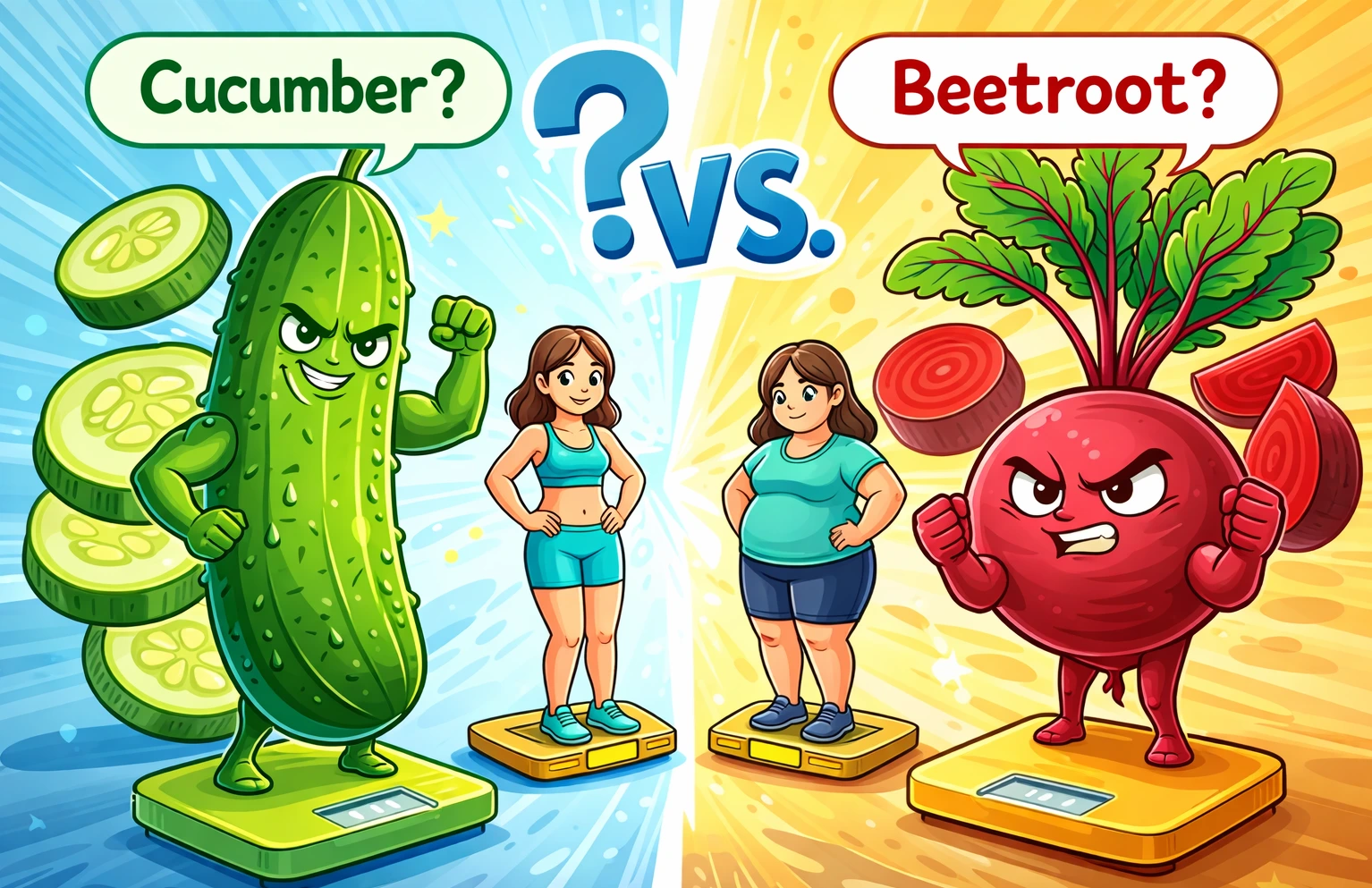
Cucumber and beetroot are both common vegetables that often appear in weight-loss diets. Many people include them in salads, juices, or meals because they are considered healthy. However, they affect the body in different ways. One is very low in calories and mostly water. The other contains more carbohydrates, fiber, and natural sugars.
When it comes to weight loss and everyday eating, the question is not which vegetable is “good” or “bad”. The real question is how each one fits into a balanced diet and what role it plays in controlling hunger, calories, and nutrition.
Calories and Weight Loss
Weight loss depends on overall calorie intake, not on eating one specific food.
Cucumber is extremely low in calories because it is mostly water. A large serving adds very few calories to a meal. This makes cucumber helpful for people who are trying to reduce total calorie intake without feeling deprived.
Beetroot contains more calories than cucumber. This is mainly because it has more natural carbohydrates. However, its calorie content is still moderate and reasonable when eaten in proper portions.
Eating beetroot does not prevent weight loss. Eating large portions without balance can slow progress, just like with any food.
How Each Vegetable Affects Hunger
Managing hunger is one of the biggest challenges during weight loss.
Cucumber fills the stomach because of its water content. This can create a feeling of fullness, but it often does not last very long. Hunger may return sooner, especially if cucumber is eaten alone.
Beetroot contains fiber, which slows digestion. This can help keep you full for a longer time. People who feel hungry soon after meals may find beetroot more satisfying when eaten as part of a balanced plate.
Neither vegetable works the same for everyone. Hunger control varies by person.
Carbohydrates, Sugar, and Energy
Beetroot naturally contains sugar. This sugar is not added or artificial, but it still contributes to carbohydrate intake. Because beetroot also contains fiber, the sugar is absorbed more slowly than refined sugars.
Cucumber contains very few carbohydrates and almost no sugar. It has little effect on blood sugar levels for most people.
For people who want minimal impact on blood sugar, cucumber may be easier to include. For people who need steady energy, beetroot can support energy levels when portions are controlled.
Nutrition Beyond Weight Loss
Weight loss diets should not focus only on calories.
Cucumber helps with hydration and provides small amounts of vitamins and minerals. It is refreshing and easy to digest.
Beetroot provides fiber, minerals, and plant compounds that support overall health. It also contributes to digestive health because of its fiber content.
Eating a variety of vegetables usually provides better nutrition than relying on just one.
Daily Use and Practicality
Cucumber is easy to prepare. It can be eaten raw, sliced, or added to meals without cooking. However, it spoils relatively quickly.
Beetroot often requires cooking, which takes more time. However, it lasts longer in storage and can be prepared in advance.
Both vegetables are affordable and widely available.
Which One Is Better for Weight Loss?
There is no single winner.
Cucumber may be more useful for:
- Strict calorie control
- Frequent snacking
- Light meals
Beetroot may be more useful for:
- Longer-lasting fullness
- Higher fiber intake
- Supporting energy needs
The best results usually come from using both wisely within a balanced diet.
Common Weight-Loss Myths
Neither cucumber nor beetroot burns fat directly.
Neither targets belly fat.
Neither causes weight loss on its own.
Weight loss happens through consistent eating habits, portion control, and lifestyle factors such as movement and sleep.
What Health Experts Generally Agree On
Research suggests that vegetables support weight management when they replace higher-calorie foods and are part of a balanced diet. No vegetable works as a shortcut.
Both cucumber and beetroot can support weight loss when eaten in appropriate portions and combined with other nutritious foods.
Final Perspective
Cucumber is low in calories and helpful for reducing overall energy intake.
Beetroot is more filling and provides fiber and nutrients.
The better choice depends on your hunger levels, activity, and daily meals. Most people benefit from including both rather than choosing one exclusively.
Long-term weight management comes from consistency, not from any single vegetable.
FAQs
Is cucumber good for weight loss?
Yes. Cucumber is very low in calories and high in water, which may help reduce overall calorie intake when included in meals.
Is beetroot good for weight loss?
Beetroot can support weight loss when eaten in moderate portions. It contains fiber, which may help with fullness and appetite control.
Which is better for weight loss, cucumber or beetroot?
Neither is strictly better. Cucumber is lower in calories, while beetroot is more filling. The better choice depends on portion size and overall diet.
Does beetroot increase blood sugar?
Beetroot contains natural sugars, but it also has fiber. When eaten as part of a balanced meal, its effect on blood sugar is usually moderate.
Can I eat cucumber and beetroot together?
Yes. Eating both together can add variety, hydration, fiber, and nutrients to meals.
Disclaimer
This article is for informational purposes only and does not replace professional medical or nutrition advice. Individual dietary needs vary, and readers should consult a qualified health professional for personalised guidance.
Latest Post:
- What Happens to Your Skin When You Add a 5-Seed Trail Mix to Your Daily Diet
- Jogging vs Brisk Walking: Which Is Better for Weight Loss?
- 7 Homemade Drinks That May Help Improve Iron Deficiency and Boost Energy Levels
- Drinking Olive Oil Daily: Real Benefits, Side Effects & What Experts Want You to Know
- What are people thinking about Zepbound and sleep apnea?







Leave a comment