





Simple yoga poses are gentle body positions designed to stretch muscles, encourage steady breathing, and help the mind slow down. For beginners, these poses offer an easy way to release tension, calm the nervous system, and bring a sense of relaxation without intense workouts or complicated movements.
After a long day of work, study, or household responsibilities, the body often carries tension in places we barely notice—tight shoulders, a stiff lower back, or a restless mind that refuses to slow down. Many people look for ways to relax, but not everyone wants an intense workout or a complicated fitness routine.
That is one reason yoga has become so popular around the world. Unlike many exercise programs, yoga focuses not only on movement but also on breathing and awareness. Even a few gentle poses can help the body feel looser and the mind feel quieter.
For beginners, starting with simple poses is the best approach. Basic movements allow the body to stretch gradually without strain. Over time, regular practice can improve flexibility, posture, and overall comfort.
Another advantage is that yoga can be practised almost anywhere. A small open space at home, a comfortable mat, and a few minutes of quiet time are usually enough to begin.
Why Yoga Helps With Relaxation
Yoga focuses on slow, controlled movements that allow the body to stretch gently while the mind gradually begins to relax. This slower pace naturally reduces physical tension while helping the mind shift away from constant mental activity.
One of the biggest reasons yoga promotes relaxation is breathing. Many poses encourage deep, steady breaths. When breathing becomes slower and more controlled, the body often responds by lowering stress levels.
Gentle stretching also helps release tight muscles. Areas like the back, hips, and shoulders tend to store tension throughout the day. Stretching these muscles gradually can create a feeling of relief and ease.
Another important factor is how yoga influences the nervous system. Calm breathing combined with mindful movement can signal the body that it is safe to relax. As a result, heart rate may slow slightly, muscles soften, and mental tension begins to fade.
This combination of movement, breath, and awareness is what makes yoga especially effective for relaxation.
5 Easy Yoga Poses Beginners Can Do at Home
These poses are beginner-friendly and require no special equipment apart from a yoga mat or comfortable surface.
Move slowly, breathe naturally, and stop if any position feels uncomfortable.
1. Child’s Pose (Balasana) Yoga

Child’s Pose is often considered one of the most comforting positions in yoga. It allows the body to rest while gently stretching the back and shoulders.
How to do it
Start by kneeling on the mat. Bring your big toes together and allow your knees to spread slightly apart.
Lower your hips back toward your heels while folding your upper body forward. Your forehead can rest on the mat or on your hands.
Extend your arms forward for a deeper stretch or place them beside your legs for a more restful version.
How long to hold
Beginners can stay in this pose for about 30–60 seconds, breathing slowly.
Relaxation benefits
This position encourages the spine and shoulders to release tension. The forward fold also helps quiet mental chatter, making it a useful pose when the mind feels busy or overwhelmed.
2. Cat–Cow Pose (Marjaryasana–Bitilasana) Yoga

Cat–Cow is a gentle movement sequence rather than a static pose. It involves slowly arching and rounding the back in coordination with breathing.
How to do it
Start on your hands and knees with your wrists under your shoulders and knees under your hips.
As you inhale, gently drop your belly toward the mat while lifting your chest and gaze slightly forward. This is the Cow position.
As you exhale, round your back upward and tuck your chin toward your chest. This creates the Cat shape.
Continue moving between these two positions slowly and smoothly.
How long to practice
Repeat the movement 6–10 times, matching each motion with your breath.
Relaxation benefits
This flowing movement helps loosen stiffness in the spine and improves circulation in the back muscles. The rhythmic breathing also encourages calm, steady breathing patterns.
3. Forward Fold (Uttanasana) yoga
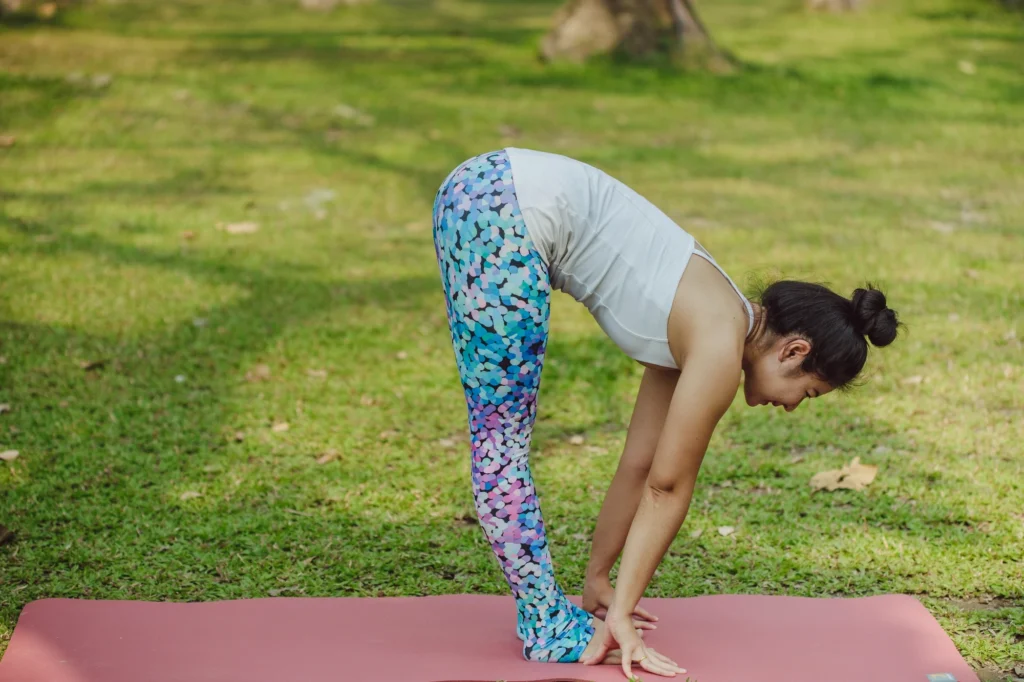
Forward Fold is a simple standing stretch that allows the upper body to relax while gravity gently stretches the back of the legs.
How to do it
Stand with your feet about hip-width apart.
Slowly hinge forward from the hips, letting your upper body hang toward the floor.
Your hands may reach the mat, your ankles, or simply rest on your shins. Beginners can bend their knees slightly if the stretch feels too intense.
Allow your head and neck to relax completely.
How long to hold
Stay in the position for 20–40 seconds, breathing slowly.
Relaxation benefits
This pose stretches the hamstrings and lower back while easing tension in the neck and shoulders. Many people also notice that forward bends create a naturally calming effect on the mind.
4. Butterfly Pose (Baddha Konasana) Yoga

Butterfly Pose is a seated position that gently opens the hips and inner thighs. It is simple, comfortable, and suitable for beginners.
How to do it
Begin by sitting comfortably on your mat and stretch your legs out straight in front of your body. Bring the soles of your feet together and allow your knees to fall outward to the sides.
Hold your feet with your hands and sit upright with a tall spine.
If your hips feel tight, you can place cushions or folded towels under your knees for support.
How long to hold
Remain in this pose for 30–60 seconds, breathing naturally.
Relaxation benefits
This stretch helps loosen the hips, which can become tight from long periods of sitting. When the hips relax, many people feel an overall sense of physical ease.
5. Legs Up the Wall (Viparita Karani) Yoga

Legs Up the Wall is one of the most relaxing yoga positions. It requires very little effort and is often used at the end of a practice.
How to do it
Sit next to a wall and gently lie back while swinging your legs upward so they rest vertically against the wall.
Your hips should be close to the wall, and your arms can rest comfortably at your sides.
Keep your legs relaxed and allow your shoulders to settle into the floor.
How long to hold
Beginners can remain in this position for 2–5 minutes.
Relaxation benefits
Elevating the legs may help reduce feelings of fatigue after a long day of standing or walking. The stillness of this pose also encourages deep relaxation and slow breathing.
Tips for Beginners Starting Yoga at Home
Starting a yoga routine at home can be simple, but a few small tips can make the experience more comfortable and enjoyable.
Begin slowly.
There is no need to rush into complex poses. Gentle stretches allow the body to adapt gradually.
Pay attention to breathing.
Steady breathing helps the body relax and makes each movement feel smoother.
Use a comfortable surface.
A yoga mat or soft exercise mat can provide support and prevent slipping.
Practice consistently.
Even a short session a few times per week can make a noticeable difference over time.
Listen to your body.
If a pose causes discomfort or pain, adjust the position or skip it.
Common Mistakes Beginners Should Avoid
When people first start yoga, a few common habits can make the experience less comfortable.
One mistake is holding the breath. Breathing naturally is important because it helps the muscles relax during stretches.
Another issue is forcing flexibility. Trying to push the body into deeper stretches too quickly can lead to strain. Flexibility develops gradually.
Some beginners also skip warm-up movements. Gentle stretches or a few minutes of light movement help prepare the body.
Finally, practicing on hard or slippery surfaces can make poses unstable. A supportive mat helps maintain balance and comfort.
Benefits of Practicing Yoga Daily
Regular yoga practice offers several physical and mental benefits.
One of the most noticeable improvements is reduced stress. Slow breathing and mindful movement can help the body unwind after a busy day.
Flexibility often improves as muscles gradually lengthen and joints move more freely.
Yoga can also encourage better posture, especially for people who spend long hours sitting at desks.
Many practitioners report better sleep as well. Gentle stretching and relaxation techniques can help the body settle down before bedtime.
Another benefit is increased daily energy. When muscles feel less tight and breathing becomes deeper, the body often feels lighter and more comfortable throughout the day.
Who Should Be Careful With Yoga
Although yoga is generally gentle, some individuals should approach certain poses carefully.
People who have serious injuries, especially involving the spine or joints, may need guidance from a professional before practicing.
Those with chronic back problems, knee issues, or recent surgeries may benefit from modified movements designed for their condition.
If there is any uncertainty, speaking with a healthcare professional or a qualified yoga instructor can help ensure that exercises are safe and appropriate.
Conclusion
Simple yoga poses can offer a quiet moment of relaxation during busy days. Even a few gentle stretches combined with steady breathing can help release tension and encourage a sense of calm. With regular practice, beginners often notice improvements in flexibility, comfort, and overall well-being.
FAQs:-
How often should beginners practice yoga for relaxation?
Most beginners can start with short sessions three to four times a week. Even 10–15 minutes of gentle yoga can help the body relax and make the practice easier to maintain over time.
Do beginners need special equipment for yoga at home?
Not necessarily. A simple yoga mat provides comfort and grip, but beginners can also practice on a soft carpet or exercise mat if a yoga mat is not available.
Can yoga help reduce everyday stress?
Many people find that gentle yoga helps relax tight muscles and encourages slow breathing, which can make the body feel calmer after a long day.
Is it okay to modify yoga poses as a beginner?
Yes. Beginners should feel comfortable adjusting poses by bending the knees, using cushions for support, or holding a pose for a shorter time.
Disclaimer —— (Read Me)






Leave a comment