




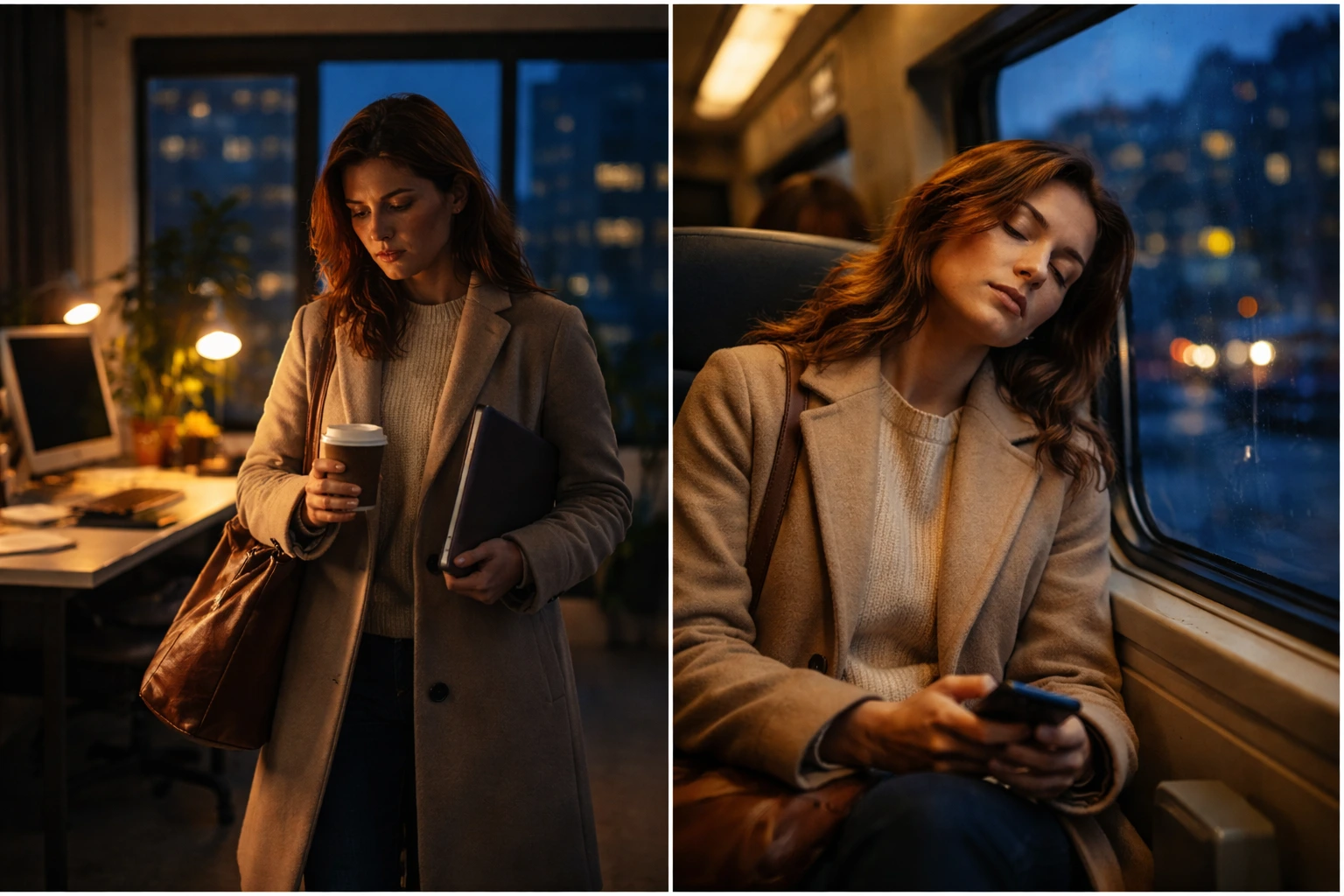
You look outside, and it already feels like bedtime. Streetlights on. The sky has gone flat and navy.
How early darkness changes your sleep drive can catch you off guard, especially when the evening has only just started.
You’re not fully tired. But you’re not exactly awake either.
Something in between.
Your brain still listens to light, even if your schedule doesn’t.
Modern life runs on clocks, alarms, and calendar reminders. But underneath all that, your body is older. It still pays attention to sunrise, sunset, brightness, and shadow. When those shift, you feel it.
Earlier darkness can send a gentle nudge toward winding down.
Not a command. More like a suggestion.
And suggestions are powerful.
You might notice:
- the sofa calling your name sooner
- concentration thinning out
- cravings for comfort food
- patience running low
None of this means you’re doing anything wrong. It’s a response, not a weakness.
Sleepiness isn’t just about how long you’ve been awake.
People often assume tired equals hours spent working, commuting, parenting, and existing. But light exposure plays a huge role in alertness.
Dimmer environments can soften your edges.
Think of how you feel in a cosy cinema or during a long evening train ride. Your body interprets reduced light as permission to power down, even if responsibilities remain.
So at 6 pm, you might feel like it’s 10.
That mismatch can be surprisingly disorienting.
The trouble starts when the world expects more from you.
Dinner still needs sorting. Emails might linger. Maybe you planned to exercise, tidy, study, or meet someone.
But your system has already shifted gears.
Now there’s friction between expectation and biology.
It can show up as:
- irritability
- procrastination
- zoning out with your phone
- abandoning plans you made earlier in the day
And then comes guilt, which is its own kind of tired.
Some people push through. Others fold early.
There’s no single pattern.
A few get a second wind later at night, almost as if the body rebounds once artificial lights are bright and screens are glowing. They end up awake far past when they meant to sleep.
Others drift toward bed very early, only to wake at odd hours because the timing didn’t quite fit.
Both experiences are common.
Both can feel confusing.
Darkness can blur the boundary between rest and shutdown.
Rest is intentional. You choose it. Maybe you read, stretch, talk, and cook slowly.
Shutdown feels heavier. Passive. You didn’t plan to lie down, but here you are. You didn’t mean to scroll for an hour, but time slipped.
Early nightfall can make that slide easier.
Without strong daylight keeping momentum up, evenings sometimes lose structure.
Home lighting matters more than most of us realise.
You don’t need laboratory brightness. But moving from outdoor dusk to one small lamp in the corner can intensify the signal that the day is over.
Tiny adjustments sometimes help keep the brain orientated.
For example:
- turning on more lights during cooking
- sitting upright rather than immediately reclining
- playing music that feels lively
- stepping briefly onto the balcony or near a window
- washing your face when you get in
Little resets. Not dramatic. Just cues.
There’s also emotion tied into it.
Darkness can carry meaning. For some, it’s cosy and safe. For others, it feels isolating, especially if the day held stress.
When visual stimulation drops, thoughts can get louder.
Work conversations replay. Tomorrow creeps forward. The mind fills the quiet.
Fatigue mixed with mental activity is a strange combination. You’re worn out but wired.
That can delay actual sleep, even if the drive to rest arrived hours ago.
Your habits may quietly change across the season.
You might socialise less without fully deciding to. Move less. Snack differently. Stay indoors more.
These shifts feed back into energy levels.
Less movement can mean less alertness. More sitting can make you feel slower. Heavier meals can amplify sleepiness.
Suddenly the whole evening feels like wading through syrup.
Again, normal. Understandable. Human.
Fighting your biology rarely works well.
Aggressively telling yourself to “stay productive” can backfire. Energy forced is often energy drained.
A softer approach tends to land better.
Maybe you scale plans. Choose one small task instead of five. Prepare for tomorrow in ten minutes rather than an hour.
Give yourself wins that match the environment.
Momentum doesn’t have to be heroic.
At the same time, you don’t have to surrender the night.
Some gentle activation can protect later sleep quality.
People often find benefit in things like:
- a short walk after dinner
- light stretching
- calling a friend
- doing something with your hands
- limiting how early you get into bed
You’re not denying tiredness. You’re shaping it.
Helping it arrive at a time that suits you.
If your pattern feels extreme, it’s worth noticing.
Maybe you’re falling asleep unintentionally every evening. Or lying awake half the night. Or feeling your mood dip sharply once it’s dark.
Those signals deserve curiosity, not criticism.
Bodies vary. Circumstances differ. Support can make the path smoother.
You don’t have to puzzle it out alone.
Outside, the sky deepens. Windows glow across the street. Someone clatters plates in a nearby kitchen. Night builds gradually, as it always has.
You’re allowed to respond gradually too.
If changes in sleep or evening fatigue are worrying you or interfering with daily life, consider speaking with a GP or another qualified health professional for personal advice.
- after work fatigue
- bedtime shift
- body clock
- circadian rhythm
- dark afternoons
- early sunset
- evening tiredness
- feeling sleepy early
- light and sleep
- London winter mood
- low energy at night
- melatonin timing
- mental wellbeing evening
- seasonal sleep change
- sleep drive
- sleep timing
- UK winter routine
- urban winter life
- why evenings feel longer
- winter evenings UK







Leave a comment