





Scroll through social media right now, and you are likely to see it. People bouncing lightly on small trampolines in their living rooms. Music playing. Smiles on their faces. The workouts look playful, almost effortless. This trend is often called “rebounding”, but online it is usually just called a mini trampoline workout.
These videos are everywhere in 2025 and heading into 2026. Fitness apps are adding rebound classes. Home workout brands are selling compact trampolines that fit in small apartments. Many people say it feels easier than running and kinder on their joints. Some even claim it helped them lose weight without the misery they associate with traditional cardio.
That raises a fair question. Are mini trampoline workouts actually useful for weight loss? Or are they just another fitness trend that looks better on a screen than it works in real life?
To answer that, it helps to slow down and look at what is really happening when you bounce.
Why This Trend Took Off
Mini trampoline workouts did not come out of nowhere. They arrived at the right moment.
Many people now exercise at home. Gyms feel expensive, crowded, or inconvenient. At the same time, long walks and running are not appealing to everyone, especially those with knee or back discomfort. High-impact workouts can feel intimidating or painful.
A mini trampoline seems to solve several problems at once. It takes up little space. It looks low impact. It feels playful rather than punishing. For people who struggle with motivation, that matters.
There is also the boredom factor. Traditional cardio can feel repetitive. Bouncing feels different. It breaks the routine. For some, that novelty alone is enough to get them moving again.
But enjoyment does not automatically mean effectiveness.
What Actually Happens When You Jump
When you bounce on a mini trampoline, your body is doing real work, even if it does not feel intense at first.
Your heart rate goes up. That makes it a form of cardio. Your legs are working to push you up and control the landing. Your core muscles engage to help you stay balanced. Your ankles and hips make constant small adjustments.
Unlike running on pavement, the trampoline surface absorbs some of the impact. That is why it often feels gentler on the joints. Many people say they can bounce longer than they can jog.
Balance also plays a role. Staying centered on the trampoline requires focus. Over time, that can improve coordination and body awareness.
So yes, rebounding is exercise. The real question is whether it is enough exercise to support weight loss.
Calories, Intensity, and Weight Loss
Weight loss is not tied to one workout or one piece of equipment. It depends on your total daily calorie balance over time. That includes what you eat, how much you move, how you sleep, and even how stressed you are.
Mini trampoline workouts can burn calories, but how many depends on several things.
Intensity matters a lot. Gentle bouncing while scrolling on your phone is very different from a focused workout with steady movement and arm use. Some rebound classes include faster jumps, knee lifts, or light hand weights. Others are slow and relaxed.
Duration also matters. Ten minutes will not have the same effect as thirty or forty minutes.
Body size matters too. A larger body uses more energy to move than a smaller one.
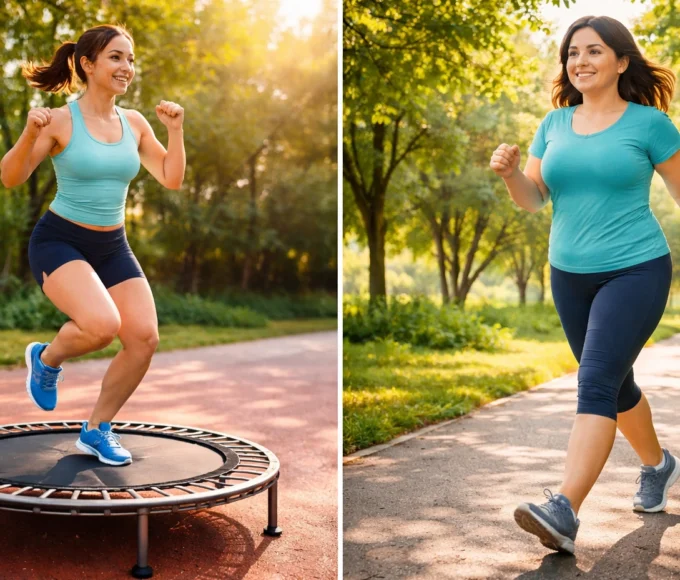
Compared to walking, rebounding can be similar if the effort level is close. Compared to running, it is usually lower unless the bouncing is fast and sustained. That does not make it useless. It just means expectations should be realistic.
Weight loss does not come from doing one trendy workout a few times a week. It comes from regular movement that adds up.
What Research Says So Far
Research on rebounding is limited but not nonexistent.
Some studies suggest that bouncing on a trampoline can improve cardiovascular fitness. Others point to benefits for balance and lower-body muscle engagement. There is also evidence that low-impact exercise is easier to stick with for people who experience joint pain.
You may also hear claims about rebounding and the lymphatic system. These claims often say bouncing helps “detox” the body. The truth is more cautious. The lymphatic system does rely on muscle movement, but strong scientific evidence linking trampoline workouts to special detox effects is limited. The body already has organs that handle waste removal very well.
Experts generally agree on one thing. Any movement that raises the heart rate and is done consistently can support health. Rebounding fits into that category. It just should not be oversold.
How It Compares to Walking or Running
People often want to know if rebounding is better than walking or running. That question misses an important point. “Better” depends on the person.
Walking is simple and accessible. It requires no equipment. It is easy to do outdoors and easy to maintain long-term.
Running burns more calories in less time, but it also puts more stress on the joints. Many people stop running because of injury or discomfort.
Mini trampolines fall somewhere in between. They are lower impact than running and often more engaging than walking indoors. For some people, that makes them easier to stick with.
Enjoyment matters more than many fitness plans admit. A workout you like is more likely to become a habit. And habits matter more than intensity alone.
Who Might Benefit Most
Mini trampoline workouts tend to appeal to certain groups more than others.
Beginners often find them less intimidating. There is no complicated setup. You can start slow and build confidence.
People with mild knee discomfort may prefer the softer surface, though anyone with joint concerns should still be cautious.
Busy professionals like the convenience. A trampoline can be used for short bursts of movement between meetings.
People who dislike gyms often enjoy the privacy and comfort of home workouts.
None of this guarantees weight loss, but it does increase the chance that someone will move more often.
Where Mini Trampolines Fall Short
It is important to be honest about limitations.
Rebounding does not build much upper-body strength on its own. It also does not challenge muscles in the same way as resistance training. For long-term health and body composition, strength work still matters.
It is also easy to underestimate effort. Because bouncing feels fun, people may assume they worked harder than they did. That can lead to disappointment if weight does not change.
Short sessions may not create a meaningful calorie deficit unless paired with other movement and mindful eating.
Consistency is key. Using a trampoline once in a while will not make a noticeable difference.
The Bigger Picture of Weight Loss
Weight loss is rarely about finding the perfect workout. It is about building a routine that fits your life.
Movement helps, but so does sleep. So does managing stress. So does eating in a way that feels balanced and sustainable.
Mini trampoline workouts can be part of that picture. They can make cardio feel less like a chore. They can help people move more on days they might otherwise sit still.
But they are not a shortcut. They do not replace thoughtful eating or other forms of exercise.
A Realistic Way to Look at the Trend
Mini trampolines are not magic. They will not transform bodies overnight. They will not cancel out an unbalanced lifestyle.
What they can do is make movement feel lighter. For some people, that is enough to create a habit. And habits, over time, shape outcomes more than viral trends ever do.
In a fitness world full of extremes, that might be the most valuable thing about this bounce-heavy moment.
FAQs
Are mini trampoline workouts good for weight loss?
Mini trampoline workouts may support weight loss by increasing heart rate and encouraging regular movement, but results depend on consistency, intensity, and overall diet.
How many calories do mini trampoline workouts burn?
Calorie burn varies by body weight, workout intensity, and duration. Research suggests rebounding can provide moderate cardio benefits similar to brisk walking.
Are trampoline workouts better than walking?
Mini trampoline workouts are lower impact and easier on joints, but walking may be easier to sustain for longer periods. Enjoyment and consistency matter more than the exercise type.
Can beginners use mini trampolines safely?
Many beginners find mini trampolines approachable because of their low-impact nature, but balance and gradual progression are important.
Do trampoline workouts reduce belly fat?
No exercise targets fat loss in one area. Trampoline workouts may help with overall calorie balance when combined with healthy eating and regular activity.
Disclaimer
This article is for general informational purposes only and does not provide medical or fitness advice. Individual results may vary. If you have a medical condition, injury, or concerns about starting a new exercise routine, consider speaking with a qualified healthcare professional.
Latest Posts: –
- What Happens to Your Skin When You Add a 5-Seed Trail Mix to Your Daily Diet
- Jogging vs Brisk Walking: Which Is Better for Weight Loss?
- 7 Homemade Drinks That May Help Improve Iron Deficiency and Boost Energy Levels
- Drinking Olive Oil Daily: Real Benefits, Side Effects & What Experts Want You to Know
- What are people thinking about Zepbound and sleep apnea?






Leave a comment