




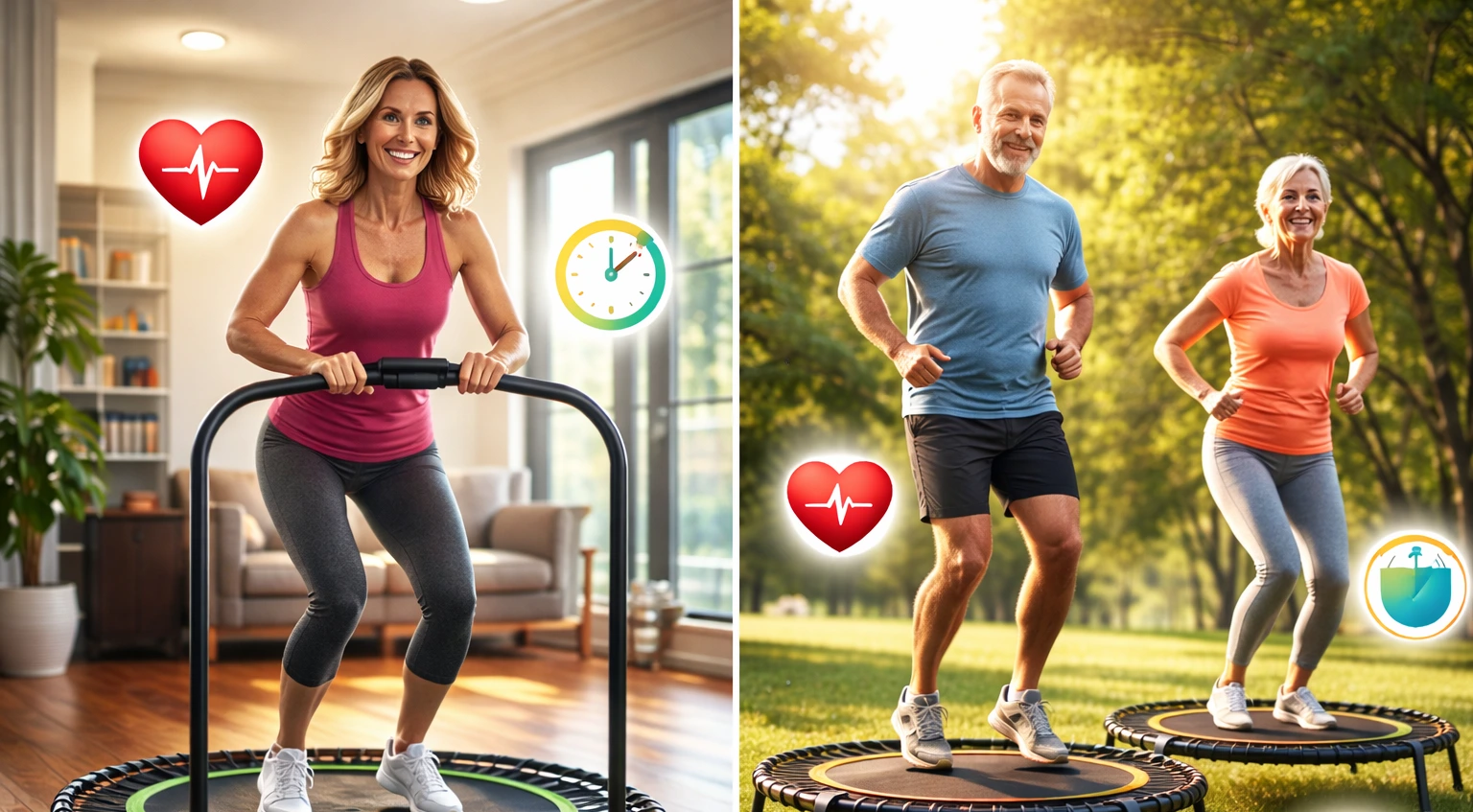
Rebounding is a form of exercise done on a small trampoline, often with gentle, controlled bouncing. It is considered low-impact, which means it puts less stress on the joints than running or jumping on hard ground. For adults over 50, rebounding may support weight management and heart health when practiced regularly. Like any activity, results depend on consistency, overall lifestyle, diet, sleep, and personal health conditions.
Why Exercise Changes After 50
After the age of 50, the body does not respond to exercise the same way it did in younger years. Muscle mass slowly decreases with age, even in people who stay active. This natural loss of muscle can affect strength, balance, and daily movement. Joints may also feel stiffer, especially in the morning or after sitting for long periods.
Metabolism tends to slow down as well. This means the body burns fewer calories at rest than it once did. Many people notice that weight gain becomes easier, while weight loss takes more effort. At the same time, recovery after intense workouts may take longer.
Because of these changes, low-impact movement becomes more important. Exercises that are gentle on the knees, hips, and back can help people stay active without increasing injury risk. The goal after 50 is not extreme workouts but steady movement that supports strength, balance, and heart health over time.
What Rebounding Actually Is
Rebounding is done on a small trampoline, sometimes called a rebounder. Unlike large outdoor trampolines, rebounders are close to the ground and designed for fitness use. The movement is controlled and often subtle. Feet may stay in contact with the mat while the body gently rises and falls.
This type of bouncing reduces impact because the mat absorbs much of the force. The joints do not take the same shock they would during running or jumping on pavement. Many rebounders also come with a support bar, which can help with balance.
Rebounding engages several muscle groups at once. The legs work to stabilise the body, the core helps maintain posture, and the arms may move to assist balance. For many adults over 50, this combination feels more manageable than high-impact cardio.
Weight Management After 50
Weight management often becomes more challenging with age. A slower metabolism means fewer calories are burned throughout the day. Loss of muscle mass also plays a role, since muscle tissue burns more calories than fat tissue.
Rebounding raises the heart rate and can increase energy use during the workout. How many calories are burned depends on effort, duration, and body size. Gentle bouncing burns fewer calories than more active movement, but it still contributes to daily activity levels.
It is important to be realistic. Rebounding alone is unlikely to cause major weight loss. It works best as part of a broader routine that includes regular movement, balanced meals, and enough protein to support muscle. When done consistently, rebounding may help support weight control by keeping the body active without excessive strain.
Heart Health Considerations
Aerobic movement plays an important role in heart health. Activities that raise the heart rate help support circulation and overall cardiovascular function. Rebounding can be a form of moderate aerobic exercise when done at a steady pace.
For adults over 50, low-impact cardio options are often easier to maintain long-term. Rebounding allows people to increase heart rate without placing heavy stress on the joints. This may make it easier to exercise more often.
Blood pressure and heart conditions should always be considered. People with known heart issues, chest pain, or uncontrolled blood pressure should seek medical guidance before starting any new exercise. Rebounding can be adjusted to a gentle pace, but personal health history always matters.
Bone and Joint Impact
Bone density naturally declines with age, especially after midlife. Light-impact activities can help stimulate bones, but too much force increases injury risk. Rebounding creates a mild loading effect as the body moves up and down against gravity.
This gentle impact may support bone health when done carefully. At the same time, the soft surface reduces stress on the knees and hips compared to hard surfaces. This balance makes rebounding appealing for people who want movement without sharp joint pain.
Joint comfort varies from person to person. Some people feel relief with low-impact bouncing, while others may need to limit duration. Listening to the body and avoiding discomfort is important, especially for those with arthritis or past injuries.
Balance, Coordination, and Fall Prevention
Balance often declines with age due to changes in muscle strength, vision, and nerve response. Falls are a common concern for adults over 50, especially as stability decreases.
Rebounding challenges balance in a controlled way. The moving surface encourages the body to engage small stabilizing muscles in the legs and core. Over time, this may help improve coordination and body awareness.
Using a support bar or placing the rebounder near a wall can add safety. The goal is not high jumps but controlled movement that trains balance gently. Improved stability can support confidence in daily activities like walking, climbing stairs, or standing from a seated position.
Longevity — What Science Actually Says
Research suggests that regular physical activity is linked to longer life and better quality of life. People who move consistently tend to maintain strength, mobility, and independence as they age. Cardiovascular fitness and muscle strength both play a role.
Rebounding is one form of physical activity. It can contribute to weekly movement goals, especially for those who avoid higher-impact exercise. However, no single exercise guarantees longevity. Health outcomes depend on many factors, including genetics, nutrition, stress, sleep, and medical care.
Rebounding fits into a larger picture of staying active. When combined with strength training and healthy daily habits, it may support long-term well-being. The focus should remain on regular movement, not on any one workout being a solution.
Who Should Be Careful
While rebounding is low-impact, it is not suitable for everyone. People with severe osteoporosis may face higher fracture risk. Those with balance disorders or frequent dizziness may need to avoid unstable surfaces.
Recent joint surgery, especially involving the knees, hips, or ankles, requires caution. Uncontrolled blood pressure or certain heart conditions may also limit suitability. Inner ear issues can affect balance and increase fall risk.
In these cases, it is wise to seek medical guidance before starting. A healthcare professional can help determine whether rebounding is appropriate or suggest safer alternatives.
How to Start Safely After 50
Starting slowly is key. Many beginners begin with five to ten minutes of gentle movement. Feet can stay flat on the mat, with small controlled motions rather than jumps.
Using a support bar or holding onto a stable surface can improve confidence. Wearing supportive shoes may help some people feel more secure. Focus on posture, relaxed breathing, and steady rhythm.
Rebounding works best alongside other forms of exercise. Light strength training helps maintain muscle, while stretching supports flexibility. Over time, duration and intensity can increase gradually, based on comfort and energy levels.
A Grounded Way to Stay Active
Rebounding can be a joint-friendly way to stay active after 50. It supports movement, balance, and heart health when done safely and consistently. Like any form of exercise, it is not a shortcut or a cure-all. Long-term health depends on regular activity, strength training, balanced nutrition, good sleep, and ongoing medical care. When approached with patience and realism, rebounding can be one useful tool in a healthy, active lifestyle.
FAQs
What is rebounding exercise?
Rebounding is a form of exercise done on a small trampoline. It involves gentle, controlled bouncing that raises the heart rate while putting less stress on the joints compared to high-impact workouts.
Is rebounding safe after age 50?
Rebounding can be safe for many adults over 50 when done carefully. Starting slowly, using support if needed, and paying attention to balance are important. People with certain health conditions should seek medical guidance first.
Can rebounding help with weight management after 50?
Rebounding may support weight management by increasing daily movement and calorie use. Results depend on consistency, effort level, and overall lifestyle, including diet and sleep.
Does rebounding support heart health?
As a form of aerobic activity, rebounding may help support heart and circulation health when done at a moderate pace. Anyone with heart concerns should talk to a healthcare professional before starting.
Is rebounding good for balance and coordination?
Rebounding engages core and stability muscles, which may help improve balance and coordination over time. This can be especially helpful as balance naturally declines with age.
How long should beginners over 50 rebound?
Many beginners start with 5 to 10 minutes and gradually increase duration as comfort and balance improve. Controlled movements are more important than speed or height.
Disclaimer
This article is for general informational purposes only and does not provide medical advice. Exercise needs and health conditions vary by individual. Before starting any new workout routine, especially after age 50 or with a medical condition, consider consulting a qualified healthcare professional.
Latest Posts:
- What Happens to Your Skin When You Add a 5-Seed Trail Mix to Your Daily Diet
- Jogging vs Brisk Walking: Which Is Better for Weight Loss?
- 7 Homemade Drinks That May Help Improve Iron Deficiency and Boost Energy Levels
- Drinking Olive Oil Daily: Real Benefits, Side Effects & What Experts Want You to Know
- What are people thinking about Zepbound and sleep apnea?





Leave a comment