




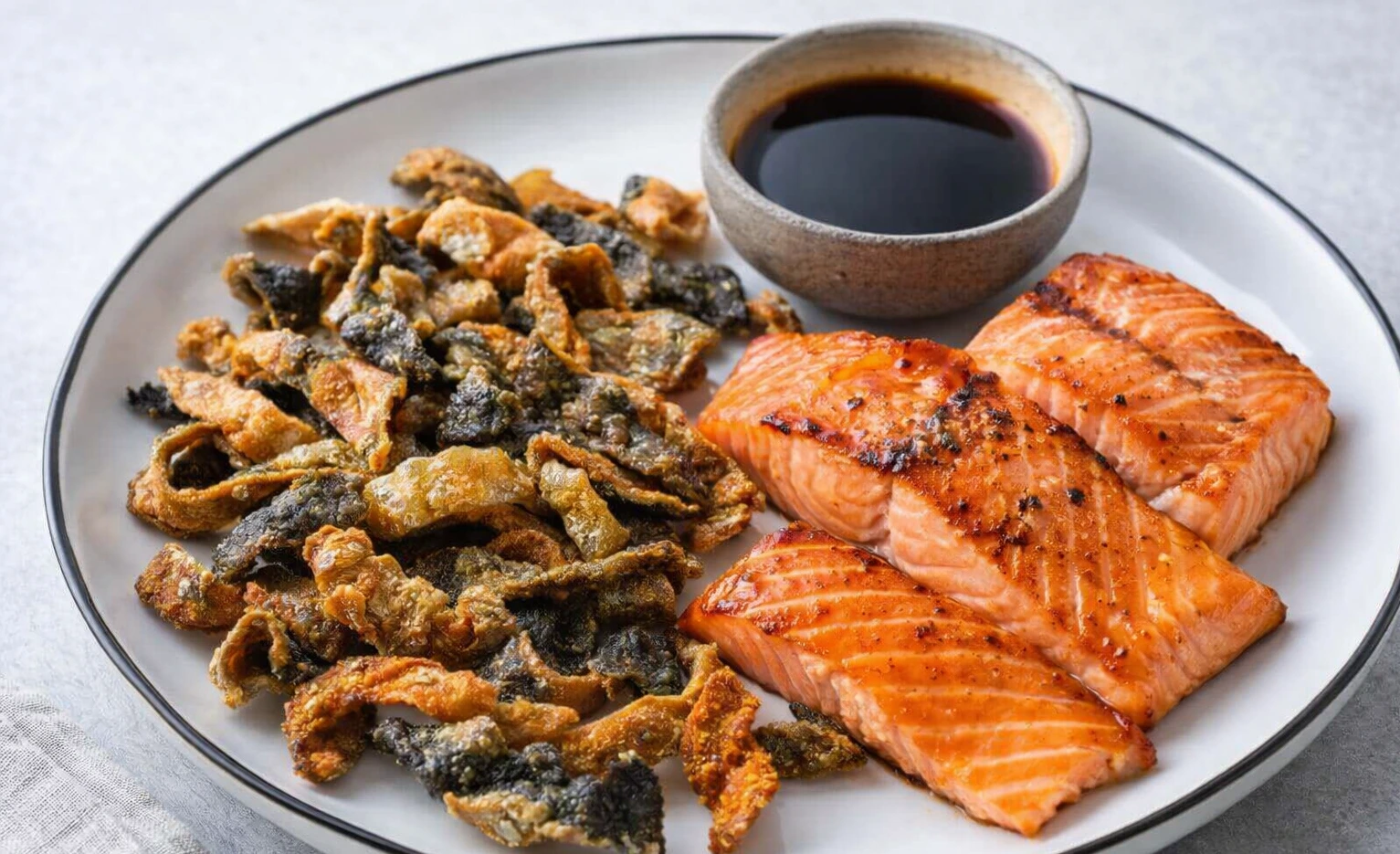
When people cook salmon at home, many people remove the skin before eating, and some believe the skin contains too much fat. Others believe it may be unhealthy. For this reason, the skin is often discarded.
But nutrition experts say that salmon skin actually contains useful nutrients. When cooked properly, it can be both tasty and nutritious. Salmon skin contains some healthy fats that make this fish so popular. It also contains protein and some essential minerals. Many chefs prefer to cook salmon with the skin on. The skin saves cooking time and gives the fish a richer flavour.
So what actually happens inside your body when you eat salmon skin? Let’s take a look at its nutrients, possible benefits, and some things you should know before incorporating it into your diet.
Can You Eat Salmon Skin?
Yes, salmon skin is generally safe to eat. Moreover, in many cultures around the world, people eat fish with the skin on. In many restaurants, salmon is cooked with its skin, so the fish remains juicy during cooking.
When salmon skin is cooked on a hot pan or grill, it becomes crispy and tasty. The skin also contains some of the fish’s thick fat layer, which contains valuable nutrients.
However, the quality of the fish is important. Sail from a clean, reliable source is usually the best option.
Nutritional Value of Salmon Skin
Salmon skin contains several nutrients that support overall health.
Here is a simple breakdown.
| Nutrient | Why It Matters |
|---|---|
| Omega-3 fatty acids | Help support heart health and brain function |
| Protein | Helps repair body tissues and maintain muscles |
| Collagen | Supports skin structure and connective tissues |
| Vitamin D | Important for bones and immune health |
| Selenium | Helps protect cells and supports the immune system |
Many of these nutrients are stored in the fatty layer close to the skin. Because of this, eating the skin can slightly increase the nutrition you get from salmon.
Is Eating Salmon Skin Good for Your Body?
Eating salmon skin from time to time can provide nutrients that support different parts of the body.
Here are some possible effects.
1. Your Body Gets More Omega-3 Fats
Salmon are known for being rich in omega-3 fatty acids, and these fatty acids are essential for our bodies because the body can’t make them on its own. When you eat salmon with the skin, you can get a little more of these essential fats.
Omega-3 fats help support:
- Heart health
- Healthy blood flow
- Brain activity
- Balanced inflammation in the body
Many health experts recommend eating fatty fish partly because of these nutrients.
2. Your Skin May Get Nutrients That Support Structure
Salmon skin contains natural collagen. Collagen is a type of protein that helps support the structure of skin, joints, and connective tissue.
When you eat foods containing collagen, your body breaks them down into amino acids. These building blocks can then be used in different tissues throughout the body.
This is one reason why collagen-rich foods are often included in diets that support skin and joints.
3. It May Help the Body Maintain Healthy Inflammation Levels
Swelling is a natural defense mechanism of the body. When the body is injured or impacted, it produces swelling to protect itself. But when these swellings persist for a long time, they can have a negative impact on overall health.
And the omega-3 fatty acids found in salmon can help balance swelling in the body and maintain good health. By including salmon in your diet—sometimes with skin—you can get these sought-after benefits in good amounts.
4. Your Brain May Benefit From Healthy Fats
The brain needs healthy fats to function properly. Omega-3 fatty acids are especially important for brain cells.
They help support:
- Memory
- Focus
- Mood balance
- Communication between brain cells
Studies often show that people who eat fish regularly tend to have better long-term brain health. Adding salmon to meals can help increase omega-3 intake.
5. Your Body Receives Important Minerals
Salmon skin also provides small amounts of minerals the body needs. One important mineral is selenium.
Selenium supports several functions, such as
- Protecting cells from damage
- Supporting the immune system
- Helping the thyroid gland work normally
Even small amounts can contribute to your daily nutrition.
Is Salmon Skin Good for Weight Loss?
Salmon skin contains both protein and healthy fats. These nutrients help make meals more satisfying. When food keeps you full longer, it may help reduce unnecessary snacking between meals.
Protein also supports muscle health, which plays a role in metabolism. However, salmon skin does contain extra calories because of its fat content. For this reason, it’s best to enjoy it in moderate portions.
Possible Risks of Eating Salmon Skin
Although salmon skin can be nutritious, there are a few things to keep in mind.
Environmental Contaminants
Fish sometimes absorb small amounts of pollutants from the water where they live. These may include chemicals or heavy metals. Fatty parts of fish, including the skin, may store slightly higher levels of these substances.
For most people, eating salmon in moderate amounts is still considered safe. Choosing high-quality fish can reduce potential concerns.
Farmed vs Wild Salmon
Both farm-raised and wild salmon are widely sold in stores. Wild salmon often has a slightly different nutrient profile and may have lower contamination levels in some cases.
Farmed salmon can still be nutritious, but farming practices vary. Looking for responsibly sourced salmon is usually a good idea.
Eating Too Much
Even healthy foods should be eaten in balance. Eating large amounts of salmon skin every day may increase calorie intake.
Eating a mix of protein foods, vegetables, whole grains, and healthy fats helps create a balanced diet.
How to Eat Salmon Skin Safely
If you enjoy salmon skin, a few simple steps can help you prepare it safely.
Choose Good-Quality Fish
Try to buy salmon that is
- Fresh
- Stored properly
- From trusted suppliers
Wild-caught or responsibly farmed salmon are often good options.
Cook It Thoroughly
Cooking fish well helps reduce food safety risks.
Popular cooking methods include:
- Pan-searing
- Grilling
- Baking
High heat can also make the skin crispy and more enjoyable to eat.
Dry the Skin Before Cooking
Before cooking, rinse the salmon and gently pat it dry with paper towels. Dry skin helps create a crisp texture when cooked.
Crispy Salmon Skin: Why Chefs Like It
Many professional chefs don’t remove the skin when cooking salmon, and there are two main reasons for this.
First, the salmon’s skin acts as a natural barrier. It protects the fish from direct heat, keeping its meat tender and juicy.
Second, when salmon is cooked properly, its skin becomes crispy and delicious. This combination of crispy skin and tender fish inside is a favourite among many.
For this reason, salmon is often cooked and served skin-side down in restaurants.
How Often Should You Eat Salmon?
Many health experts recommend eating fatty fish about two times per week. This amount usually provides beneficial omega-3 fats without overdoing it.
Salmon is one of the most popular choices because it is both nutritious and flavourful. Eating it occasionally with the skin can be part of a healthy eating pattern.
Quick Summary of Key Benefits
Eating salmon skin in moderation may provide several benefits:
- Adds extra omega-3 fats to your diet
- Supports heart and brain health
- Provides collagen and protein
- Contains minerals like selenium
- Helps make meals more filling
These benefits are best enjoyed as part of a balanced diet.
Healthy Ways to Add Salmon to Your Diet
If you want to include salmon more often in your meals, here are some simple ideas.
Grilled Salmon With Vegetables
Serve grilled salmon with roasted vegetables and brown rice.
Salmon Salad
You can place cooked salmon chunks on a salad with green leaves and olive oil.
Salmon Bowls
Combine salmon with rice, avocado, and vegetables for a balanced bowl.
Baked Salmon With Herbs
Bake salmon with garlic, lemon, and herbs for a simple and healthy dinner.
How to Cook Salmon Skin (Step-by-Step)
Cooking salmon skin the right way can turn it into a crispy and flavourful part of the fish. Many chefs actually consider the skin one of the best parts when it is prepared correctly.
The key is using high heat and keeping the skin dry before cooking. This helps it become crispy instead of soft or chewy.
Here is a simple way to cook salmon skin at home.
1. Start With Fresh Salmon
The first step is choosing good quality salmon.
Fresh fish usually has:
- A clean, mild smell
- Firm flesh
- Bright color
Wild-caught salmon or responsibly farmed salmon are both good options when they are fresh and properly stored.
2. Dry the Skin Well
Before cooking, rinse the salmon lightly under cold water.
After rinsing, gently pat the fish dry using paper towels. The skin should be as dry as possible.
Dry skin helps it become crispy during cooking.
If the skin is wet, it may steam instead of crisp.
3. Season the Fish
Simple seasoning usually works best for salmon.
You can lightly sprinkle:
- Salt
- Black pepper
- A small amount of olive oil
Some people also add garlic powder or lemon zest for extra flavor.
4. Heat the Pan Properly
Place a non-stick or stainless-steel pan on medium-high heat.
Add a small amount of oil and allow the pan to heat up before placing the fish inside.
A hot pan is important because it helps the skin cook quickly and become crispy.
5. Cook Skin-Side Down First
Place the salmon in the pan skin side down.
Press the fish gently with a spatula for a few seconds so the skin stays flat against the pan.
Let it cook without moving it for about 4 to 6 minutes.
During this time, the skin will become golden and crispy.
Most of the cooking actually happens on this side.
6. Flip Briefly to Finish
Once the skin looks crispy, flip the salmon carefully.
Cook the other side for about 1 to 2 minutes.
This finishes cooking the fish while keeping the inside tender.
7. Serve Immediately
Crispy salmon skin tastes best when served right after cooking.
The texture is usually:
- Crispy on the outside
- Soft and flaky inside the fish
You can serve it with vegetables, rice, salad, or a simple lemon sauce.
Extra Tip: Making Salmon Skin Extra Crispy
If you want the skin even crispier, you can cook the salmon slightly longer on the skin side.
Another option is separating the skin from the fish and baking it in the oven at 375°F (190°C) for about 10–12 minutes until it becomes crunchy.
Some people enjoy crispy salmon skin as a snack or topping for salads.
Conclusion
Salmon skin is often removed and thrown away, but it can actually contain valuable nutrients. It provides healthy fats, protein, collagen, and minerals that support different parts of the body.
When eaten in reasonable amounts, salmon skin can be a nutritious addition to a balanced diet. The most important step is choosing good-quality fish and cooking it properly.
With the right preparation, salmon skin can be both tasty and beneficial.
FAQs:
Is salmon skin safe to eat?
Yes, salmon skin is usually safe to eat when the fish is fresh and cooked properly. Many chefs leave the skin on because it helps keep the fish moist and adds flavour. Choosing salmon from trusted sources and cooking it well can reduce potential risks.
Does salmon skin contain omega-3 fatty acids?
Yes, salmon skin contains omega-3 fatty acids because these healthy fats are stored in the fish’s fatty layer. Eating the skin can slightly increase the amount of omega-3 you get from a salmon meal.
Is crispy salmon skin healthy?
Crispy salmon skin can be a nutritious part of the fish when prepared using healthy cooking methods like grilling, baking, or pan-searing. It contains protein, healthy fats, and small amounts of important minerals.
Can salmon skin help with weight management?
Salmon skin contains protein and healthy fats that may help you feel full after eating. Feeling satisfied after meals can sometimes help reduce unnecessary snacking. However, it should still be eaten in moderate portions because it contains calories.
How often should you eat salmon?
Many nutrition experts recommend eating fatty fish such as salmon about two times per week. This amount can help provide beneficial omega-3 fatty acids while maintaining a balanced diet.








Leave a comment