





Strengthening the lower back at home can help support daily movement, posture, and long-term comfort. Gentle, controlled exercises that activate the back, core, and glutes may improve stability over time. The goal is not intense workouts but consistent, well-performed movements that build strength gradually without strain.
Why Do Lower Back Muscles Weaken
Lower back weakness is rarely about one single cause. It usually develops slowly, shaped by everyday habits.
Sitting for long hours
Many UK adults spend much of the day seated at desks, in cars, or on sofas. Prolonged sitting reduces muscle engagement in the lower back and hips, allowing strength to fade over time.
Poor posture
Slouching or leaning forward shifts work away from supportive muscles. Over time, this can leave the lower back underused and less resilient.
Inactive glutes and core
The lower back does not work alone. When the glutes and abdominal muscles are weak, the lower back often compensates, leading to fatigue and stiffness rather than strength.
Stretching vs Strengthening: What’s the Difference?
Stretching and strengthening are often confused, but they serve different purposes.
- Stretching focuses on improving flexibility and reducing tightness.
- Strengthening builds muscle capacity so the lower back can support movement and posture.
Both matter. Stretching may help you move more freely, while strengthening helps you stay stable. A balanced routine usually includes both, but this guide focuses on lower back strengthening exercises that can be done safely at home.
6 Beginner-Friendly Lower Back Strength Exercises
These exercises are commonly used by fitness professionals to support a weak lower back. They rely on body weight rather than equipment and emphasise control over intensity.
1. Glute Bridge

What it works: Glutes, lower back, core
How to do it:
- Lie on your back with knees bent and feet flat on the floor
- Keep arms by your sides
- Gently tighten your core and squeeze your glutes
- Lift your hips until your body forms a straight line from shoulders to knees
- Lower slowly
Reps: 8–12, 2–3 sets
Common mistakes:
- Arching the lower back
- Pushing through the toes instead of the heels
Who should avoid:
Anyone who feels sharp lower back discomfort during lifting should pause and reassess their form.
2. Bird-Dog
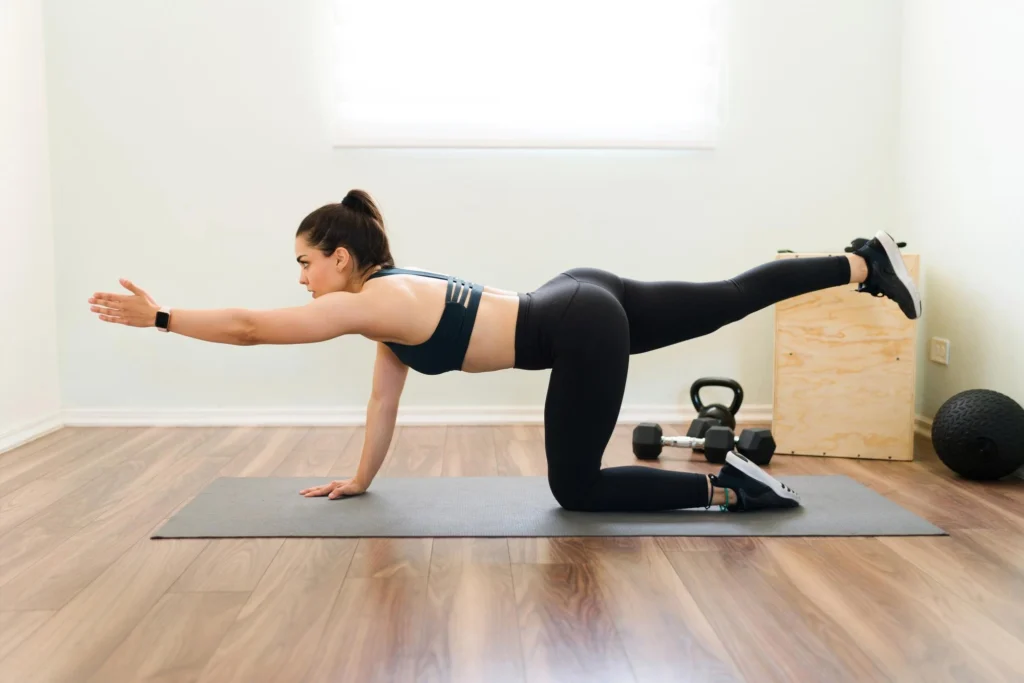
How it works: Lower back stabilisers, core, glutes
How to do it:
- Start on hands and knees
- Keep spine neutral
- Extend one arm forward and the opposite leg back
- Hold briefly, then return and switch sides
Reps: 6–10 per side
Common mistakes:
- Twisting the hips
- Letting the lower back sag
Who should avoid:
Those who struggle to maintain balance without pain should reduce the range of motion or temporarily skip.
3. Dead Bug

What it works: Deep core muscles that support the lower back
How to do it:
- Lie on your back with arms raised and knees bent
- Keep lower back gently pressed into the floor
- Slowly lower opposite arm and leg
- Return and switch sides
Reps: 6–10 per side
Common mistakes:
- Allowing the back to arch
- Moving too quickly
Who should avoid:
Anyone unable to keep the spine controlled should shorten the movement.
4. Pelvic Tilt

What it works: Lower abdominal muscles and spinal control
How to do it:
- Lie on your back with knees bent
- Gently flatten your lower back into the floor
- Hold for a few seconds, then release
Reps: 8–12
Common mistakes:
- Holding breath
- Forcing the movement
Who should avoid:
Generally safe for most, but stop if discomfort increases.
5. Modified Plank (Knees Down)

What it works: Core and lower back support muscles
How to do it:
- Place forearms on the floor, knees down
- Keep body in a straight line
- Hold while breathing steadily
Duration: 10–20 seconds, repeat 2–3 times
Common mistakes:
- Dropping the hips
- Holding breath
Who should avoid:
Anyone who feels pressure in the lower back rather than controlled engagement.
6. Bodyweight Hip Hinge

How it works: Glutes, lower back, hip control
How to do it:
- Stand tall with feet hip-width apart
- Push hips back slightly while keeping spine neutral
- Return to standing by squeezing glutes
Reps: 8–12
Common mistakes:
- Rounding the back
- Bending excessively at the knees
Who should avoid:
Those with balance difficulties may prefer support from a chair or wall.
How Often to Train Lower Back Muscles
For most beginners, 2–3 sessions per week is sufficient. Strength develops through consistency, not daily intensity.
- Rest days allow muscles to adapt
- Quality matters more than quantity
- Gradual progress reduces strain risk
Combining strengthening with light daily movement, such as walking, often supports better outcomes than exercise alone.
Signs You Should Stop and Speak to a GP
Lower back exercises should feel controlled, not painful. Stop and seek advice from a GP if you notice:
- Increasing pain rather than mild effort
- Numbness, tingling, or weakness in the legs
- Pain that worsens at night or interferes with daily tasks
- Symptoms following a fall or sudden injury
In the UK, a GP can help assess whether further guidance or referral is appropriate.
A Practical Way to Think About Lower Back Strength
Strengthening the lower back is not about pushing through discomfort. It is about building support gradually, using simple movements done well. Many people find that focusing on form, breathing, and consistency makes exercises feel more manageable and sustainable over time.
When in doubt, slow down. Controlled progress is usually more helpful than intensity when supporting lower back health at home.
DISCLAIMER
This article is for general fitness and educational purposes only. It does not replace professional medical advice. If you have ongoing pain, injury, or symptoms that worsen, speak to a GP or qualified health professional before starting new exercises.









Leave a comment