




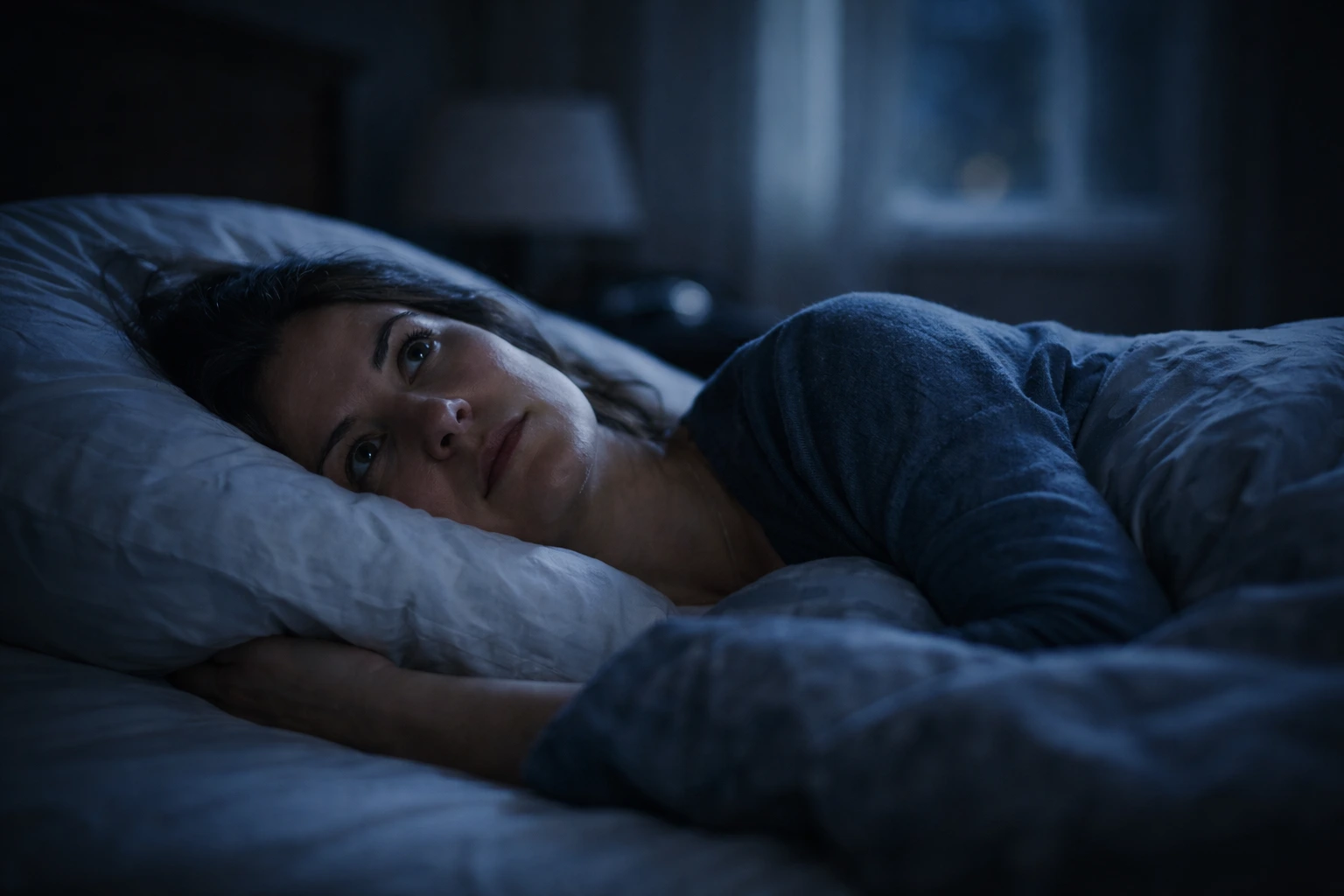
You open your eyes, and the room is dark in that specific, middle-of-the-night way. The house is quiet. Your brain, unfortunately, is not. If you’ve ever wondered why you wake up at 3 a.m. and can’t fall back asleep, you’re in very crowded company.
It can feel personal. Like your body picked a fight with you.
You were tired. You did everything “right.” And yet, here you are, staring at the ceiling, negotiating with the clock.
Let’s sit with what might be happening.
Sometimes sleep naturally gets lighter toward morning
A lot of people imagine sleep as one long, deep, uninterrupted block. Real sleep doesn’t work like that. As the night goes on, it becomes easier to wake, and your mind drifts closer to the surface.
So when you pop awake at 3 a.m., it doesn’t always mean something is wrong. It may simply be a lighter stage of the night.
You might notice:
- small sounds suddenly feel loud
- temperature changes become obvious
- thoughts line up quickly
Earlier in the night, you may have slept right through the same things.
Your brain loves unfinished business
Daytime is busy. Emails, errands, conversations, traffic, dishes. There isn’t much space to process how you actually feel about any of it.
At 3 a.m., the quiet arrives. And your mind finally says, Oh good, now we can talk.
It may bring up:
- that awkward moment from earlier
- something due tomorrow
- a health worry you pushed away
- a random memory from ten years ago
Not because night is magical. Because it’s finally still.
The harder you try, the more awake you feel
This is the trap almost everyone falls into.
You wake up, check the time, and calculate how many hours are left, and suddenly sleep feels urgent. Now it’s a task. A performance. Something you must achieve immediately.
Pressure activates alertness.
Alertness fights sleep.
And just like that, your body thinks, “Guess we’re up.”
A small scene you might recognize
Someone rolls over. Sees 3:12 glowing on the phone.
They think, If I fall asleep right now, I can still get five hours.
Then:
Why am I not sleepy?
I’m going to be exhausted.
Tomorrow will be terrible.
Heart rate climbs a little. Muscles tighten. The brain turns brighter.
Sleep didn’t leave because it hates you. It left because it sensed an emergency.
Stress hormones like early morning
Your body starts preparing to wake up hours before the alarm. Hormones slowly rise to help you feel alert later.
If you’re already stressed, sensitive, or going through a tough season, that rise can feel stronger. It can nudge you awake before you want it to.
You may notice:
- sudden mental clarity
- warmth
- faster thoughts
It’s biology doing its job, just a bit too enthusiastically.
Alcohol can trick you
It often helps people fall asleep fast. That part is real.
But later in the night, as it wears off, sleep becomes lighter and more fragmented. Wake-ups are common. And once you’re up, returning to sleep may feel harder.
People are often surprised by how small amounts can do this.
Especially if evenings have become a regular unwind ritual.
Your environment changes at night
Around 3 a.m., the world shifts in subtle ways.
The heating or cooling system may kick on. A partner might move. The blanket might slip. Even silence itself can feel louder.
During deep sleep, none of it matters. During lighter sleep, it can be enough.
You wake, and then your mind takes over the story.
The myth: “If I wake up, I ruined the night.”
Waking briefly is normal. Healthy sleepers do it too—they just tend to drift off again without noticing.
When someone becomes worried about being awake, they stay awake longer. That makes the wake-up feel bigger and more dramatic than it truly is.
The moment becomes memorable. Repeatable. Feared.
And fear makes it louder the next night.
What can quietly help in the moment
Not heroic solutions. Gentle ones.
Sometimes the goal is simply reducing the sense of emergency.
You might try:
- turning the clock away
- letting your eyes stay closed even if thoughts wander
- slow breathing without forcing it
- reminding yourself rest still counts
Some people like a short mental distraction, like naming animals or replaying a familiar show.
Nothing intense. Nothing with a scoreboard.
When getting out of bed can be kinder
If frustration starts boiling, lying there can make the bed feel like a battleground.
Getting up briefly—low light, something calm, no doom-scrolling—can reset the mood. When sleepiness returns, you go back.
It sounds simple, but emotionally it can break the cycle of trying and failing.
Your life stage matters more than you think
Parents of young kids. Caregivers. People in demanding jobs. Anyone going through change.
Of course your nervous system is alert at night. It’s on duty.
In those seasons, 3 a.m. wake-ups can be less about technique and more about support, boundaries, and giving yourself extra compassion during the day.
You are not malfunctioning.
You are responding.
Some nights will just be weird
This part can be strangely comforting.
Even excellent sleepers have random off nights. Travel, weather, hormones, emotions, late meals, excitement—life is dynamic.
One restless night does not predict the next one.
But many people accidentally treat it like a prophecy.
What people often discover later
When sleep improves, they rarely say, “I found the perfect trick.”
They usually say, “I stopped panicking.”
They trusted that the body knows how to sleep. They made room for imperfect nights. And the intensity softened.
Sleep likes safety.
Not pressure.
If you’re awake tonight, you’re not broken. You’re a human with a very alert brain doing its best to protect you, even if the timing is inconvenient.
The clock will keep moving. Your body will take another run at sleep. It always does, in its own way, at its own pace.
You can let the night be a little unfinished.
✅ FAQs:
Why do I keep waking up around 3 a.m.?
Sleep becomes lighter in the second half of the night. Stress, hormones, or small environmental changes can make awakenings more noticeable.
Why can’t I fall back asleep after waking up?
Trying hard to sleep can create pressure, which makes the brain more alert. Worrying about the clock often keeps the cycle going.
Is waking up at night normal?
Yes. Many people wake briefly during the night. Good sleepers usually drift back off without remembering it.
Should I stay in bed or get up?
If you feel calm, resting in bed is fine. If frustration builds, getting up for a short, quiet reset in low light may help.
Medical note: This information is educational and not a replacement for individual medical care. If nighttime awakenings are frequent, distressing, or affecting daily life, a healthcare professional can help you explore possible causes and options.









Leave a comment