




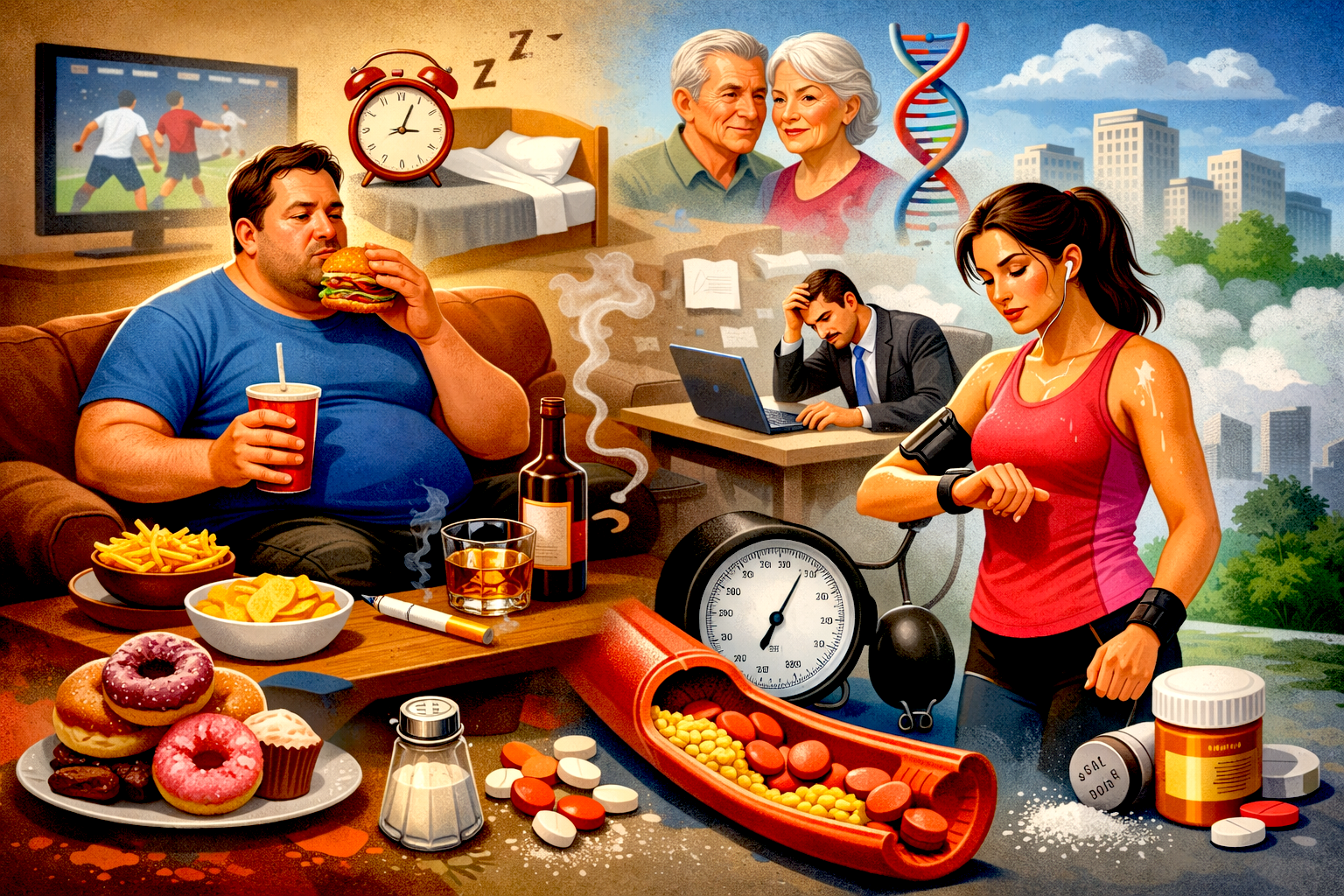
High blood pressure usually doesn’t develop with obvious symptoms. In most people, it’s discovered during a routine health checkup. Often, you feel completely normal—no pain, no discomfort, and your daily routine feels smooth and uninterrupted.
So when a doctor says, “Your blood pressure is a little high,” a very common thought pops into your mind:
If my blood pressure were high, I would feel something… right?
The simple answer is ‘not necessarily’. In the early stages, high blood pressure usually does not cause clear symptoms. No pain. No weakness. No warning signs.
High blood pressure doesn’t appear overnight. It builds slowly over time due to a combination of daily lifestyle habits, natural changes in the body, and sometimes genetics.
In this article, you’ll understand:
- what high blood pressure actually is
- which lifestyle habits can raise blood pressure
- Which influences can be changed through daily choices, and which ones are beyond personal control?
What Is High Blood Pressure, Really?
Blood pressure describes how strongly blood moves through the arteries each time the heart sends blood out to the body.
- blood travels through the arteries to the rest of the body
- healthy arteries expand slightly
- then relax again
When this system is balanced:
- blood flows smoothly
- the heart doesn’t need extra effort
- pressure stays within a normal range
Problems begin when this balance slowly starts to break down.
Why Does Blood Pressure Rise Gradually?
Over time, some natural changes happen in the body:
- arteries become less flexible
- blood or fluid volume may increase
- the heart has to push harder to move blood
These changes don’t happen in a single day. They develop over months and years. The body adapts to them, which is why you don’t feel anything unusual—but your blood pressure numbers quietly keep rising.
Because it usually develops without obvious warning signs, high blood pressure can quietly progress for years before it’s noticed.
Lifestyle Habits That Can Raise Blood Pressure
In most cases, one single factor does not cause high blood pressure. It’s the combined effect of everyday habits.

1. High Sodium (Salt) Intake
When sodium intake is high, the body tends to retain extra fluid, which increases the volume of blood flowing through the vessels.
When there’s extra fluid in the body:
- blood volume increases
- pressure on artery walls goes up
It’s important to know that sodium doesn’t only come from table salt. It’s hidden in:
- packaged foods
- restaurant meals
- sauces, soups, and bread
- chips and snack foods
Even if food doesn’t taste salty, it may still be high in sodium.
2. Heavy Reliance on Processed Foods
Processed foods often contain:
- high sodium
- low fiber
- fewer helpful nutrients like potassium
This combination isn’t ideal for blood vessels. Over time, it can interfere with how blood pressure is regulated.
3. Lack of Physical Activity
Regular movement:
- makes the heart more efficient
- helps keep arteries flexible
When daily activity is low:
- the heart has to work harder
- circulation slows down
The effect is gradual, but significant over the long term.
4. Extra Body Weight
With extra body weight:
- the heart has to supply blood to more tissue
- pressure naturally increases
Excess weight also affects hormones and the body’s salt–water balance, both of which play a role in blood pressure control.
5. Chronic Stress
Stress isn’t just a mental issue. During stress, the body releases hormones that:
- increase heart rate
- tighten blood vessels
Occasional stress is normal, but ongoing daily stress can push blood pressure higher over time.
6. Poor Sleep
During sleep, blood pressure naturally drops. This gives the heart and arteries time to recover.
If sleep is:
- too short
- or poor in quality
Blood pressure doesn’t reset properly, and readings may stay elevated in the long run.
7. Smoking
Each cigarette:
- temporarily narrows blood vessels
- causes an immediate rise in blood pressure
Over time, smoking damages artery walls and makes them stiffer, making blood pressure harder to control.
8. Excessive Alcohol Intake
Regular heavy drinking:
- stimulates the nervous system
- adds extra calories
- disrupts sleep patterns
Together, these effects can gradually raise blood pressure.
Risk Factors You Can’t Control
Some factors are beyond lifestyle choices:
Age
As you get older, arteries naturally lose flexibility, increasing the risk of high blood pressure.
Family History
Having a family history of high blood pressure can increase the likelihood of developing it yourself.
Hormonal Changes
Hormonal shifts—such as those around menopause—can affect blood vessels and fluid balance.
Ethnic Background
Some populations have a higher average risk, making regular monitoring especially important.
Medical Conditions That Can Affect Blood Pressure
Sometimes, high blood pressure is linked to another health condition, such as the following:
- kidney problems
- thyroid disorders
- sleep apnea
- certain medications
That’s why repeated high readings should never be ignored.
Why Doesn’t High Blood Pressure Cause Symptoms?
Blood vessels don’t send pain signals when pressure increases. The heart and body slowly adjust.
As a result, you can feel completely normal even when blood pressure is high. Symptoms usually appear only when blood pressure becomes very high or when complications develop.
Can blood pressure improve?
For many people, lifestyle changes can support healthier readings:
- gradually reducing salt intake
- daily walking or light exercise
- managing stress
- improving sleep habits
- maintaining a healthy weight
Small, consistent changes tend to be more effective over the long term.
When Should You See a Doctor?
Consult a healthcare provider if:
- blood pressure readings are repeatedly high
- you experience severe headaches, dizziness, or chest pain
- there’s a strong family history
- lifestyle changes don’t improve your readings
Bottom Line
High blood pressure:
- develops slowly
- often has no symptoms
- results from a mix of lifestyle and non-lifestyle factors
Feeling normal does not guarantee normal blood pressure. Early awareness and regular monitoring are essential.
FAQs:
What is the most common cause of high blood pressure?
A combination of lifestyle habits and aging is the most common cause.
Can stress alone cause high blood pressure?
Stress can temporarily raise blood pressure. Long-term stress can contribute over time.
Is high blood pressure permanent?
Not always. Many people improve their reading with lifestyle changes.
At what age can high blood pressure start?
It can begin at any age, but the risk increases as you get older.
Disclaimer: This article is for informational purposes only and does not replace professional medical advice. Always consult a qualified healthcare provider for diagnosis and treatment.








1 Comment