




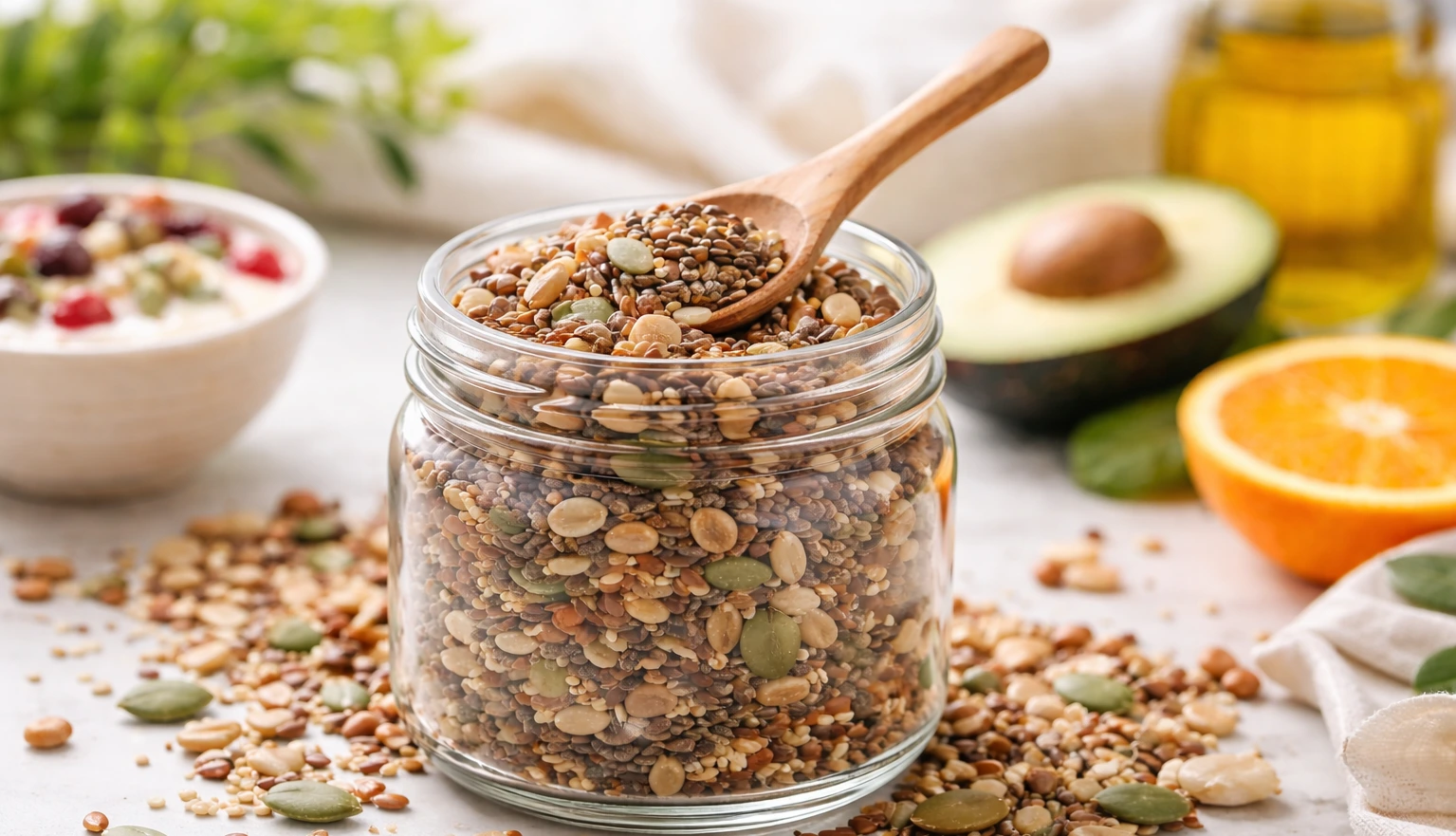
Dry skin, dullness, or frequent irritation is not always caused by skincare products alone. In many cases, skin condition reflects dietary patterns—especially when essential fats, minerals, and antioxidants are consistently lacking.
A 5-seed trail mix made from chia, flax, pumpkin, sunflower, and sesame seeds is often associated with skin health because it provides omega-3 fatty acids, zinc, vitamin E, copper, and fiber. These nutrients play important roles in supporting the skin barrier, regulating inflammation, and contributing to the skin’s natural repair processes. This is not an instant glow solution, but when included as part of a balanced diet, it may support healthier-looking skin over time.
Why a 5-Seed Trail Mix Is Often Linked to Skin Health
Skin is an active organ that does not rely only on topical products. For healthy function, it also requires adequate fats, minerals, antioxidants, and fiber.
A 5-seed trail mix delivers multiple nutrients together, each supporting different skin systems.
This approach does not focus on overnight results. Instead, it supports core skin functions such as moisture retention, inflammation control, and daily cellular repair.
Nutritional Breakdown of a 5-Seed Trail Mix
A simple 5-seed mix typically contains no added sugar or preservatives. Even a small daily portion provides a wide range of nutrients.
| Seed | Key Nutrients | Skin-Related Role |
|---|---|---|
| Chia seeds | ALA omega-3, soluble fiber | Supports the skin barrier and reduces moisture loss |
| Flax seeds | ALA omega-3, lignans | Helps balance inflammation and supports hormonal health |
| Pumpkin seeds | Zinc, protein | Supports skin repair and oil regulation |
| Sunflower seeds | Vitamin E, selenium | Antioxidant protection from daily skin stress |
| Sesame seeds | Copper, polyphenols | Supports collagen structure and skin strength |
Why Omega-6 and Omega-3 Balance Is Important for Skin
Modern diets tend to be high in omega-6 fats and low in omega-3s. When this balance shifts too far, low-grade inflammation can increase and weaken the skin barrier.
ALA omega-3s from chia and flax seeds help improve this balance and support calmer, more resilient skin.
How Omega-3s Support the Skin Barrier
The outer layer of skin relies on a lipid barrier that locks in moisture and keeps irritants out. When this barrier weakens, dryness, redness, and sensitivity increase.
Omega-3 fatty acids:
- Strengthen and improve flexibility of skin cell membranes
- Limit inflammatory signalling.
- Help control transepidermal water loss (TEWL)
The ALA in chia and flax seeds is converted in small amounts into EPA and DHA. Although conversion is limited, regular intake improves overall fatty acid balance, which is important for skin barrier support.
Why Zinc Is Important for Skin Repair
Pumpkin seeds are a strong plant-based source of zinc. Zinc is essential for daily skin maintenance.
Zinc:
- Supports skin cell renewal
- Plays a role in wound healing
- Helps regulate excess oil production
- Supports immune function
Low zinc intake may slow healing and increase skin inflammation. Zinc from seeds provides gentle, sustainable support without the risks associated with high-dose supplements.
Vitamin E and Antioxidant Protection
Sunflower seeds are rich in vitamin E. The primary role of vitamin E in skin health is protection from oxidative stress.
Daily exposure to ultraviolet light, pollution, and stress generates free radicals that damage skin lipids.
Vitamin E:
- Protects skin cell membranes
- Slows lipid oxidation
- Helps maintain skin barrier stability
Because vitamin E is fat-soluble, absorption improves when consumed with the natural fats found in seeds.
Copper and Collagen Structure
Sesame seeds provide copper, a mineral necessary for collagen and elastin structure. Copper activates the enzyme lysyl oxidase, which strengthens collagen fibers.
Copper supports:
- Skin firmness and strength
- Elasticity
- Antioxidant enzyme activity
This is not a shortcut to visible aging reversal, but it is an important nutrient for long-term skin structure.
The Gut–Skin Connection
The fiber in chia and flax seeds feeds beneficial gut bacteria. When fermented, this fiber produces short-chain fatty acids (SCFAs).
SCFAs:
- Strengthen the gut barrier
- Reduce systemic inflammation
- Improve immune balance
Because inflammation affects many skin conditions, a fiber-rich diet can indirectly support clearer, calmer skin.
Additional Potential Benefits
This mix may offer indirect benefits that support skin health:
- Improved blood sugar stability, which may slow collagen damage from glycation
- Hormonal balance support through flax lignans
- Increased satiety, helping control overeating and improve overall diet quality
These effects are subtle but may become noticeable with consistent intake.
How Much Should You Eat?
One to two tablespoons per day is generally sufficient.
Easy ways to use it:
- Sprinkle over yogurt or oatmeal
- Add to salads
- Blend into smoothies in ground form
Seeds are calorie-dense, so portion control matters. Visible skin changes typically take four to six weeks, as the skin renewal cycle requires time.
Who Should Be Cautious?
- Avoid if you have a seed allergy
- Those using blood-thinning medications should consult a healthcare professional
- People with sensitive digestion should start slowly
- Individuals with thyroid conditions should keep flax intake moderate
Diet supports skin health but does not replace medical care or skincare treatment.
Final Takeaway
Skin health does not develop overnight. However, small and consistent dietary habits—such as including a balanced 5-seed trail mix—can quietly support the skin’s natural repair and protection systems over time.
🔹 Disclaimer
This content is for informational purposes only and does not replace professional medical advice, diagnosis, or treatment. Always consult a qualified healthcare provider before dietary changes.





Leave a comment