




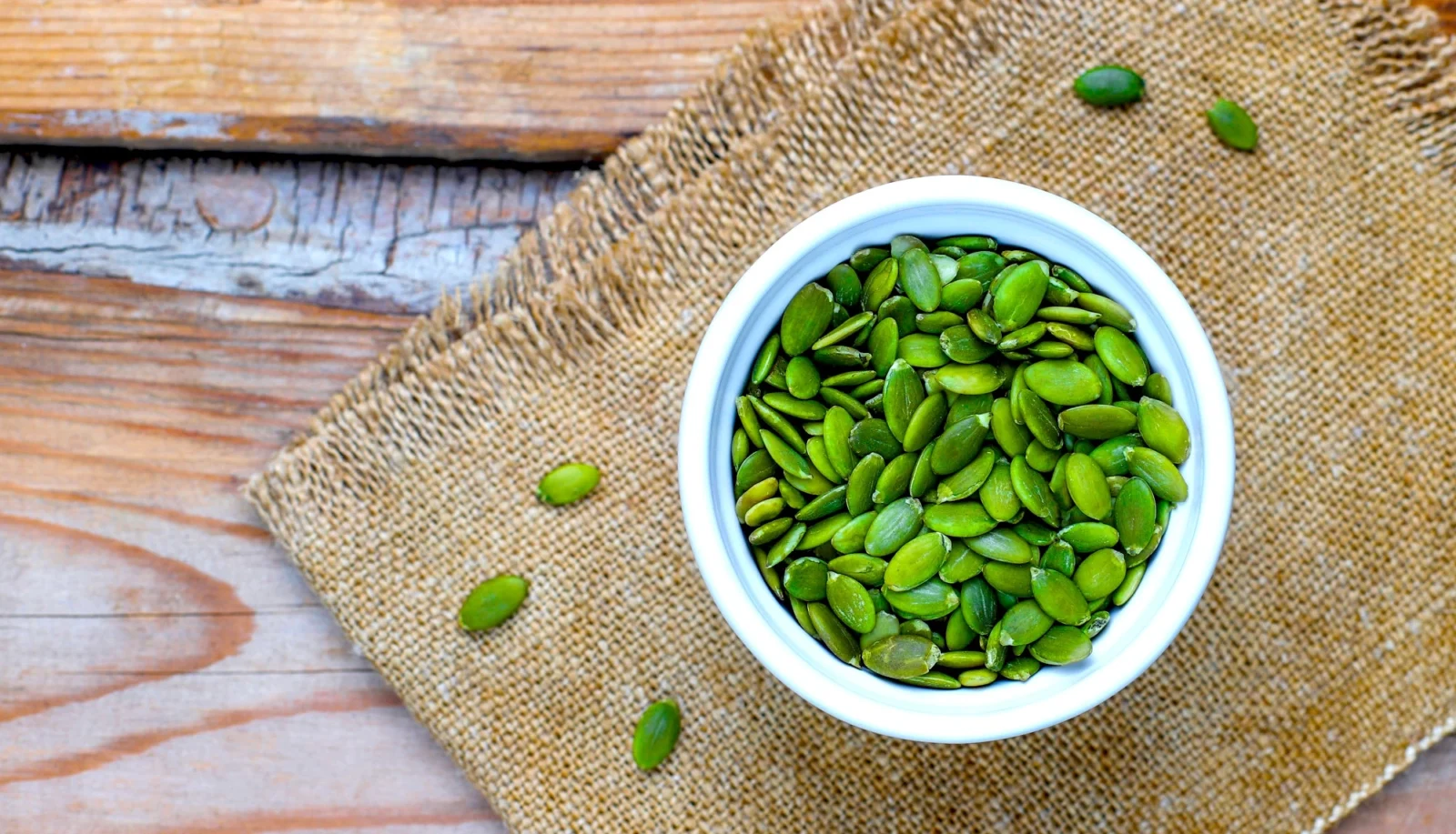
Those tiny green seeds inside a pumpkin—have you ever wondered what they can do for your health? Pumpkin seeds, also called pepitas, are more than just a seasonal snack. Packed with nutrients, they can quietly improve your body in multiple ways. Eating them daily may support your heart, bones, skin, hair, digestion, and even your sleep.
Most people overlook pumpkin seeds because they seem small and insignificant. But adding a handful every day can lead to noticeable improvements in energy, mood, and overall health. From morning smoothies to evening snacks, these seeds are simple, versatile, and surprisingly powerful.
👉 Eating pumpkin seeds every day can boost your energy, support heart and bone health, improve digestion, regulate blood sugar, nourish your skin and hair, and promote better sleep. A small daily serving of about 28–30 grams provides magnesium, zinc, protein, and healthy fats—but moderation is important to avoid excess calories or digestive discomfort.
What Are Pumpkin Seeds?
Pumpkin seeds are the seeds inside pumpkins that you can eat. When shelled, they are green, flat, and have a mild, nutty flavor. These tiny seeds are packed with protein, healthy fats, magnesium, and zinc, making them a convenient and nutrient-dense snack.
Unlike pumpkin flesh, which is mostly water and carbohydrates, pumpkin seeds concentrate nutrients in a small package. This makes them perfect for boosting mineral intake, improving heart health, and supporting overall well-being.
Nutritional Value
Here’s a snapshot of what you get in 1 ounce (28 grams) of raw pumpkin seeds:
| Nutrient | Amount per 28g |
|---|---|
| Calories | 151 kcal |
| Protein | 7g |
| Fat | 13g |
| Magnesium | 168 mg |
| Zinc | 2.2 mg |
| Fiber | 1.7 g |
Even a small handful provides a rich mix of protein, healthy fats, and minerals. That’s why pumpkin seeds are such a simple, daily way to support multiple aspects of health.
What Effects Can Daily Pumpkin-Seed Consumption Have on Your Body?
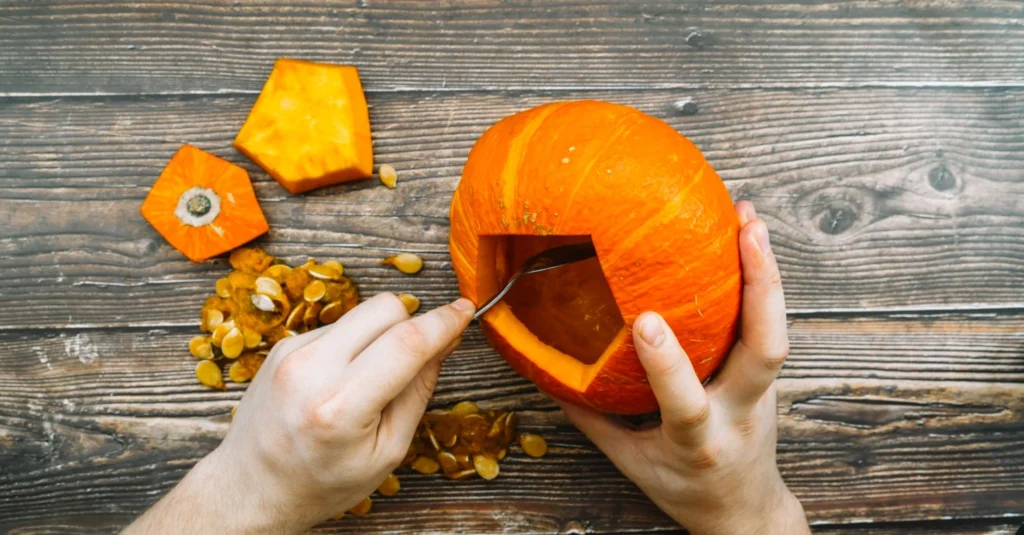
Energy Levels
Pumpkin seeds contain protein, healthy fats, and magnesium, which work together to give steady energy throughout the day. Unlike sugary snacks that cause spikes and crashes, pumpkin seeds release energy gradually. A small handful in the morning or afternoon can help you stay alert and curb midday cravings.
Heart Health
Daily pumpkin seeds support cardiovascular health. Magnesium helps maintain healthy blood pressure, and antioxidants reduce inflammation in blood vessels. Over time, this may lower the risk of heart disease and support cholesterol balance. People with family histories of heart conditions may notice real benefits from including these seeds in their routine.
Digestion
Pumpkin seeds are high in fiber, which helps support healthy digestion. Regular consumption helps maintain healthy bowel movements and supports gut bacteria. Soaking or lightly roasting the seeds makes them easier to digest and can reduce bloating for sensitive stomachs.
Sleep
Pumpkin seeds contain tryptophan, an amino acid converted into serotonin and melatonin—key hormones for sleep. Eating a small serving in the evening, like with yogurt or tea, can improve sleep quality and help you fall asleep faster.
Skin & Hair
Pumpkin seeds are rich in zinc and healthy fats, which support skin and hair health. Zinc supports skin repair and hair strength, while antioxidants help defend against early ageing. Eating them regularly may help your skin look clearer, reduce dryness, and make your hair stronger and healthier.
Blood Sugar Balance
Pumpkin seeds are rich in magnesium and fiber, which support healthy blood sugar levels. Eating them regularly can reduce post-meal sugar spikes and stabilize energy throughout the day, making them especially helpful for people with prediabetes or type 2 diabetes.
Mood and Mental Focus
Magnesium and tryptophan in pumpkin seeds also support brain health and mood. Magnesium calms the nervous system, while tryptophan helps produce serotonin. Daily consumption can improve focus, reduce mild stress, and promote a calmer, balanced mood.
Key Health Benefits
- Bone Health: Magnesium and phosphorus strengthen bones and may reduce fracture risk.
- Immune Support: Zinc enhances immune function to fight infections.
- Anti-Inflammatory Effects: Antioxidants reduce inflammation in tissues and joints.
- Weight Management: Protein and fiber increase satiety, preventing overeating.
- Heart Protection: Healthy fats and minerals support blood pressure and cholesterol levels.
- Better Sleep: Tryptophan helps regulate sleep hormones.
- Skin & Hair Care: Zinc and good fats help maintain healthy skin cells and hair roots.
How Much Is Safe to Eat Daily
A handful (28–30 grams) is considered safe. More than that can lead to extra calories, bloating, or mild digestive discomfort. Moderation ensures benefits without overloading your system.
For best results, spread your intake throughout the day—for example, a small portion in the morning, afternoon, and evening.
Best Ways to Enjoy Pumpkin Seeds Recipes
Pumpkin seeds are not just for snacking. Here’s how to enjoy them throughout the day:
1. Raw or Soaked Pumpkin Seeds
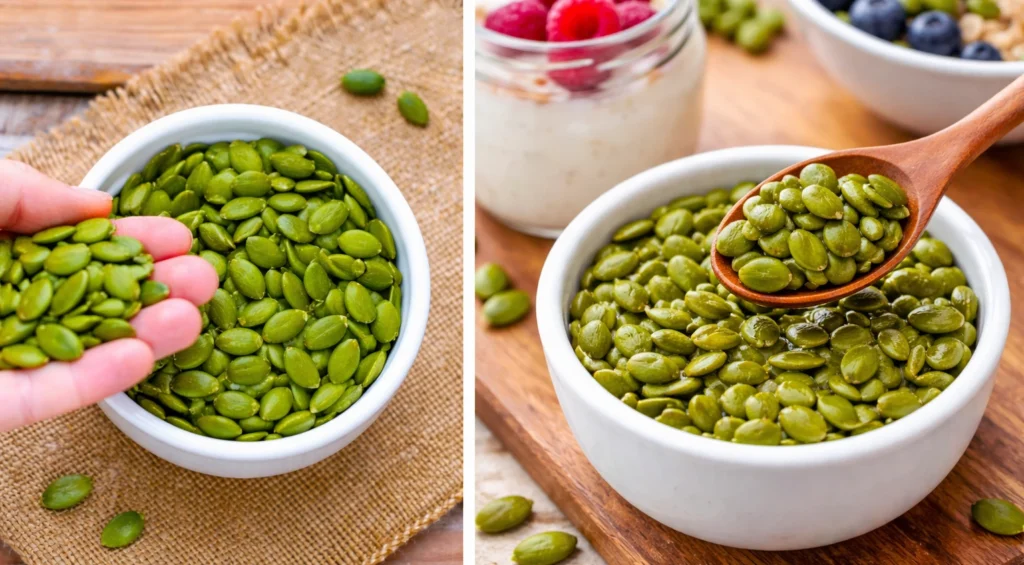
- Raw: Grab a handful as a quick, nutrient-rich snack.
- Soaked: Soak seeds in water for 4–6 hours to make them easier to digest. Mix into yogurt, oatmeal, or smoothies for added crunch.
2. Roasted Pumpkin Seeds
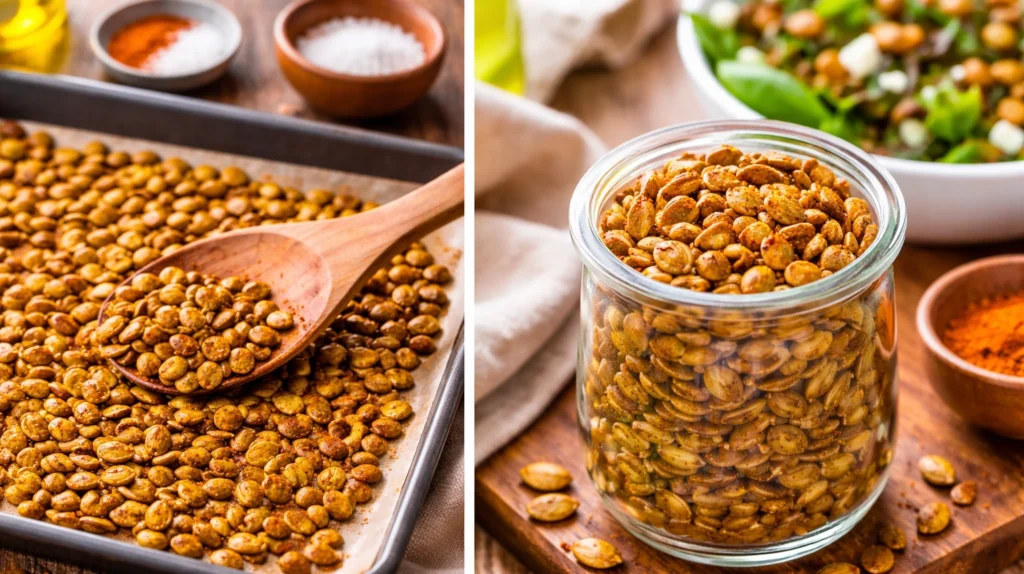
Roasting enhances flavor while keeping nutrients intact.
Ingredients:
- 1 cup raw pumpkin seeds
- 1 tsp olive oil or coconut oil
- Pinch of salt or spices (cinnamon, paprika, garlic powder)
Instructions:
- Preheat oven to 350°F (175°C).
- Toss the seeds with oil and spices.
- Spread on a baking tray and roast for 10–15 minutes, stirring halfway.
- Cool and store in an airtight container.
Sprinkle on salads, oatmeal, or soups for added crunch.
3. Pan-Fried Pumpkin Seeds
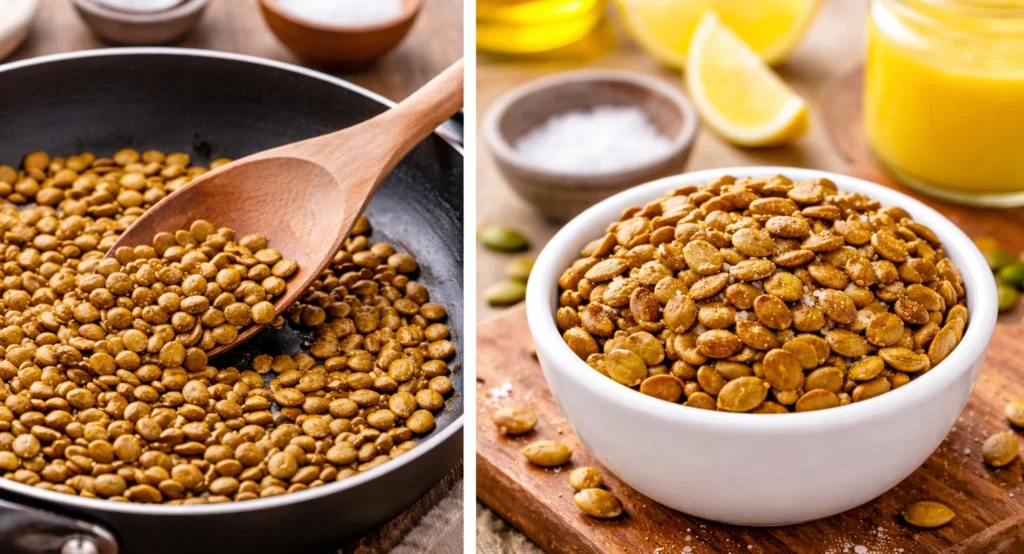
Ingredients:
- 1 cup pumpkin seeds
- 1 tsp coconut oil or ghee
- Pinch of salt
Instructions:
- Heat oil over medium heat.
- Stir the seeds for 3–5 minutes until lightly browned.
- Remove from heat and let cool.
Tip: Avoid deep-frying to preserve nutrients.
4. Mix Into Meals
- Salads: Add a handful for crunch and protein.
- Smoothies: Blend 1 tbsp for extra nutrients.
- Breakfast Bowls: Mix with oatmeal, granola, or yogurt.
- Soups: Use as a garnish for texture.
- Baking: Incorporate into bread, muffins, or energy bars.
5. Nut Butter or Paste
Grind roasted seeds into a creamy paste. Use as a spread or dip for fruits, veggies, or toast. A healthier alternative to store-bought spreads.
Crunchy Pumpkin Seed Energy Bites
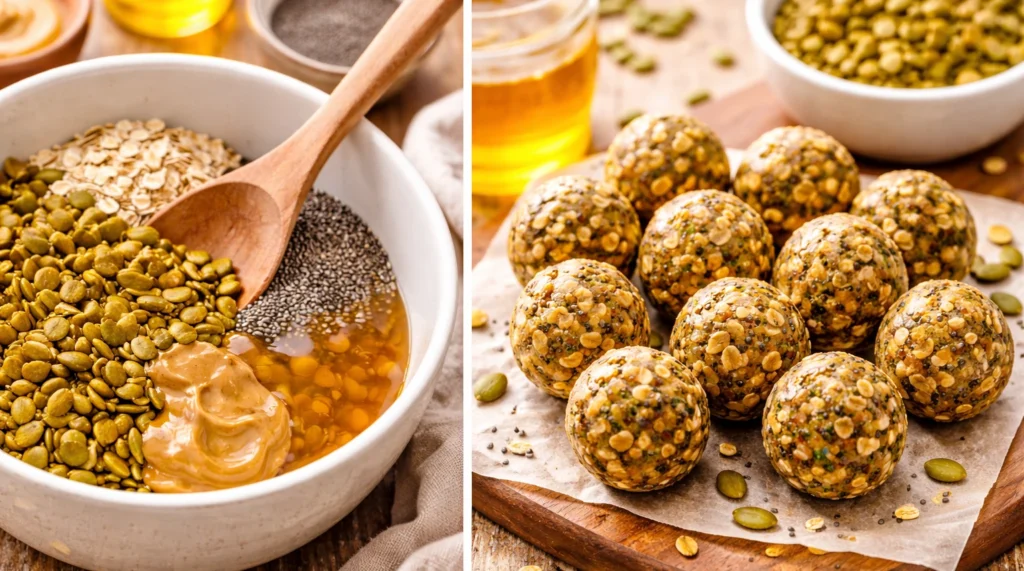
Ingredients:
- 1 cup roasted pumpkin seeds
- ½ cup oats
- ¼ cup honey or maple syrup
- ¼ cup peanut butter
- 2 tbsp chia seeds (optional)
Instructions:
- Mix all ingredients until sticky.
- Form into bite-sized balls.
- Chill for 30 minutes.
Great for a quick snack, these bites give protein, fiber, and healthy fats for steady energy.
Best Time to Eat Pumpkin Seeds
Pumpkin seeds are flexible.
- Morning: Boost energy for work or workouts.
- Afternoon: Maintain steady energy and prevent cravings.
- Evening: Enjoy a small handful with yogurt or tea to support sleep.
Tip: Pair with protein and complex carbs for the best results.
Side Effects
- Bloating or Gas: High fiber may cause mild digestive issues.
- Excess Calories: Overeating can add up quickly.
- Salted Seed Risks: Too much salt can affect blood pressure.
- Digestive Issues: Very large portions may cause mild cramping.
Who Should Avoid or Limit
- Allergies: Avoid if sensitive to seeds.
- Kidney Issues: High magnesium content may require caution.
- Sensitive Digestion: Start with small portions to prevent bloating.
Simple Daily Routine
- Breakfast: Sprinkle 1 tbsp over oatmeal or smoothie bowls
- Mid-Morning Snack: A small handful for steady energy
- Lunch: 1–2 tbsp on salads or soups
- Evening Snack: 1 tbsp with yogurt or herbal tea to support sleep
Even small, consistent portions can add up to noticeable health benefits over time.
What Nutritionists Say About Pumpkin Seeds
Nutrition experts consider pumpkin seeds a nutrient-dense snack rich in magnesium, zinc, protein, and healthy fats. Regular consumption in moderation can support heart, bone, and brain health, improve sleep quality, and aid digestion. Their versatility makes them a practical, affordable addition to almost any diet.
Conclusion
Incorporating pumpkin seeds into your daily routine is simple, delicious, and beneficial. From energy and heart health to better sleep, skin, and hair, the benefits are noticeable when eaten in moderation. A small handful each day, creatively included in meals or snacks, can enhance overall wellness naturally.
FAQs:
Can pumpkin seeds help me sleep better?
Yes. Tryptophan in pumpkin seeds supports serotonin and melatonin production, aiding sleep.
Are pumpkin seeds good for heart health?
Absolutely. Magnesium, healthy fats, and antioxidants help reduce inflammation and support blood pressure.
How many pumpkin seeds should I eat daily?
A handful (28–30 grams) is safe and effective. Overeating may cause bloating and extra calories.
Can pumpkin seeds improve digestion?
Yes. Fiber in pumpkin seeds supports regular bowel movements and healthy gut bacteria.





Leave a comment