




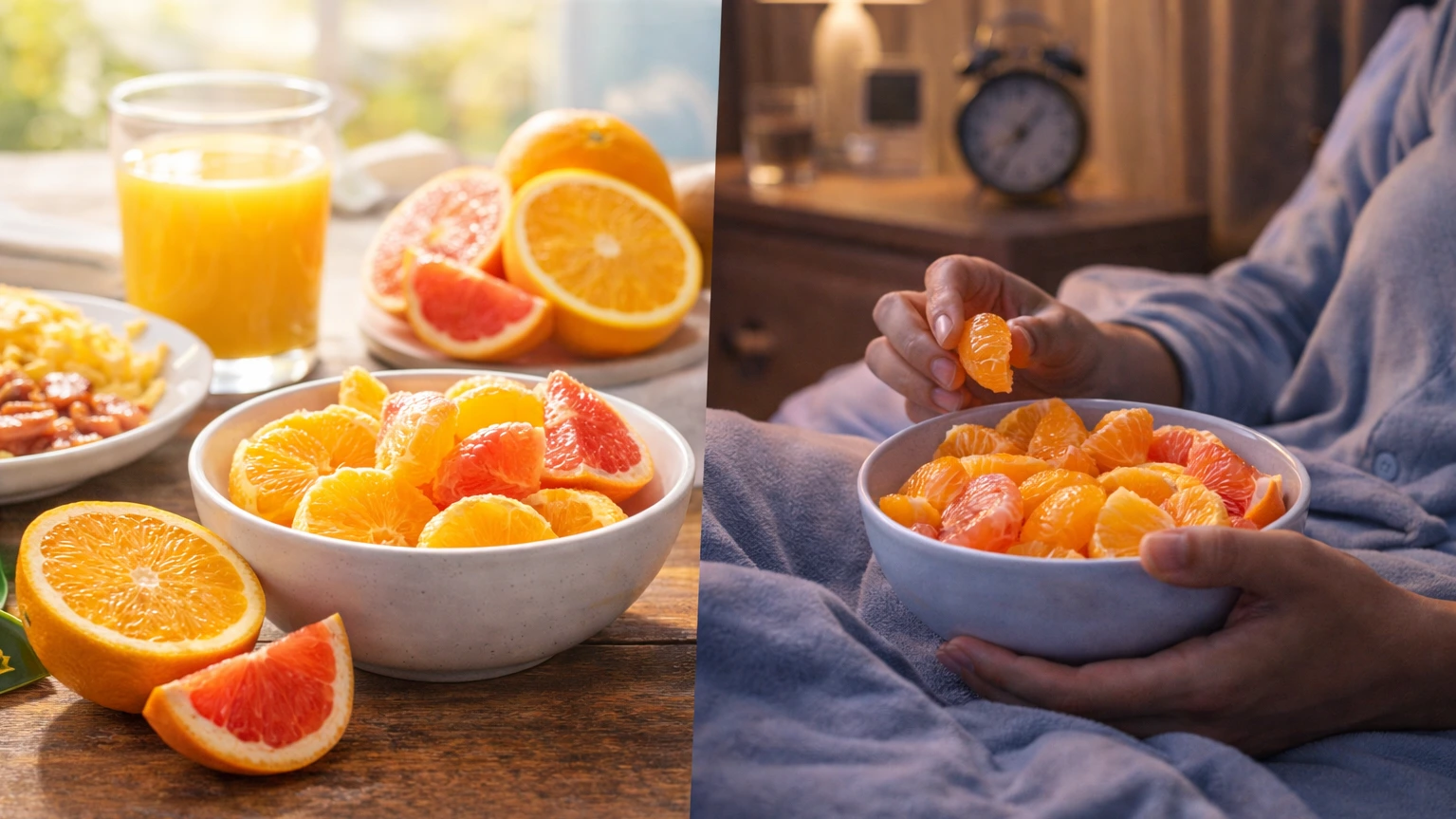
Citrus fruits like oranges, lemons, sweet limes, and grapefruits are part of everyday eating for many people. Some include them with breakfast, others prefer them later as a snack, and a few avoid them at certain times without really thinking about it. Unlike heavier foods, citrus does not come with strict rules or fixed timings that everyone follows.
Most habits around citrus develop naturally. People notice how their body feels, what fits their routine, and what feels comfortable over time. The same fruit can feel refreshing in the morning and uncomfortable at night, depending on the person and the situation. Energy levels, digestion, weather, and daily schedules all influence when citrus feels like a good choice.
Rather than following rigid advice, most people adjust their citrus intake quietly through experience.
First Thing in the Morning
Morning is one of the most common times people eat citrus. After waking up, many prefer something light and refreshing rather than a heavy meal. An orange, a few slices of sweet lime, or lemon water often feels easy to consume and does not require much preparation.
For people who enjoy fruit-based breakfasts, citrus fits naturally alongside toast, oats, or eggs. The sharp, fresh taste can feel energising and help people feel more awake. Some enjoy citrus on its own, while others prefer pairing it with food to soften the acidity.
Benefits
- Feels light after waking up
- Refreshing taste
- Easy to include without cooking
Why People Choose This Time
Morning citrus often feels like a gentle start. It does not demand much appetite and fits well into rushed mornings.
Considerations
Not everyone feels comfortable eating citrus on an empty stomach. People with sensitive digestion sometimes notice acidity or discomfort. This is why many choose to eat citrus after a small meal rather than before anything else.
Mid-Morning or Mid-Afternoon (Snack Time)
For those who skip citrus at breakfast, mid-morning becomes a popular option. Hunger starts to return, but a full meal still feels unnecessary. A piece of fruit during this time often feels practical and satisfying.
In the afternoon, citrus is commonly used as a light break between meals. When energy drops or focus fades, fruit feels easier than heavy snacks or processed foods.
Benefits
- Light and refreshing
- Does not feel heavy during work hours
- Easy to carry and eat
Why This Timing Works
By mid-morning or mid-afternoon, digestion usually feels more settled. Citrus feels easier to tolerate and fits naturally into short breaks.
Pairing Ideas
Many people pair citrus with nuts, yoghurt, or other small foods to feel more satisfied. Others enjoy it on its own when the goal is freshness rather than fullness.
Pre- or Post-Workout
Citrus is also commonly eaten around physical activity, especially light or moderate movement. Before exercise, it feels easy and does not weigh the body down. After movement, citrus can feel refreshing, particularly in warm weather.
People who walk, stretch, practise yoga, or do casual workouts often find citrus comfortable afterwards. It suits moments when the body wants hydration and something simple rather than a heavy meal.
Benefits
- Feels light before activity
- Refreshing after movement
- Easy to digest for many people
Why People Include It
Citrus fits well with movement because it does not feel slow or heavy. It complements activity rather than interrupting it.
When to Avoid
Those doing intense workouts or who feel stomach sensitivity may prefer to avoid citrus immediately before exercise.
Afternoon Energy Slumps
Afternoons are when many people feel tired or unfocused. During this time, citrus becomes a popular choice because it feels lighter than fried snacks or sweets.
An orange or sweet lime in the afternoon can feel refreshing without making people sluggish. For those working long hours, fruit breaks often feel like a reset rather than a distraction.
Some people eat citrus alone, while others combine it with other foods depending on hunger levels.
Evening Preferences
Evening habits around citrus vary more than at any other time of day. Some people enjoy citrus in the early evening, especially before dinner, because it feels light and does not spoil their appetite. Others prefer a small portion after dinner as a refreshing bite.
At the same time, many people avoid citrus later in the evening. Acidity can feel uncomfortable for some, and others simply prefer warmer or heavier foods at night.
There is no universal rule here. Evening tolerance depends entirely on individual comfort.
Before Bed
Late-night citrus is less common, but not unheard of. Some people choose fruit at night instead of processed snacks because it feels lighter. Others avoid citrus completely after sunset due to acidity or digestive discomfort.
Over time, people usually learn what works for them. Those who feel discomfort tend to move citrus earlier in the day without needing formal advice.
Directly After Heavy Meals
Many people avoid eating citrus immediately after heavy meals. Rich or oily foods combined with citrus can sometimes feel uncomfortable. This is why citrus is often eaten separately or after some time has passed.
In some cultures, citrus is traditionally eaten after meals, while in others it is avoided. These habits are usually based on tradition and comfort rather than strict rules.
Seasonal and Lifestyle Influence
Citrus habits often change with seasons. In warmer months, people reach for citrus more often and at different times of day. In colder weather, citrus may appear less frequently or only with specific meals.
Lifestyle matters too. Someone with a busy schedule may eat citrus whenever it is convenient. Someone with a fixed routine may associate it with a particular time. Neither approach is better; both are shaped by daily life.
Key Takeaways for Citrus Consumption
Citrus fruits tend to work best when they fit naturally into the day. Morning suits those who enjoy a light start, while mid-morning or afternoon works better for people who prefer fruit as a snack. Evening and night intake depends mostly on individual tolerance.
Rather than forcing a schedule, most people benefit from noticing how citrus feels at different times and adjusting quietly.
Whole Citrus Fruits Over Juice
Many people prefer eating whole citrus fruits instead of drinking juice. Whole fruits feel more filling, take longer to eat, and fit better into everyday routines. Juice is often consumed quickly and sometimes out of habit rather than hunger.
This is why oranges, sweet limes, and grapefruits are more commonly eaten as snacks, while juice remains an occasional choice.
Consistency Over Timing
What matters most is not the exact time but how easily citrus fits into daily life. Someone who enjoys citrus every morning will naturally stick to it, while another person may only eat it in the afternoon and feel perfectly comfortable.
Consistency comes from choosing a time that feels easy, repeatable, and free of discomfort. Over time, that quiet routine becomes part of the day without effort.
Disclaimer:
This article is for general information and everyday lifestyle awareness only. It does not provide medical advice, diagnosis, or treatment. Individual responses to foods may vary.
Latest posts: –
- What Happens to Your Skin When You Add a 5-Seed Trail Mix to Your Daily Diet
- Jogging vs Brisk Walking: Which Is Better for Weight Loss?
- 7 Homemade Drinks That May Help Improve Iron Deficiency and Boost Energy Levels
- Drinking Olive Oil Daily: Real Benefits, Side Effects & What Experts Want You to Know
- What are people thinking about Zepbound and sleep apnea?
- Why doctors are studying weight loss drugs for sleep apnea








Leave a comment