




It happens somewhere between locking the front door at work and stepping off the bus. The light has already gone. You glance at the clock, certain it must be much later. Why evenings feel longer when the sun sets early can sneak up on you like that.
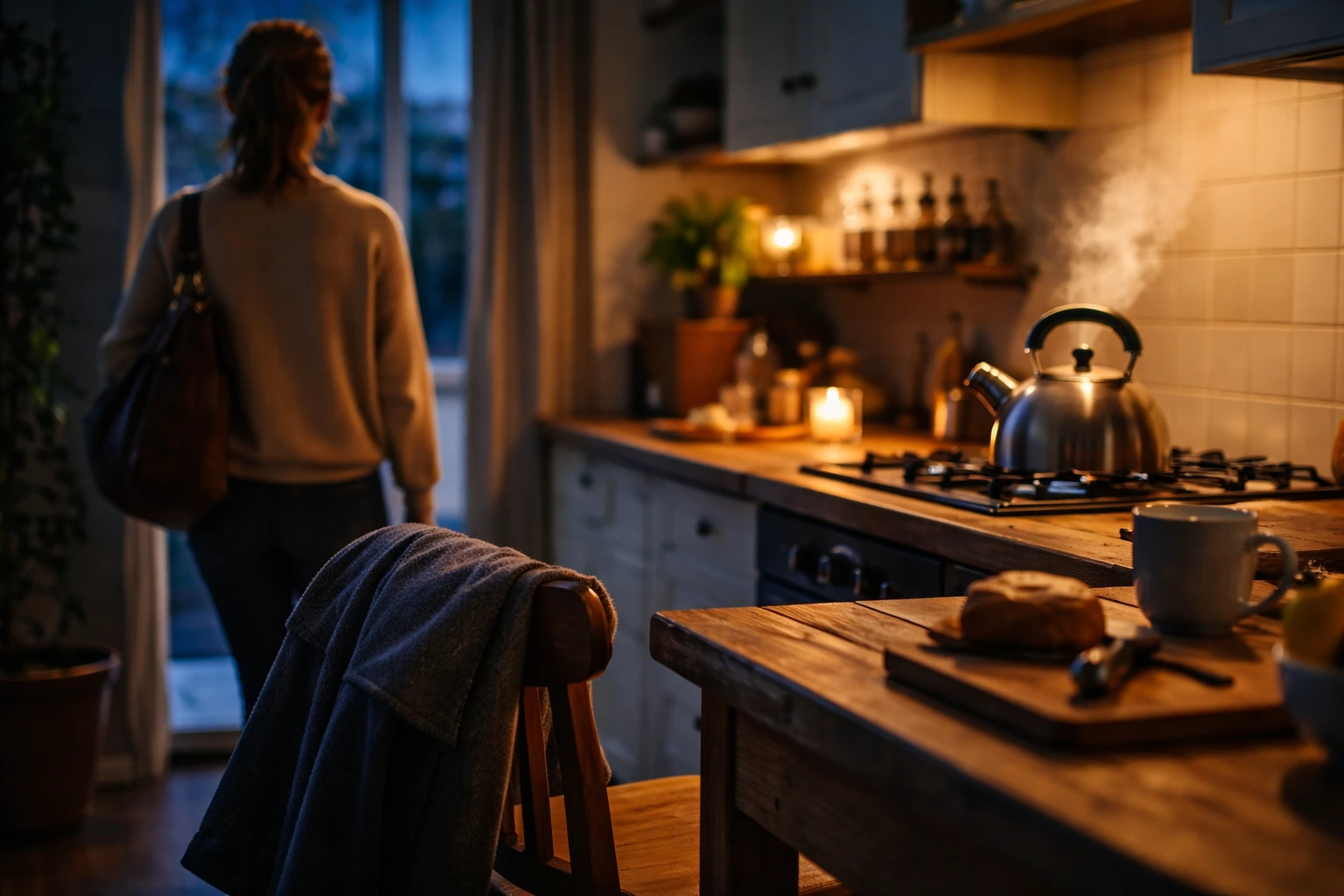
You’re home. Kettle on. Coat over the chair. And yet the night seems stretched, wider than it used to be.
The clock says one thing. Your body says another.
When daylight disappears in the late afternoon, the usual signals that guide your sense of time get a bit muddled. You might feel as if bedtime should be near, even though the evening has barely begun.
For many people, it shows up in small, ordinary ways.
- You start yawning before you’ve eaten.
- The sofa feels magnetic at half five.
- Motivation quietly packs up early.
- Even simple tasks feel like they belong to “tomorrow”.
None of this means you’re lazy or doing evenings wrong. Your brain partly relies on light to pace the day. Remove it, and things blur.
The commute home can feel like a closing curtain.
There’s a particular mood to travelling back in the dark. Reflections in the train window. Everyone quieter. Headphones in. The city is still busy, but somehow winding down.
It can create the feeling that the day is finished, even when it isn’t.
You might notice:
- fewer plans made after work
- more cancellations
- a stronger pull towards takeaway and television
- less patience for anything demanding
Light used to mark a transition. Now the transition arrives early, and your mind follows.
At home, time can lose its edges.
In summer, evening light spills across the pavement and drifts through the curtains. People pop to the shops. Someone waters plants. There’s movement.
In winter, the same hours can feel sealed.
You come into the flat, switch on lamps, maybe change into something comfortable, and suddenly it could be nine o’clock. Or six. It’s oddly hard to tell.
Without natural cues, minutes stretch. The brain fills the space differently. Sometimes with rest. Sometimes with rumination.
Darkness changes energy, not just visibility.
Many readers describe a drop in emotional volume rather than physical tiredness. Less spark. Less forward motion.
You’re not necessarily exhausted. You’re… flatter.
Common descriptions sound like this:
- “I can’t get going again once I’m in.”
- “The evening feels heavy.”
- “Everything takes longer than it should.”
- “I keep checking the time.”
Lower light nudges the nervous system towards slowing down. Helpful when sleep is near. Confusing when dinner still needs cooking.
The idea that you should “use the evening well” can make it worse.
There’s quiet pressure attached to weekday nights. Exercise. Life admin. socialising. hobbies. cooking properly. Perhaps learning something new.
When the world outside already feels shut, that list can land badly.
Instead of inspiration, it can create friction.
So people hover. Scroll. Half-watch something. Stand in the kitchen unsure what they came in for. The sense of wasted time makes the evening feel even longer.
A loop, really.
Some people experience an emotional echo of Sunday.
Not the dramatic version. More a faint hum in the background.
Early darkness can bring anticipation of tomorrow forward. Responsibilities feel closer. Morning alarms seem louder in your imagination.
You might find yourself:
- thinking about emails
- mentally rehearsing conversations
- worrying about the week
- feeling time speed up and slow down at once
The body is at home, but part of the mind has already left.
Routines built for summer don’t always translate.
It’s easy to forget how much behaviour depends on daylight. A quick walk after supper. Meeting a friend. Popping out without much thought.
When it’s dark, those habits need more effort. Layers, visibility, motivation.
Many people quietly drop them.
Nothing dramatic. They just fade. And with them goes a familiar way of breaking up the evening. Without that punctuation, hours feel longer.
Small pools of light can help more than big gestures.
You don’t need a personality transformation or a heroic plan. Often, gentle structure works better.
A few ideas people tend to find useful:
- switching on lamps instead of the main light
- making tea a small ritual rather than background noise
- playing music while cooking
- phoning someone during a tidy-up
- sitting somewhere different from the daytime spot
Tiny signals that the evening is still alive, not over.
They give the brain something to hold onto.
It’s also fine if evenings are quieter.
Not every long feeling needs solving. Some nights are meant to be slower. Recovery has value, even if it looks unproductive.
There can be relief in allowing the pace to drop without judgement.
Read. Bathe. Watch something gentle. Go to bed earlier if it suits you. Winter has always invited a bit more retreat. Fighting that completely can be exhausting.
Balance tends to work better than resistance.
If your mood dips sharply, it deserves attention.
For some people, early darkness doesn’t just stretch time. It shifts well-being more noticeably. Sleep changes. Appetite wanders. Motivation falls further than expected.
That’s not a personal failure. It’s information.
Keeping an eye on patterns, talking them through, and asking for support can make a real difference.
You don’t have to wait for things to become unmanageable.
The kettle clicks off. Steam curls up. Outside, someone walks past quickly, collar up against the cold. The night is doing what winter nights do.
You’re allowed to move through it at your own pace.
If you’re worried about persistent changes in your mood, sleep, or daily functioning, it’s a good idea to speak with a GP or another qualified health professional.






Leave a comment