




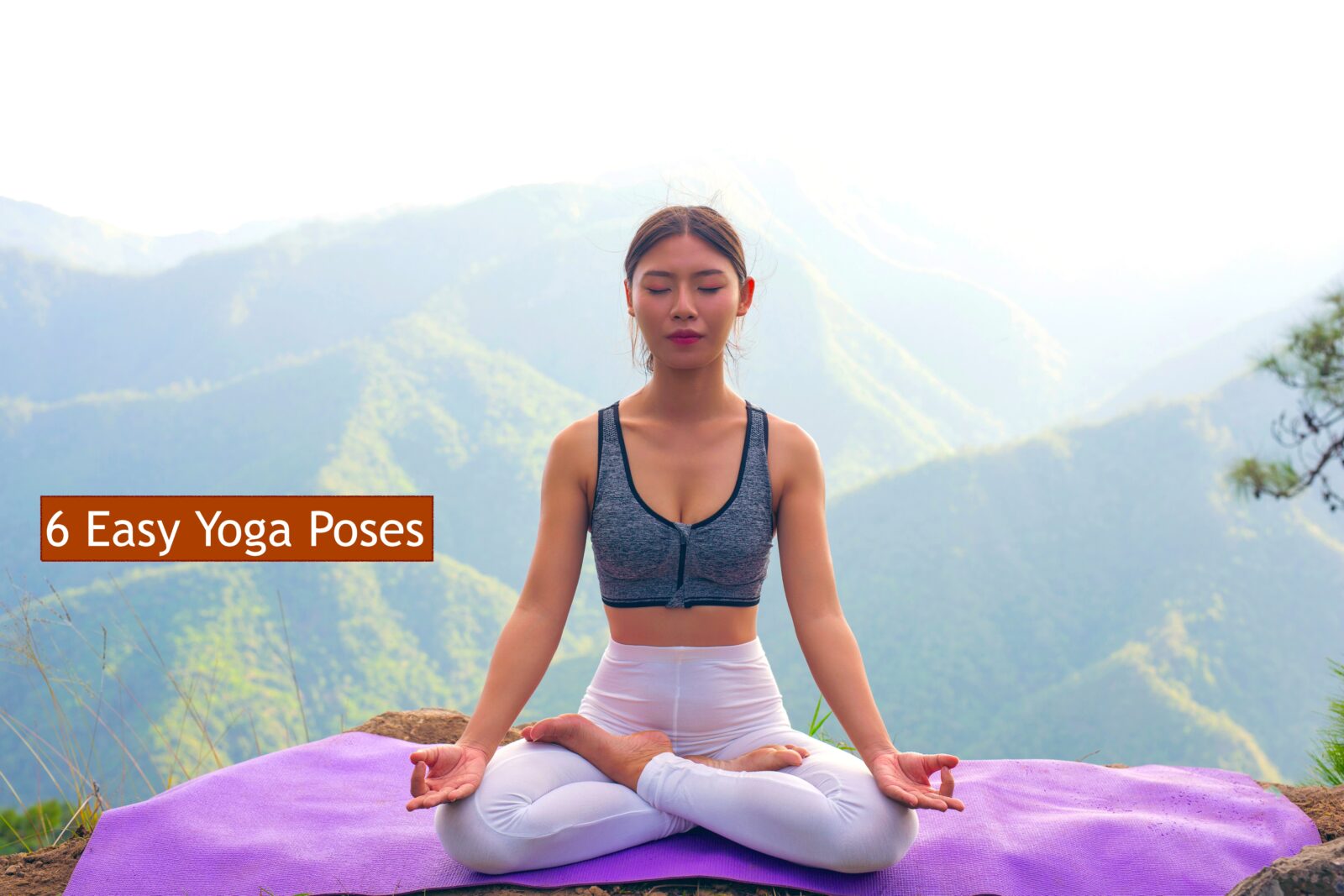
It usually doesn’t happen all at once. First, your shoulders feel heavy. Then your jaw tightens. Your thoughts keep looping, even after the day is technically over. You sit down hoping to unwind, yet your body still feels tense and unsettled.
Eventually, you roll out a yoga mat—not because you’re aiming for a workout, but because you’re craving a pause. Gentle yoga has a way of meeting us exactly in these moments, not by forcing relaxation, but by offering the nervous system something it understands: slow, steady movement, deep breathing, and the feeling of being supported by the ground beneath us.
This isn’t about flexibility or perfect poses. It’s about signaling safety—physically and mentally—so your body can begin to let go.
Why gentle yoga helps calm the nervous system
When life feels overwhelming, your nervous system often stays in a “high alert” state. Your breathing becomes shallow, muscles tighten, and even small stressors feel amplified.
Slow, mindful yoga works in the opposite direction.
Unhurried breathing gently activates the parasympathetic nervous system—the part responsible for rest and recovery. Forward folds and grounded postures encourage the body to soften inward. Simple stretches release physical tension that quietly feeds mental stress.
Nothing dramatic happens. Instead, there’s a gradual shift: breathing deepens, thoughts slow down, and the body remembers how to rest.
That’s the kind of calm these poses are designed to support.
The practice: six poses that invite calm, not effort
Rather than rushing through positions, think of this sequence as a gentle conversation with your body. Each pose leads naturally into the next, allowing tension to unwind little by little.
You don’t need to hold every posture for a set time. Let your breath guide you. Stay where you feel steady; move on when it feels right.
1. Child’s Pose (Balasana) – When the Mind Needs Rest
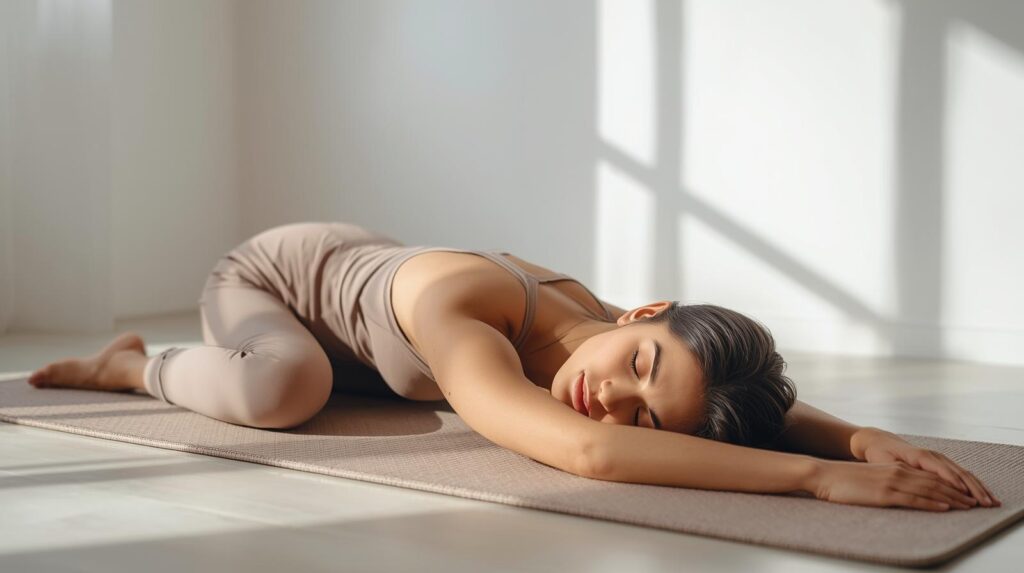
This posture often feels like a physical sigh of relief. Kneeling down and folding forward creates a sense of protection. The front of the body softens, the back expands, and the head lowers—positions that many people instinctively associate with safety and rest.
To settle into it, bring your knees down, sit back toward your heels, and allow your torso to drape forward. Your forehead can rest on the mat, a block, or stacked hands.
What makes this pose especially calming is the gentle pressure of the floor beneath you. It gives the nervous system a clear signal that it’s okay to pause.
As you breathe, focus on the rise and fall of your back. Take a calm inhale, and then release the breath slowly, giving the exhale a bit more time. If your hips or knees feel tight, place a folded blanket under you for support. When you’re ready, slowly lift your torso, keeping the softness you’ve created.
3. Cat-Cow Pose (Marjaryasana-Bitilasana) – Gentle Movement for Stress Release
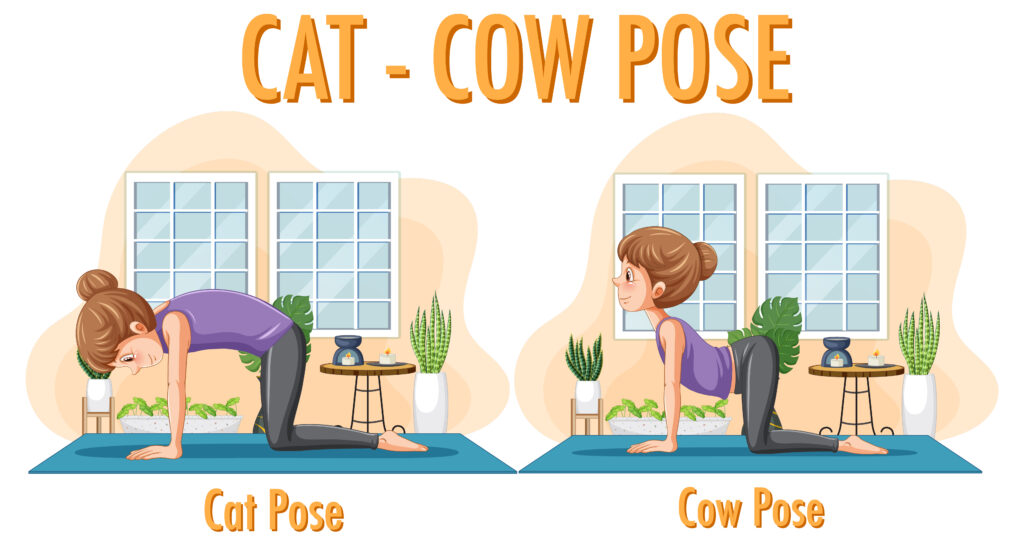
From stillness, gentle movement helps release what’s been held. Cat–cow is less about stretching and more about rhythm. Moving the spine in time with your breath reconnects you to the present moment and eases stiffness that often builds up from sitting or stress.
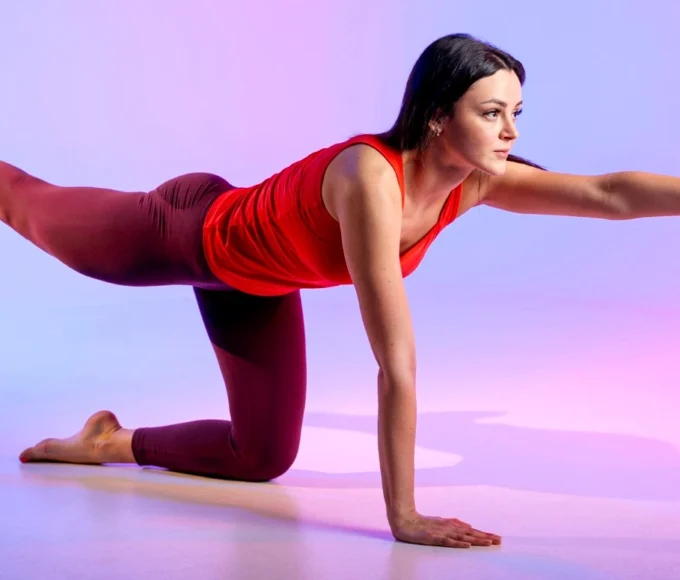
Come onto your hands and knees. As you inhale, let your belly soften, and your chest broaden slightly. As you exhale, round your spine and allow your head to drop.
There’s no need to exaggerate the movement. Small, smooth motions are enough.
The calming effect comes from the predictability: inhale, expand; exhale, release. Over several rounds, the nervous system begins to settle into that rhythm.
If your wrists are sensitive, you can place your forearms on the mat or make loose fists. After a few slow rounds, return to a neutral spine and pause.
3. Downward-Facing Dog (Adho Mukha Svanasana)
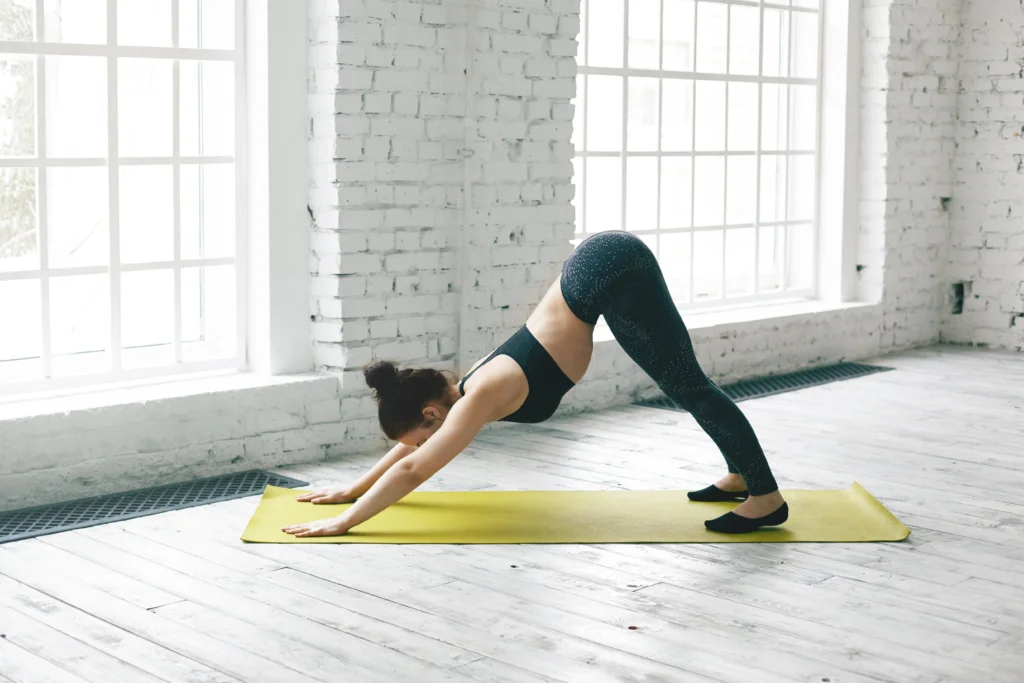
This pose gently shifts perspective—both physically and mentally. With your hips lifted and head below the heart, circulation subtly changes. Many people find this mild inversion refreshing without being overstimulating, especially when approached softly.
From hands and knees, tuck your toes and lift your hips back and up. Let your knees bend as much as needed. The goal isn’t straight legs—it’s a long, comfortable spine.
Press into your hands and imagine your breath travelling down your back with each exhale. The stretch through the shoulders, back, and legs can help release tension stored in areas that often carry stress.
If this feels intense, walk your feet wider or lower your knees to the mat while keeping your hips lifted. Take a few slow breaths, then gently walk your feet forward.
4. Standing Forward Bend (Uttanasana)
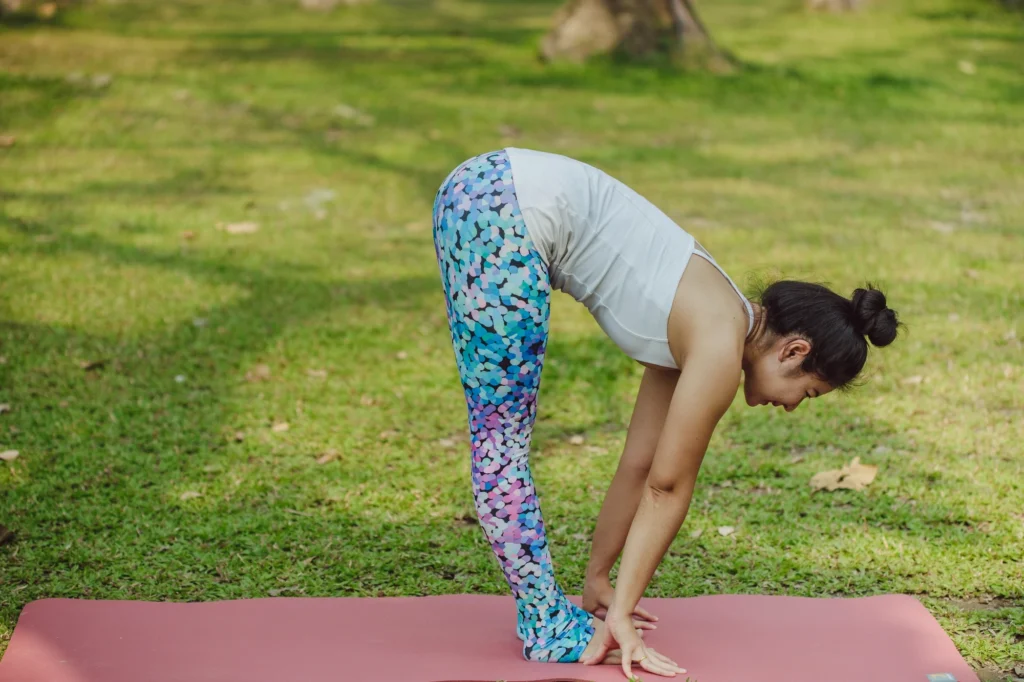
Forward folds naturally quiet the mind. In this posture, gravity does much of the work. As your upper body hangs, the neck releases, the jaw softens, and mental noise often fades into the background.
From standing, hinge at your hips and allow your torso to drape over your legs. Keep your knees bent enough that your lower back feels comfortable.
Let your arms hang loosely or rest your hands on opposite elbows. There’s no need to pull yourself deeper.
This position encourages turning inward, creating a subtle sense of withdrawal from external stimulation. Many people notice their breath becoming slower without trying. When you’re ready to come up, bend your knees and roll up slowly, giving your body time to adjust.
5. Supine Spinal Twist (Supta Matsyendrasana)
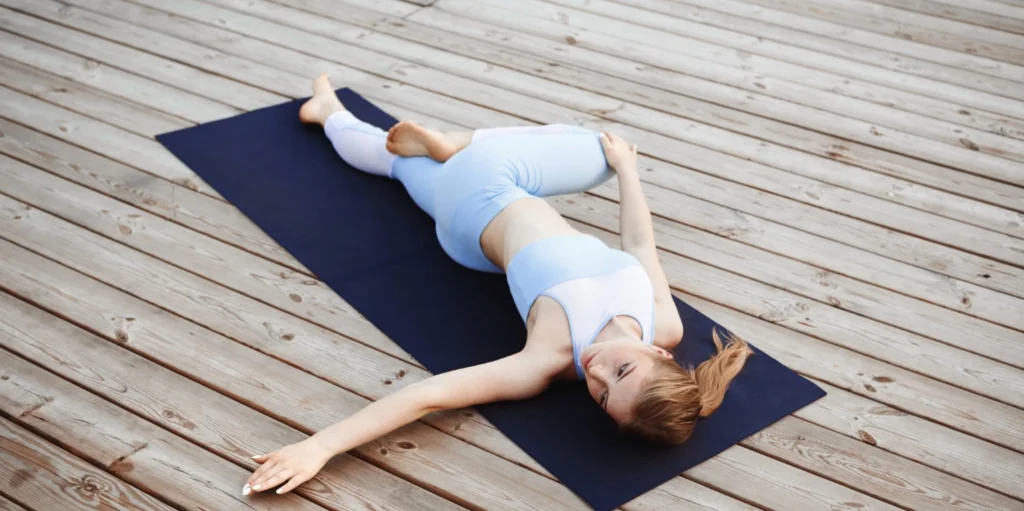
Twists often release tension we didn’t realize we were holding. Lying down adds another layer of relaxation. With the floor supporting your entire body, the nervous system can soften more fully.
Begin on your back with your knees relaxed. Draw one knee in and let it move softly across your body while the other arm extends outward for balance. Let gravity do the twisting—avoid forcing the stretch.
Turn your head in whichever direction feels natural, or keep it neutral if that’s more comfortable.
As you breathe, imagine each exhale helping your body settle deeper into the mat. This pose encourages both physical release and mental unwinding. After a few breaths, switch sides.
6. Closing rest: guided stillness
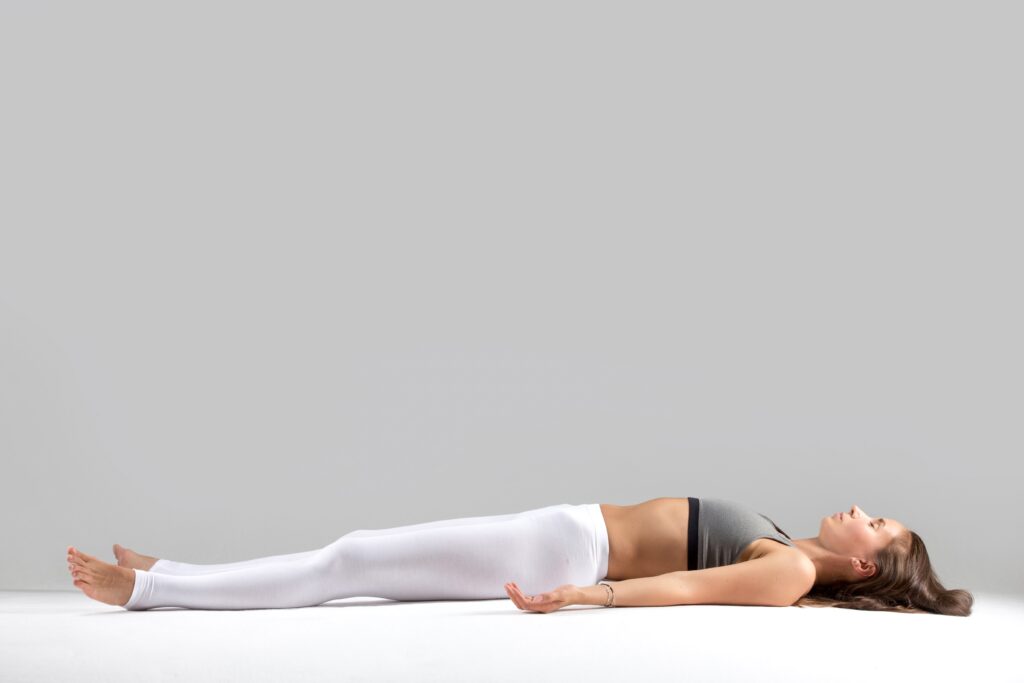
Instead of rushing to finish, allow time for stillness. Lie flat on your back with your arms resting comfortably by your sides or one hand on your chest and the other on your belly. Let your legs fall open naturally.
This quiet pause is where the benefits of the practice begin to integrate. Your nervous system processes the signals of safety you’ve been offering it through movement and breath.
Stay here for three to five minutes. Notice the natural rhythm of your breathing. If thoughts arise, let them pass without engagement. Stillness isn’t empty—it’s restorative.
Tips for beginners approaching calming yoga
If you’re new to yoga, less really is more.
Move slowly, especially when transitioning between poses. Avoid pushing into discomfort or trying to match what you’ve seen online. Flexibility develops over time, but relaxation can happen right away.
Breathing matters more than depth. If your breath feels strained, ease out of the pose.
And remember: pain is a signal to stop, not something to work through.
A calm ending, not a finish line
Relaxation doesn’t always arrive instantly. Sometimes it shows up quietly—your breath feels fuller, your shoulders drop, your thoughts slow just enough.
These poses aren’t meant to fix everything. They simply create space. And in that space, your nervous system can begin to settle on its own terms.
FAQs:
Can yoga really help calm anxiety?
Gentle yoga can support relaxation by slowing breathing and easing physical tension. While it’s not a replacement for professional care, many people find it helps them feel more grounded.
How long should I hold each pose?
There’s no fixed rule. Stay for a few steady breaths, or as long as the pose feels supportive rather than effortful.
Is this sequence safe for beginners?
Yes, these poses are commonly practiced by beginners. Using props and modifying positions helps keep the experience comfortable.
Can I do this before bed?
Absolutely. Gentle yoga like this is often well-suited for evening practice, as it encourages the body to wind down.
Disclaimer
This article is for general wellness information only and does not replace professional medical advice. If you have injuries, chronic pain, or medical conditions, consult a qualified healthcare professional before starting a new exercise routine.






Leave a comment