




You may have heard that walking in the morning burns more fat—but is that true? Or is it just a fitness idea that sounds right but does not really impact your real results that much?
At first, it feels like waking up and walking on an empty stomach is a perfect fat-loss plan. But in reality, weight loss is not controlled by one “perfect time”. It also depends on your daily habits, consistency, and your body’s response, and most people do not understand that timing only works when it matches your routine.
⚡ Quick Answer
The best time for weight loss can be morning, when fat burning is slightly higher, or evening, when consistency and digestion are better. The real point is that the most effective time is the one you can follow every day for 30–45 minutes without skipping, because consistency matters more than timing.
Does Timing Really Matter for Weight Loss?
At first, it feels like choosing the right time will make weight loss faster. But in reality, the basis of weight loss is something else. It is not just the time of walking but also your routine, calories burnt, and consistency that decide it. Most people do not understand that timing only supports the process and is not the main reason.
Walking helps you burn calories and stay active, but fat loss happens when you regularly burn more calories than you consume.
Timing affects things like the following:
- Energy during the walk
- How the body uses fat or carbs
- Blood sugar balance
- Stress and recovery
- Routine consistency
How Long Should You Walk Daily Actually to Lose Weight?
Many people start walking with a weight loss goal, but they often underestimate how important duration is. Walking for a short time can improve mood, but for fat loss, a consistent and structured approach is necessary, and how long you walk directly affects how many calories you burn and how your body adapts.
For effective weight loss, your daily walking duration should be:
- 30 minutes minimum for beginners
- 45–60 minutes for consistent fat loss
- 60+ minutes for fast and visible results
Even 30 minutes of daily walking creates a calorie deficit, but when you increase it to 45–60 minutes, the fat-burning potential increases a lot. Over time, the body becomes efficient, and longer walks help maintain progress.
The most important thing is to stay consistent daily instead of doing too much in one day, and a routine always performs better.
Best Walking Speed and Intensity for Maximum Fat Burn
Just walking longer is not enough if your walking intensity is low. Many people walk at a normal or casual pace and then expect fat loss results. But in reality, fat loss happens when your body gets a slight challenge. When you walk at the right speed, your heart rate increases, which improves both calorie burn and metabolism—simply put, the better the intensity, the better the results.
For maximum fat burn, your walking intensity should be:
- Brisk pace (you can talk, but cannot sing comfortably)
- Speed around 5–6 km/h
- Light sweating starts within 10–15 minutes
- Heart rate increases slightly, but you can continue that pace
Slow walking is good for relaxation, but brisk walking signals the body to use stored fat for energy, and this is especially important if your goal is not just to stay active but also real fat loss.
Another important point—maintaining a consistent pace is more effective than changing speed again and again. This helps the body adapt more effectively and yields consistent results.
Morning Walk: Does It Burn More Fat?
At first, it feels like morning walking is the best because the body is in a fasting state, and because of this, it feels like fat burn will automatically be higher. In reality, this is somewhat true, but not the full story, and most people do not understand that just focusing on fat burn is not enough.
In the morning, insulin levels are low, and because of this, the body uses stored fat for energy.
Benefits of morning walking:
- Low insulin increases fat burning
- The body uses stored fat
- Metabolism starts early
- Sunlight improves body clock
But if you feel low energy in the morning, then you may not stay regular, so this advantage also becomes less.
Walking Before vs After Eating: What Burns More Fat?
This is a very common question: whether walking before eating is better or walking after eating is right. Both options have their own benefits, but the final result depends on your goal and your body’s response. The simple point is that both have different roles, and if used correctly, both can be useful.
You can understand the comparison like this:

Walking before eating (empty stomach):
- The body uses more fat for energy
- Glycogen levels are low, which pushes fat burning
- Good option for morning routine
Walking After eating:
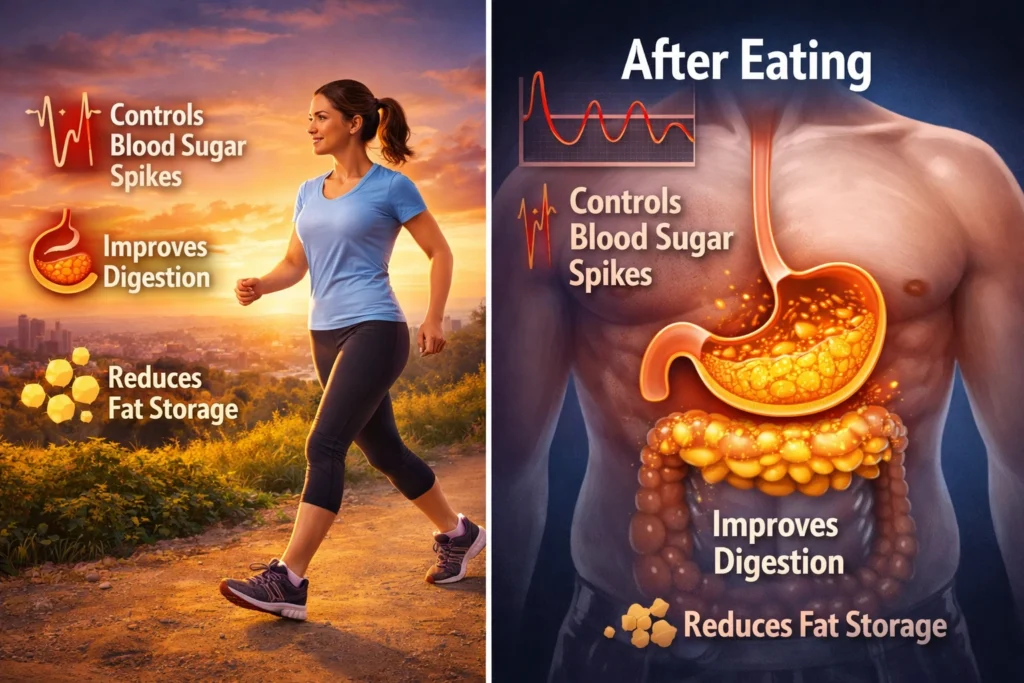
- Controls blood sugar spikes
- Improves digestion
- Helps reduce fat storage over time
Walking on an empty stomach helps the body use stored fat faster, but walking after eating is more beneficial for long-term metabolic health. The best approach is to balance both so that you get the benefits of fat loss and overall health.
Walking Immediately After Meals: Benefits for Fat Loss & Digestion
Walking right after eating is often underestimated, but it is a powerful habit for both digestion and weight control. Instead of sitting or lying down, walking a little helps the body process food.
Its main benefits are the following:
- Better digestion and less bloating
- Reduced blood sugar spikes
- Reduced fat storage
- Improved metabolism
A 10–30 minute walk after lunch or dinner helps muscles use glucose, which prevents extra sugar from converting into fat. With time, this simple habit can lead to meaningful results. Light walking is also enough; it is not always necessary to be intense.
Evening Walk: Hidden Weight Loss Benefits
Many people think that evening walks are not as effective as morning walks. But in reality, they are very useful in real life. After a full day, the body has energy, which allows you to walk at a better pace, and most people do not understand that consistency is the biggest factor in long-term fat loss.
Benefits of evening walk:
- Better performance due to more energy
- Reduces daily stress
- Improves digestion
- Easier to maintain routine
Evening walks reduce the stress hormone cortisol, which indirectly helps in fat loss.
The Science of Fat Burn in Walking
People often think that fat burning is the main goal. But in reality, total calories burnt are more important. The body does not just count one walk but your full day’s activity. So if you stay active throughout the day, overall fat loss becomes better.
Mainly, the body uses two types of energy sources:
- Carbohydrates
- Fat
Which fuel is used depends on your walking intensity and duration.
During walking:
- At low intensity, the body uses more fat
- Low insulin levels increase fat burning
- Longer duration increases total calories burned
Simple point: not just fat burn, but total calories burned is more important.
Sample Daily Walking Routine for Weight Loss
Instead of finding a perfect time, following a simple routine is more useful. People think long walks are best, but in reality, short and consistent walks also give strong results.
Routine options:
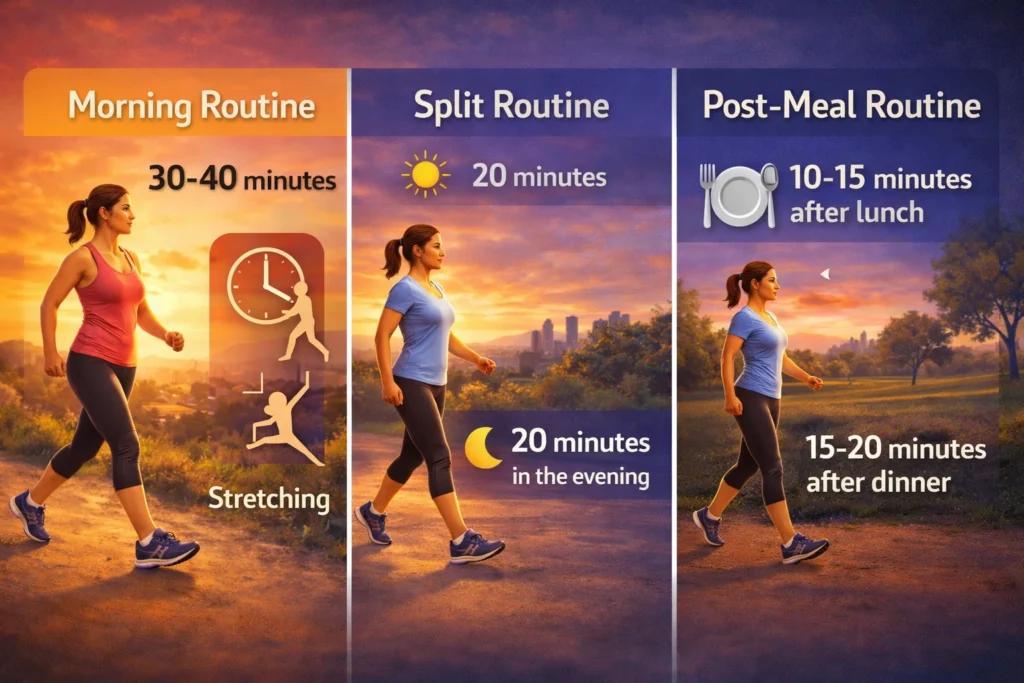
Morning routine:
- 30–40 minute morning walk
- Light stretching
Split routine:
- 20 minutes in the morning
- 20 minutes in the evening
Post-meal routine:
- 10–15 minutes after lunch
- 15–20 minutes after dinner
Combining short walks can also give good results.
What Happens If You Walk 1 Hour Every Day for a Month?
Walking for 1 hour daily may seem simple, but if done consistently, the results are very powerful. In one month, noticeable changes start to appear in the body.
You can expect:
- Visible fat loss and inch reduction
- Improved stamina and energy levels
- Better digestion and sleep
- Less stress and a clear mind
An average 1-hour brisk walk can burn 200–300 calories (depending on weight and speed). In 30 days, this creates a strong calorie deficit that gives visible results.
The biggest factor is not intensity but consistency.
Common Walking Mistakes That Slow Down Weight Loss
A simple habit like walking can also become ineffective if done the wrong way. Many people walk regularly but do not get results because small mistakes keep adding up.
Common mistakes are:
- Walking too slowly without increasing intensity
- Inconsistent routine (skipping regularly)
- Very short-duration walks
- Poor posture and lack of focus
- Depending only on walking without diet control
These mistakes reduce the impact of your effort. Walking is only effective when done with the right approach. Paying attention to speed, duration, and consistency is important. Fixing small mistakes can sometimes be more powerful than increasing workout time.
When Should You Walk?
By now, it is clear that there is no single perfect answer. The ideal timing can vary from one person to another. The most important thing is that you can stay consistent at that time.
- Morning walks are slightly better for fat burning
- An evening walk is better for consistency and stress
- Walking after meals is best for digestion
The best time is the one you can follow every day.
Final Takeaway
You do not need a complicated plan. Simple habits work; you just need to follow them regularly.
- Walk 30–45 minutes daily
- Choose a fixed time
- Maintain consistency
This simple habit slowly improves your energy, fat loss, and overall health.
FAQs:
Is walking in the morning or evening more effective for weight loss?
Morning walking can slightly increase fat burning because the body uses stored fat for energy when you are in a fasting state. However, evening walking often leads to better consistency and performance. The best option is the one you can follow daily without skipping.
Should you walk before or after eating to lose weight?
Walking before eating helps your body use stored fat for energy, while walking after eating helps control blood sugar and reduces fat storage. Both are effective in different ways, so combining them in your routine gives better long-term results.
How long should I walk after eating for weight loss?
A 10–30 minute walk after meals is enough to improve digestion and reduce blood sugar spikes. Even a short walk after lunch or dinner can help prevent fat storage and support steady weight loss over time.
Can walking 30 minutes a day really help lose weight?
Yes, walking 30 minutes daily can create a calorie deficit, which is important for weight loss. While results may be slow at first, staying consistent can lead to noticeable fat loss and better overall health over time.
Is walking on an empty stomach safe and effective?
Walking on an empty stomach is generally safe for most people and may increase fat burning. However, if you feel low energy or dizzy, it is better to eat something light before walking to maintain consistency and avoid discomfort.









Leave a comment