



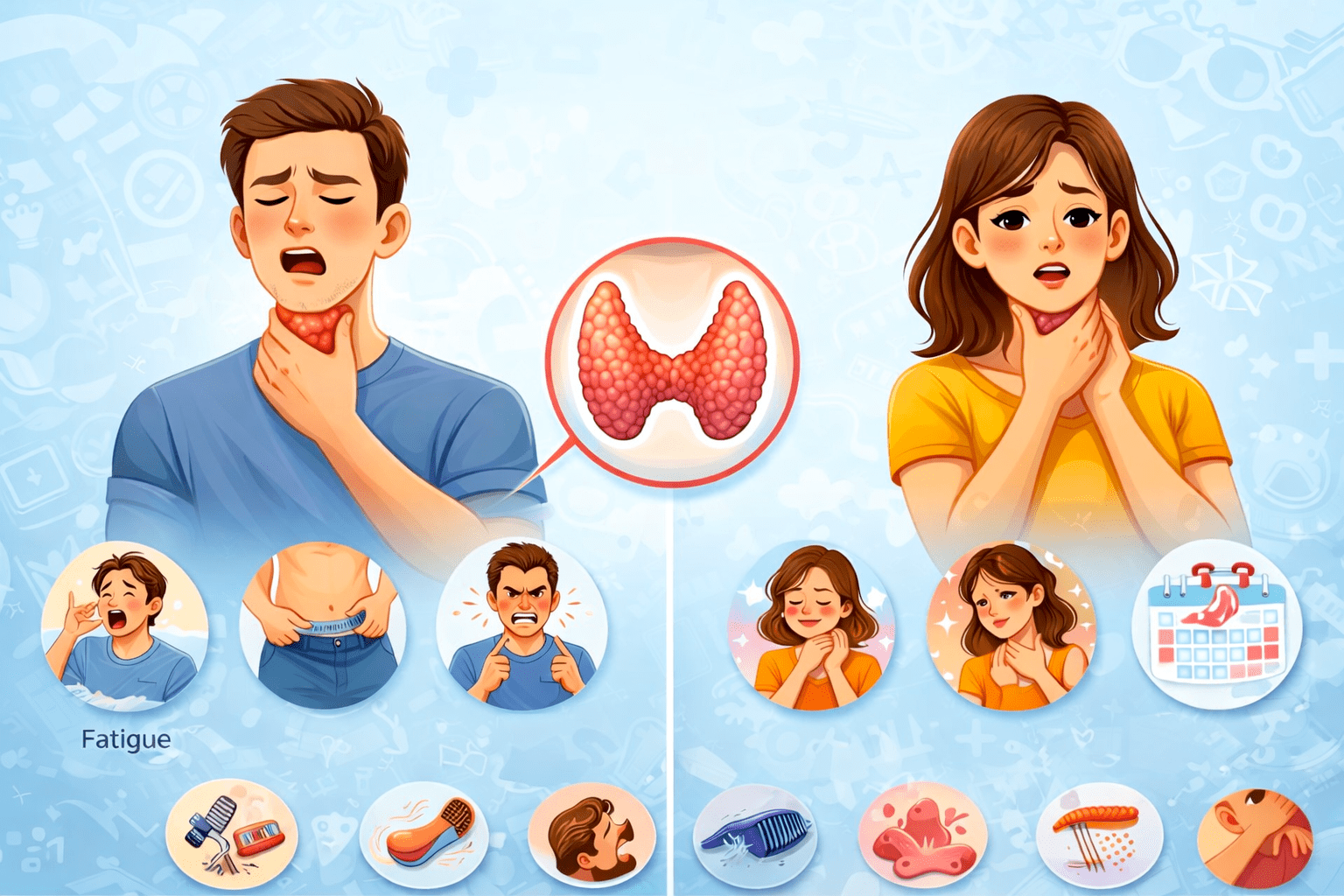
The thyroid gland is a small, butterfly-shaped organ located at the front of the neck, just below the Adam’s apple. Although it is small, it plays a major role in regulating many essential processes in the body. The thyroid produces hormones that influence metabolism, energy levels, heart rate, body temperature, and how efficiently the body uses nutrients.
When the thyroid is working normally, these hormones help keep the body balanced and functioning smoothly. But when the gland produces too much or too little hormone, a wide range of symptoms can develop.
Thyroid disorders are quite common worldwide. However, the symptoms often develop slowly and can easily be mistaken for everyday issues such as stress, ageing, fatigue, or lifestyle changes. Because of this, many people live with thyroid problems for months or even years before realising something is wrong. Understanding the common symptoms can help people recognise when it may be time to seek medical advice.
What the Thyroid Gland Does
The thyroid is responsible for making two important hormones: thyroxine (T4) and triiodothyronine (T3). These hormones travel through the bloodstream and affect nearly every organ in the body.
Their primary role is to regulate metabolism, which refers to the process the body uses to convert food into energy. When thyroid hormone levels are balanced, the body maintains a steady energy supply and keeps many systems running properly.
Thyroid hormones help regulate several key functions, including:
- Metabolic rate: How quickly the body burns calories for energy
- Body temperature: Helping maintain normal internal temperature
- Heart rate: Affecting the pace at which the heart pumps blood.
- Energy levels: Supporting physical and mental energy
- Digestion: Affecting how quickly food moves through the digestive system
- Brain function: Supporting memory, concentration, and mood
The thyroid does not work alone. It is controlled by the pituitary gland, a small gland located in the brain. The pituitary releases a hormone called thyroid-stimulating hormone (TSH), which signals the thyroid to produce the right amount of T3 and T4.
When this system is balanced, the body functions normally. When hormone levels become too high or too low, symptoms may begin to appear.
Types of Thyroid Problems
Most thyroid disorders fall into two main categories depending on whether the thyroid is underactive or overactive.
Hypothyroidism (Underactive Thyroid)
Hypothyroidism refers to a situation where the thyroid gland is underactive and produces too little thyroid hormone. This slows down many processes in the body.
As metabolism slows, people may feel unusually tired, gain weight more easily, and experience sluggish physical and mental function. Hypothyroidism tends to develop gradually, which is one reason symptoms can be overlooked.
Common causes include autoimmune conditions, certain medications, iodine deficiency, or previous thyroid treatment.
Hyperthyroidism (Overactive Thyroid)
Hyperthyroidism is the opposite condition. In this case, the thyroid produces too much hormone, which speeds up the body’s metabolic processes.
This can cause symptoms such as rapid heartbeat, weight loss despite normal eating habits, anxiety, and excessive sweating. The body essentially operates at a faster pace than normal.
Hyperthyroidism is often caused by autoimmune diseases such as Graves’ disease, thyroid nodules, or inflammation of the thyroid gland.
Common Symptoms of Thyroid Problems
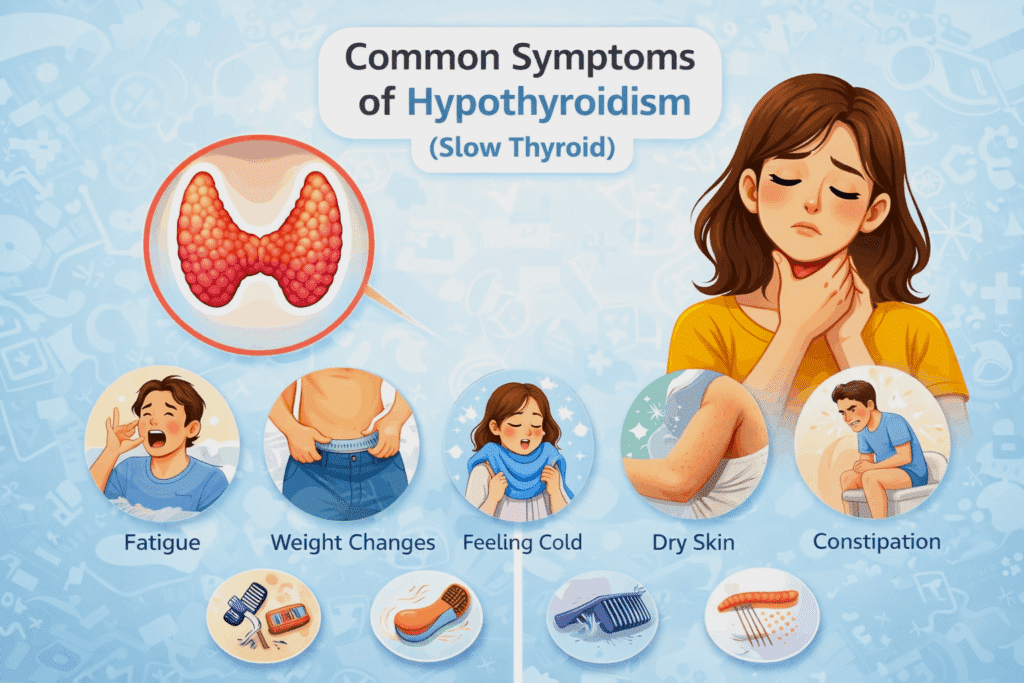
Thyroid symptoms can vary widely depending on whether hormone levels are too low or too high. Some people experience only a few symptoms, while others notice several changes over time.
Hypothyroidism Symptoms
An underactive thyroid slows down the body’s metabolism. As a result, many symptoms are related to reduced energy and slower body processes.
Persistent Fatigue
One of the most common symptoms of hypothyroidism is ongoing fatigue. Even after getting a full night’s sleep, people may feel unusually tired or lack the energy to complete daily activities.
Weight Gain
When metabolism slows, the body burns fewer calories. This can lead to gradual weight gain, even when eating habits remain the same.
Cold Intolerance
Many people with an underactive thyroid notice they feel cold more easily than others. They may feel chilled in environments where others feel comfortable.
Dry Skin and Hair Thinning
Low thyroid hormone levels can affect skin and hair health. Skin may become dry or rough, and hair may become thinner or more brittle than usual.
Constipation
Slower metabolism can also slow digestion. As a result, people with hypothyroidism may experience constipation or less frequent bowel movements.
Memory or Concentration Problems
Some individuals report difficulty focusing, slower thinking, or mild memory problems. This symptom is sometimes described as “brain fog.”
Depression or Low Mood
Changes in thyroid hormone levels can influence brain chemistry. This may contribute to feelings of sadness, low motivation, or depression.
Common Symptoms of Hyperthyroidism (Fast Thyroid)
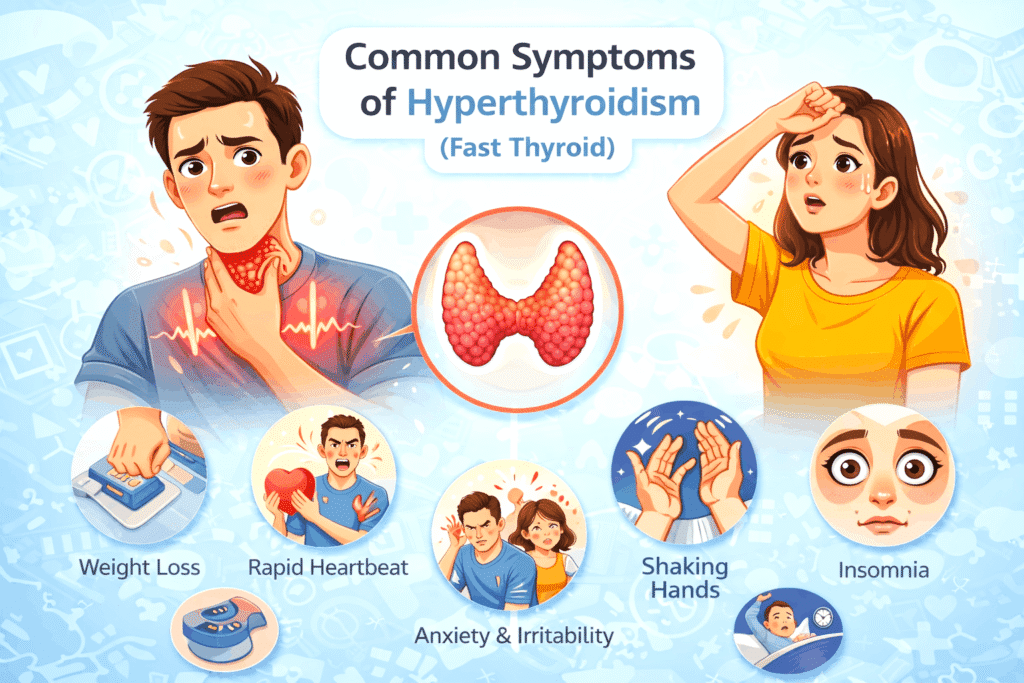
In hyperthyroidism, the body’s metabolism becomes overactive. This can produce symptoms related to increased energy use and overstimulation of body systems.
Unexplained Weight Loss
Despite normal or even increased appetite, many people with hyperthyroidism lose weight because the body burns calories faster than usual.
Rapid Heartbeat or Palpitations
An overactive thyroid can cause the heart to beat faster or irregularly. Some people feel a noticeable pounding or fluttering sensation in the chest.
Anxiety or Irritability
Excess thyroid hormone can overstimulate the nervous system. This may lead to feelings of nervousness, irritability, or restlessness.
Heat Intolerance
People with hyperthyroidism may feel uncomfortable in warm temperatures and may prefer cooler environments.
Excessive Sweating
Increased metabolism can raise body temperature and trigger more frequent sweating.
Tremors
Small, involuntary shaking movements—especially in the hands—may occur due to increased nervous system activity.
Trouble Sleeping
Many people with hyperthyroidism experience insomnia or difficulty staying asleep because the body remains in an overly stimulated state.
Physical Signs That May Appear in Both Conditions
Some physical changes may occur in either hypothyroidism or hyperthyroidism.
Neck Swelling (Goiter)
A visible swelling at the base of the neck can occur when the thyroid gland enlarges. This condition is known as a goiter and may develop in both underactive and overactive thyroid disorders.
Muscle Weakness
Thyroid hormone imbalances can affect muscle strength. Some people experience muscle fatigue or weakness, especially in the arms and legs.
Irregular Menstrual Cycles
Hormonal changes caused by thyroid disorders may disrupt menstrual cycles. For some people, periods may start to vary—flow can become heavier or lighter, and the timing between cycles may shift.
Changes in Hair and Skin
Hair texture and skin condition may change with thyroid disorders. Hair may become thin or brittle, and skin may become dry or unusually warm depending on the condition.
Why Thyroid Symptoms Are Often Misunderstood
One of the greatest challenges with thyroid disorders is that their symptoms can resemble many common health issues.
For example:
- Fatigue may be blamed on stress or lack of sleep
- Weight gain may be linked to diet or ageing
- Anxiety may be attributed to daily life pressures
- Memory problems may be mistaken for normal ageing
Because thyroid symptoms often develop gradually, people may adjust to the changes without realizing they are related to a medical condition.
In some cases, individuals experience symptoms for a long time before a routine medical test reveals a thyroid imbalance.
When to See a Doctor
Anyone who experiences persistent symptoms that cannot be easily explained should consider discussing them with a healthcare professional. A doctor may recommend simple blood tests to evaluate thyroid function. Common diagnostic tests include:
TSH Blood Test
The thyroid-stimulating hormone (TSH) test is usually the first step in evaluating thyroid health. It measures the amount of TSH produced by the pituitary gland.
High or low TSH levels can indicate whether the thyroid is underactive or overactive.
T3 and T4 Hormone Tests
These tests measure the levels of thyroid hormones circulating in the bloodstream. They help confirm the diagnosis and determine the severity of the condition.
If thyroid disease is suspected, additional tests such as imaging or antibody testing may sometimes be recommended.
Early diagnosis can make treatment more effective and help prevent complications.
Lifestyle Habits That Support Thyroid Health
Although thyroid disorders often require medical treatment, certain lifestyle habits can support overall thyroid health and well-being.
Balanced Nutrition
Including nutrient-rich foods like fruits, vegetables, lean protein, and healthy fats in your daily meals may help keep hormones more balanced. Nutrients such as iodine, selenium, and zinc are particularly important for thyroid function.
Regular Physical Activity
Exercise helps maintain healthy metabolism, improves energy levels, and supports cardiovascular health.
Stress Management
Chronic stress can affect hormone balance. Relaxation techniques such as meditation, breathing exercises, or yoga may help reduce stress levels.
Adequate Sleep
Quality sleep is essential for hormonal regulation and overall health. Experts often suggest that adults aim for around seven to nine hours of sleep every night.
Maintaining a healthy lifestyle cannot cure thyroid disorders, but it may help support treatment and improve general health.
Quick Symptom Summary Table
| Symptom | Hypothyroidism | Hyperthyroidism |
|---|---|---|
| Fatigue | Common | Sometimes |
| Weight changes | Weight gain | Weight loss |
| Temperature sensitivity | Cold intolerance | Heat intolerance |
| Heart rate | Slower heart rate | Rapid heartbeat |
| Mood changes | Depression or low mood | Anxiety or irritability |
| Digestion | Constipation | Faster digestion |
| Sleep | Excessive tiredness | Trouble sleeping |
| Sweating | Reduced sweating | Excessive sweating |
Conclusion
The thyroid gland plays an essential role in regulating metabolism, energy levels, heart function, and many other processes throughout the body. When thyroid hormone levels become too high or too low, a variety of symptoms can appear.
Because these symptoms often resemble common issues such as fatigue, stress, or aging, thyroid disorders can sometimes go unnoticed for long periods of time.
Recognizing patterns—such as persistent fatigue, unexplained weight changes, heart palpitations, or temperature sensitivity—can help individuals identify when something may be affecting their thyroid health.
If symptoms persist or interfere with daily life, consulting a healthcare professional is an important step. Simple blood tests can usually determine whether the thyroid is functioning properly and guide appropriate treatment if necessary.
Medical Disclaimer:
This article is intended for informational and educational purposes only. It should not be used as a substitute for professional medical advice, diagnosis, or treatment. Always consult a qualified healthcare provider with any questions regarding a medical condition or health concerns.











3 Comments