




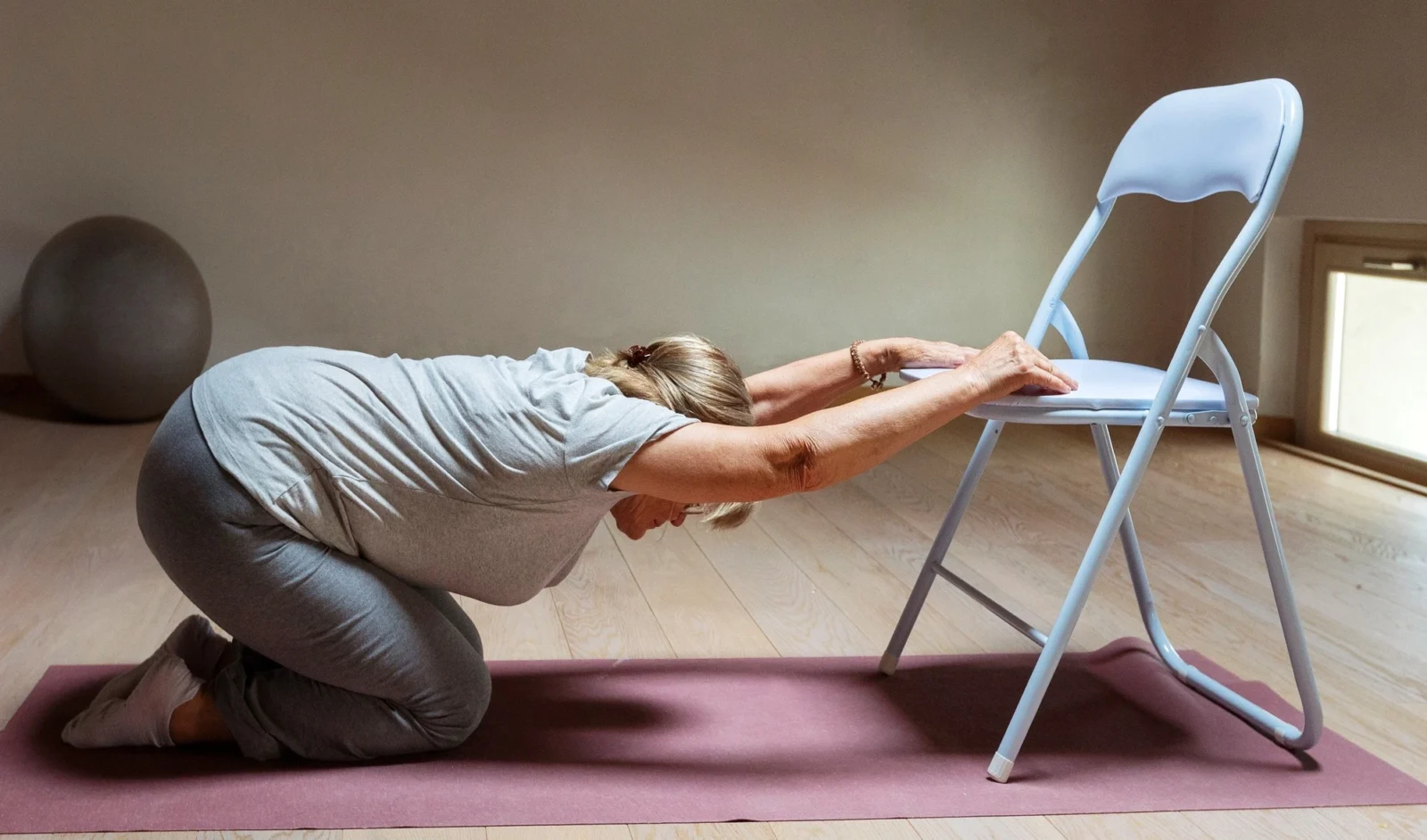
Gentle lower back stretching at home can help improve mobility and ease everyday tightness caused by sitting, inactivity, or daily strain. The safest approach is slow, controlled movements that focus on flexibility rather than force. Stretching should feel comfortable, never sharp, and is most effective when done consistently.
Why the lower back often becomes tight
Lower back tightness is very common, especially in adults who spend long hours sitting or moving very little during the day.
One of the main reasons is a sedentary lifestyle. Sitting for extended periods shortens hip muscles and reduces movement through the spine, which can leave the lower back feeling stiff.
Another factor is weak supporting muscles. When the muscles around the hips, core, and glutes are not strong or active enough, the lower back often takes on extra strain.
Finally, reduced mobility plays a role. If joints and muscles are rarely moved through their full range, flexibility gradually decreases. Over time, this can make everyday movements feel harder than they should.
Stretching does not “fix” the back on its own, but it can support better movement and comfort when done safely.
How stretching supports lower back mobility
The lower back works closely with the hips, pelvis, and upper legs. Tightness in any of these areas can affect how freely the lower back moves.
Stretching helps by:
- Gently lengthening muscles that have become stiff
- Encouraging blood flow to the area
- Improving awareness of posture and movement
A good lower back stretch should feel slow and controlled, not forced. Stretching is most helpful when combined with regular movement and light strengthening over time.
6 safe lower back stretches to do at home
These stretches are suitable for many adults with a tight lower back. They should be done on a comfortable surface, such as a mat or carpet.
Stop any stretch that causes pain, tingling, or sharp discomfort.
1. Knee-to-chest stretch
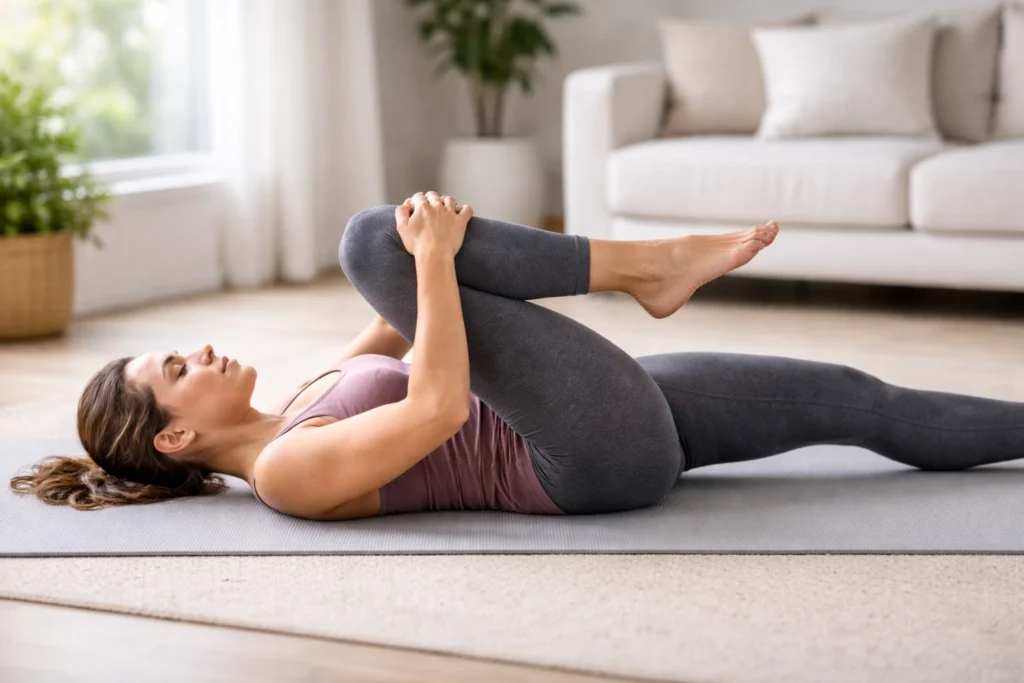
How to do it:
Lie on your back with both knees bent and feet flat on the floor. Gently bring one knee towards your chest, holding it with both hands. Keep the other foot on the floor. Switch sides.
Duration:
Hold for 20–30 seconds on each side.
Common mistakes:
- Pulling the knee forcefully
- Lifting the head or shoulders off the floor
Who should avoid it:
People with recent hip or spinal surgery should seek advice before trying this stretch.
2. Both knees to chest

How to do it:
Lie on your back and slowly bring both knees towards your chest. Hold behind the thighs or over the shins, keeping the neck relaxed.
Duration:
20–30 seconds, 1–2 times.
Common mistakes:
- Rocking aggressively
- Holding the breath
Who should avoid it:
Anyone with severe lower back pain that worsens with bending should skip this stretch.
3. Cat–cow movement

How to do it:
Start on hands and knees. As you breathe in, gently lower your belly and lift your chest. As you breathe out, round your back and tuck your chin slightly.
Duration:
Move slowly for 5–10 controlled repetitions.
Common mistakes:
- Moving too quickly
- Forcing the range of motion
Who should avoid it:
Those with wrist pain may need to modify or use fists for support.
4. Child’s pose

How to do it:
From hands and knees, sit back towards your heels and stretch your arms forward. Let your head rest comfortably.
Duration:
Hold for 30–60 seconds.
Common mistakes:
- Forcing hips down if they do not reach the heels
- Holding tension in the shoulders
Who should avoid it:
People with knee issues may need padding or an alternative stretch.
5. Seated spinal twist (gentle)

How to do it:
Sit upright in a chair. Place one hand on the back of the chair and gently rotate your torso. Keep both feet flat on the floor.
Duration:
15–20 seconds each side.
Common mistakes:
- Twisting too far
- Slouching during the movement
Who should avoid it:
Anyone with spinal instability or a recent injury should avoid twisting movements.
6. Pelvic tilt

How to do it:
Lie on your back with knees bent. Gently flatten your lower back into the floor by tightening your abdominal muscles, then relax.
Duration:
10 slow repetitions.
Common mistakes:
- Holding the breath
- Pushing through pain
Who should avoid it:
This is usually safe for most people, but stop if discomfort increases.
Morning vs evening stretching
Morning stretching may help reduce stiffness after sleep, especially if your back feels tight when you wake up. Keep movements gentle, as muscles may feel less flexible early in the day.
Evening stretching can feel more comfortable because muscles are warmer from daily activity. Many people find evening sessions help them relax before bed.
Both options are effective. The best time is the one you can do consistently.
When stretching may not be appropriate
Stretching is not always the right choice.
You should avoid stretching and seek advice if you experience:
- Sharp or worsening pain
- Numbness or tingling down the legs
- Loss of bladder or bowel control
- Pain following a fall or accident
In the UK, it is sensible to speak to a GP if lower back discomfort persists, worsens, or interferes with daily life. Stretching should never replace professional assessment when symptoms are concerning.
How long it usually takes to notice improvement
For many people, gentle stretching may start to feel helpful within one to two weeks when done regularly. Noticeable improvements in mobility often take several weeks.
Progress is usually gradual. Stretching works best as part of a routine that includes regular movement, walking, and good posture habits.
Consistency matters more than intensity.
FAQs:-
How often should I stretch my lower back?
Most people benefit from gentle stretching once or twice a day, especially if they sit for long periods. Consistency matters more than duration.
Is it safe to stretch a tight lower back?
Stretching is generally safe when movements are slow and comfortable. Sharp pain, sudden discomfort, or worsening symptoms are signs to stop.
Should I stretch before or after walking or exercise?
Light stretching after movement often feels easier, as muscles are warmer. Before activity, keep movements gentle and controlled.
Can stretching replace other lower back exercises?
Stretching supports flexibility, but everyday movement and basic strength also matter for long-term comfort.
Disclaimer
This article is for general information only and does not replace professional medical advice. Individual needs vary. Consult a GP or qualified health professional if symptoms persist or worsen.
Latest Posts: –
- What Happens to Your Skin When You Add a 5-Seed Trail Mix to Your Daily Diet
- Jogging vs Brisk Walking: Which Is Better for Weight Loss?
- 7 Homemade Drinks That May Help Improve Iron Deficiency and Boost Energy Levels
- Drinking Olive Oil Daily: Real Benefits, Side Effects & What Experts Want You to Know
- What are people thinking about Zepbound and sleep apnea?








Leave a comment