




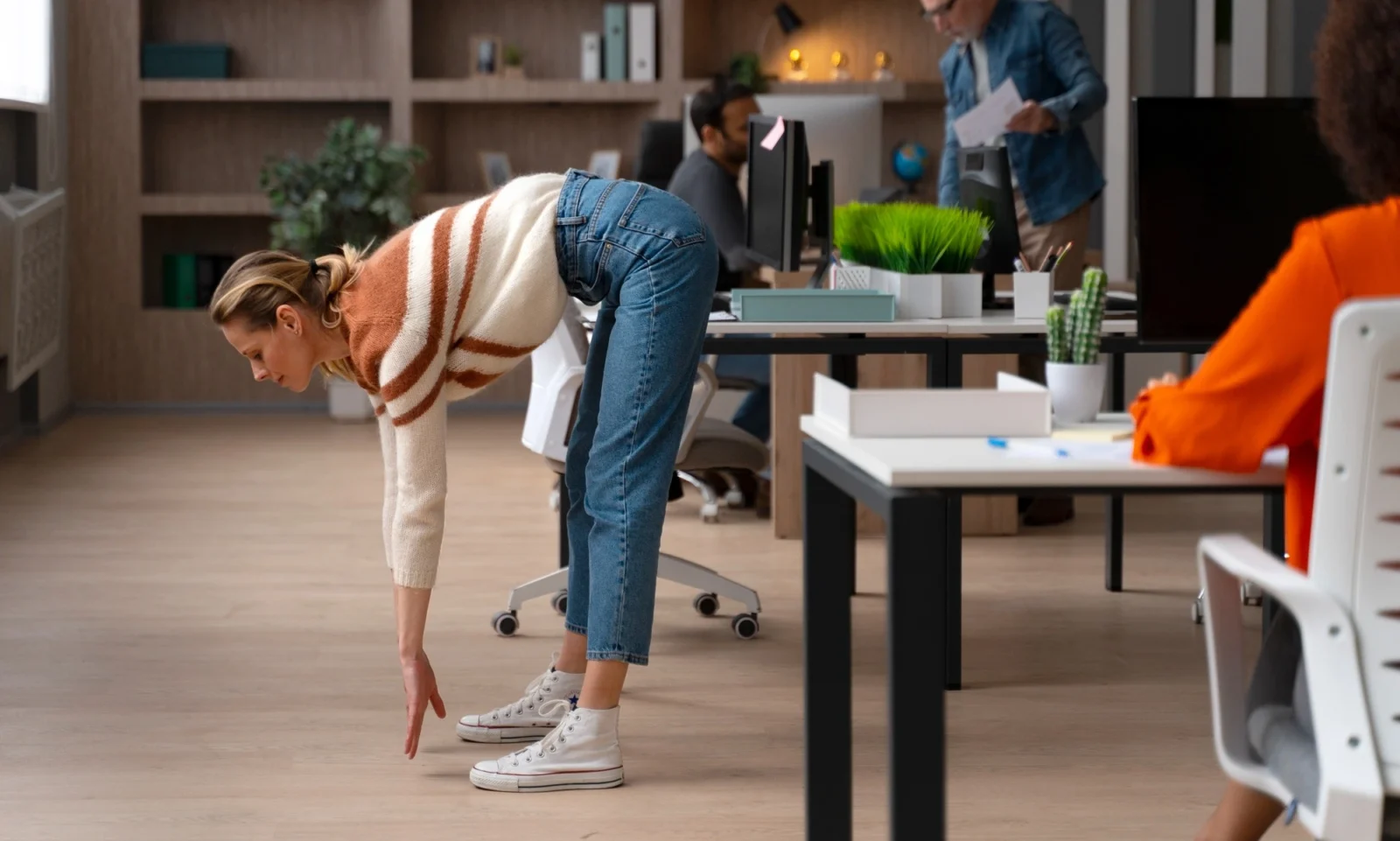
For those who work at a desk, the most effective lower back stretches are gentle movements that counteract the effects of long periods of sitting. Simple stretches like seated spinal twists, hip flexor stretches, kites and back extensions can help mobility, ease stiffness, and help the lower back move more comfortably throughout the day.
Why sitting tightens the lower back
Spending many hours seated places the lower back in a fixed position. Over time, this limits natural movement and places extra strain on surrounding muscles.
Common reasons desk work affects the lower back include:
- Reduced hip mobility, especially tight hip flexors
- Inactive glutes, which normally support the pelvis
- Sustained posture strain, often with a rounded lower back
- Limited spinal movement, as sitting discourages rotation and extension
When these patterns repeat daily, stiffness tends to build gradually rather than suddenly.
Signs your desk job is affecting your lower back
Lower back tightness from sitting often shows up in subtle ways before it becomes persistent.
You may notice:
- Stiffness when standing up after long meetings
- A dull ache after commuting or driving
- Reduced flexibility when bending or twisting
- Discomfort after sitting for more than an hour
- Relief when walking or gently moving
These signs usually indicate reduced mobility rather than injury.
7 simple lower back stretches for desk workers
These stretches are designed for adults who sit for long hours and want safe, gentle movement. None should feel pain.
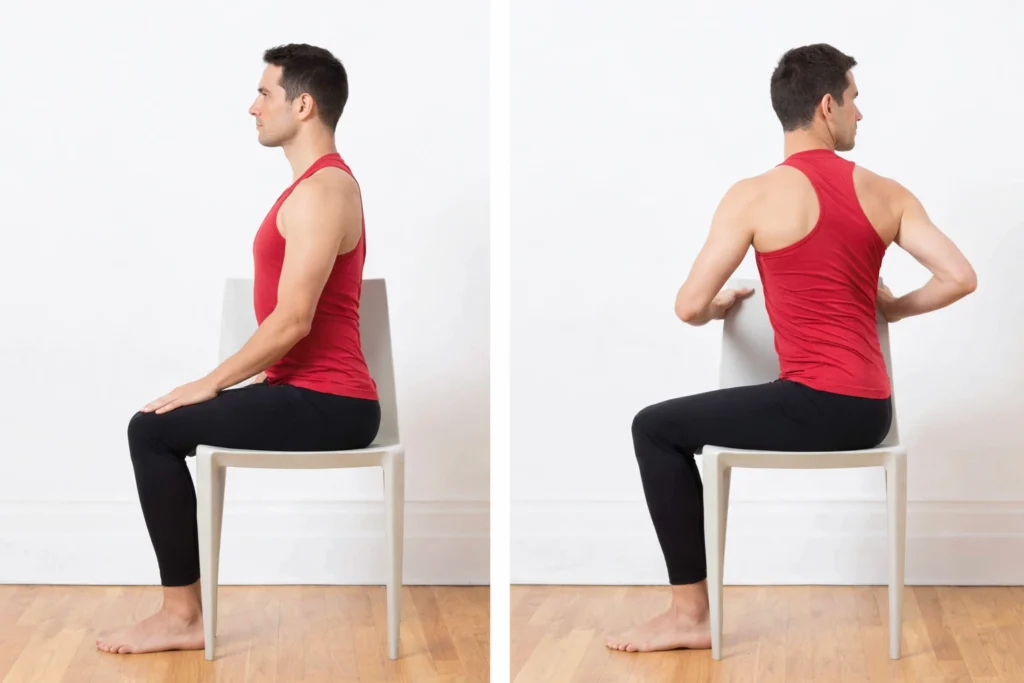
1. Seated spinal twist
When to do it: At your desk
How to do it:
Sit upright with both feet flat on the floor. Place one hand on the opposite knee and gently rotate your torso towards that side. Keep your shoulders relaxed and your movement slow.
Duration:
Hold for 15–20 seconds each side
Common mistakes:
- Forcing the twist
- Rounding the spine
- Holding your breath
Who should avoid:
Anyone with recent spinal surgery or sharp back pain
2. Standing forward fold

When to do it: At the office or at home
How to do it:
Stand with feet hip-width apart. Slowly hinge forward from the hips, letting your arms hang naturally. Bend your knees slightly if needed.
Duration:
Hold for 20–30 seconds
Common mistakes:
- Locking the knees
- Bouncing into the stretch
Who should avoid:
People who feel dizzy when bending forward
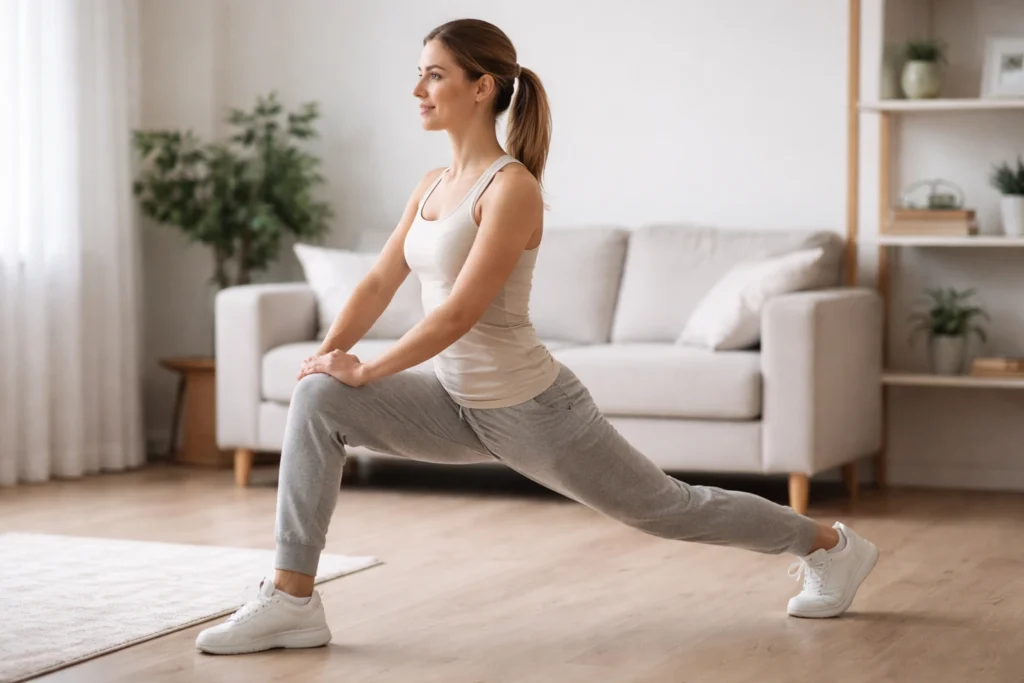
3. Hip flexor stretch
When to do it: At home or in a quiet office space
How to do it:
Step one foot forward into a split stance. Gently bend the front knee while keeping the back leg straight. You should feel a stretch at the front of the hip.
Duration:
Hold for 20 seconds each side
Common mistakes:
- Overarching the lower back
- Leaning forward instead of staying upright
Who should avoid:
Anyone with knee discomfort in this position
4. Child’s pose

When to do it: At home
How to do it:
Kneel on the floor, sit back on your heels, and gently fold forward with arms extended. Allow your back to relax.
Duration:
Hold for 30 seconds or longer if comfortable
Common mistakes:
- Forcing the hips back
- Holding tension in the shoulders
Who should avoid:
People with knee or ankle limitations
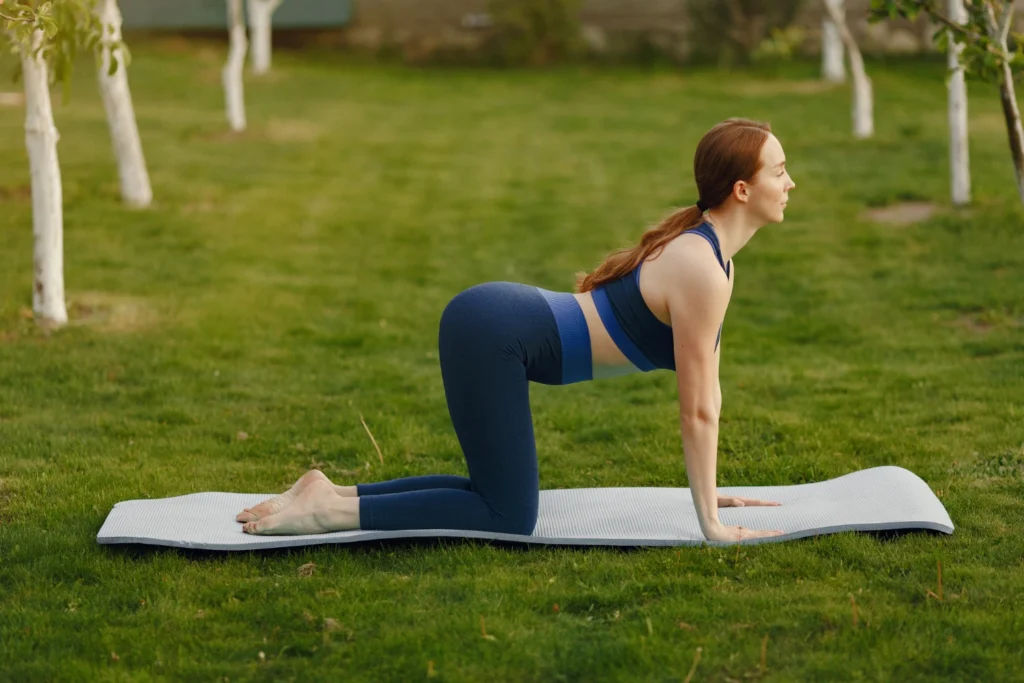
5. Cat–cow stretch
When to do it: At home
How to do it:
Start on hands and knees. Slowly round your back upwards, then gently drop your chest and lift your head. Move smoothly between positions.
Duration:
8–10 slow repetitions
Common mistakes:
- Moving too fast
- Compressing the lower back
Who should avoid:
Anyone with spinal instability
6. Figure-4 stretch
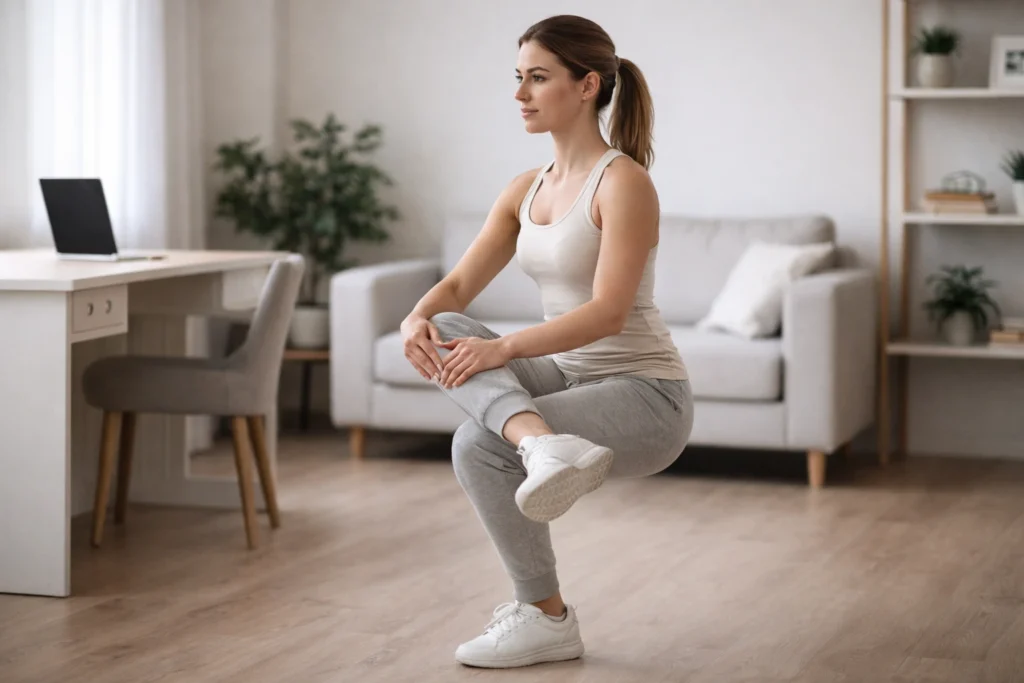
When to do it: At home or standing near your desk
How to do it:
Cross one ankle over the opposite thigh and gently lower into a seated or standing position. Keep your back upright.
Duration:
Hold for 20 seconds each side
Common mistakes:
- Letting the knee collapse inward
- Rounding the spine
Who should avoid:
People with hip or knee pain
7. Standing back extension

When to do it: At your desk
How to do it:
Stand tall, place your hands on your lower back, and gently lean backwards. Keep the movement small and controlled.
Duration:
Hold for 10–15 seconds; repeat 2–3 times
Common mistakes:
- Leaning too far
- Moving suddenly
Who should avoid:
Anyone who feels sharp discomfort during extension.
A 5-minute daily routine for office workers
This short routine fits easily into a workday:
- Seated spinal twist – 30 seconds
- Standing back extension – 30 seconds
- Standing forward fold – 30 seconds
- Hip flexor stretch – 1 minute
- Cat-cow – 1 minute
- Child’s pose – 1 minute
Consistency matters more than intensity.
When to speak to a GP
Stretching may not be appropriate if you experience:
- Persistent pain that does not improve with movement
- Pain spreading into the legs
- Numbness or tingling
- Sudden worsening stiffness
If symptoms continue or interfere with daily activities, it is sensible to consult a GP for personalised advice.
FAQs: –
What are the best lower back stretches for desk workers?
Gentle movements such as seated spinal twists, hip flexor stretches, and child’s pose are commonly used to ease stiffness from prolonged sitting.
Can I do lower back stretches at work?
Yes. Many stretches can be done at your desk or during short breaks without changing clothes or lying on the floor.
How often should desk workers stretch their lower back?
Short daily sessions are often more helpful than occasional long sessions, especially for people who sit most of the day.
Is it normal to feel stiffness after sitting for hours?
Yes. Long periods of sitting can reduce mobility and place strain on supporting muscles, leading to tightness over time.
Disclaimer
This article is for general information only and does not replace professional medical advice. Individual needs vary. Always stop if a movement causes discomfort and seek guidance if symptoms persist.
Latest Posts: –
- ABC Juice Benefits: What This Nutrient-Rich Drink Really Does for Your Body
- Papaya vs Avocado: Which Fruit Is Better for Weight Loss, Digestion, and Overall Health?
- Papaya Benefits for Women: Skin, Hormones & Weight Loss Explained
- Fig Benefits for Men: Can Figs Really Help Boost Energy and Stamina?
- Papaya for Digestion: How This Enzyme-Rich Fruit Fixes Your Gut Naturally







Leave a comment