




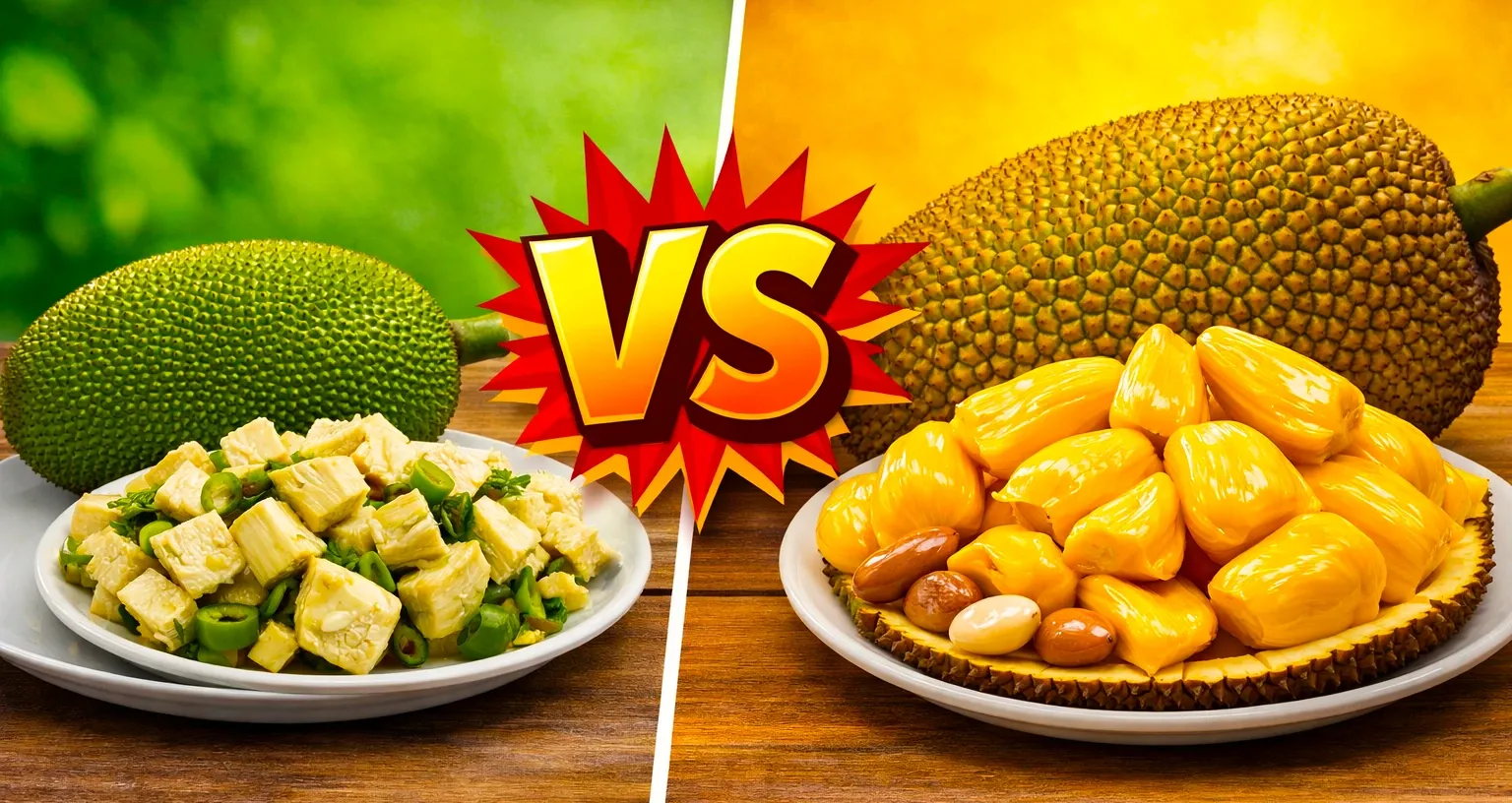
Jackfruit is a tropical fruit that people eat in two different ways — either in its raw form as a vegetable or in its ripe form as a naturally sweet fruit. Even though both come from the same fruit, the taste, texture, and how it affects the body can change a lot. Because of this, some people experience benefits like better digestion, while others may feel gas, heaviness, or even changes in blood sugar after eating it. This is why understanding the difference is important if you want to use jackfruit the right way and avoid common mistakes.
Table of Contents
What is jackfruit?

Jackfruit is known for being among the biggest fruits that grow in tropical regions. It grows in warm climates and can become very large in size. The outer skin is rough and spiky, while inside it contains multiple yellow fleshy bulbs arranged in sections. When you cut the fruit, a sticky white latex-like liquid comes out, which is completely normal. Each yellow bulb also contains a seed, and these seeds can be cooked and eaten separately.
Raw vs Ripe Jackfruit (Main Difference)
The real difference starts with how the fruit looks, feels, and tastes. Raw jackfruit is white or pale green inside and has a firm, dense, and fibrous texture. At this stage, it is not sweet, which is why it is mostly used as a vegetable in cooking. It absorbs flavors well and is commonly used in savory dishes like curries or cooked meals.
On the other hand, ripe jackfruit turns bright yellow or golden when it fully matures. Its texture becomes soft, juicy, and slightly sticky, and the taste becomes naturally sweet, often compared to a mix of mango and pineapple. At this stage, it is eaten as a fruit or used in desserts and smoothies.
Understanding
Raw jackfruit is mainly used for cooking like a vegetable, while ripe jackfruit is eaten directly as a sweet fruit. It is the same fruit, but its use completely changes depending on its stage.
Stages of Jackfruit (Important Detail)
Jackfruit does not stay in one form. It changes as it grows, and each stage has its own use. In the young or raw stage, the fruit is white, firm, and dense, which makes it best for cooking because it holds its structure and absorbs flavors well. As it moves into the semi-ripe stage, the color starts turning light yellow and the texture becomes slightly softer with a mild sweetness. It can be used in both cooking and light dishes.
When fully ripe, the fruit becomes bright yellow or golden, soft, juicy, and sweet, and at this stage it is eaten as a fruit. In the fully mature stage, the aroma and sweetness become stronger, and it is often used in desserts, shakes, and sweet recipes.
The main point is simple: as jackfruit matures, its taste, texture, and use change completely.
Quick Understanding Table
| Stage | Texture | Taste | Use |
|---|---|---|---|
| Raw | Hard & fibrous | Not sweet | Cooking |
| Semi-ripe | Slightly soft | Mild sweet | Mixed cooking |
| Ripe | Soft & juicy | Sweet | Fruit |
| Fully ripe | Very soft | Strong sweet aroma | Desserts |
Jackfruit is not just a simple fruit. It is a versatile food that changes its role depending on its stage. If you understand this properly, you can use it correctly in your diet and get better results without confusion.
Jackfruit Nutrition (Raw vs Ripe)
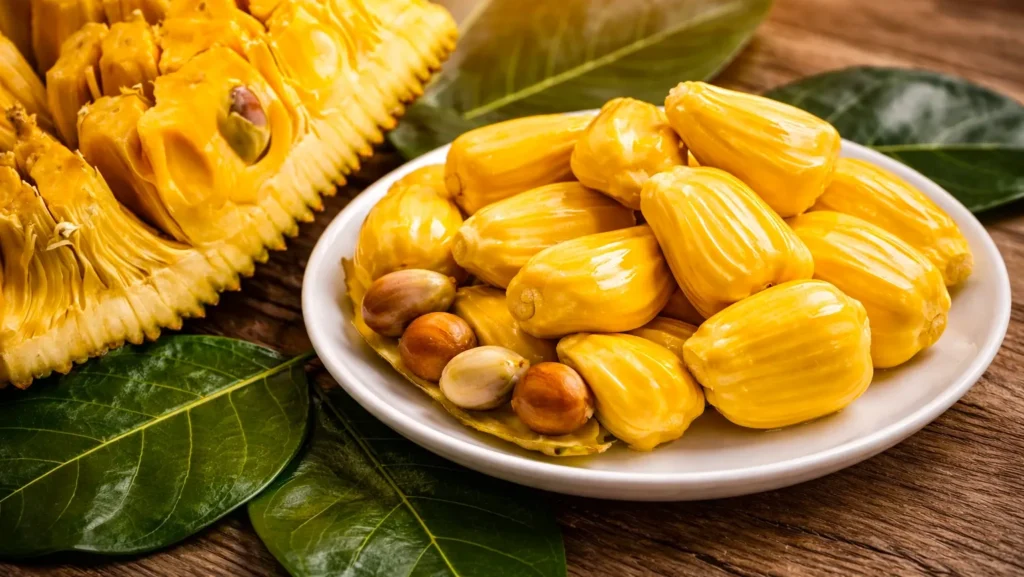
Jackfruit is not just about taste, its nutrition also plays a big role in how it affects your body. One important thing many people miss is that raw and ripe jackfruit are not the same in terms of nutrition. As the fruit matures, its calories, carbohydrates, and sugar content change, and this directly affects digestion, energy levels, and blood sugar. That’s why it is important to understand the difference before adding it regularly to your diet.
When we talk about raw jackfruit, it is comparatively lighter and more balanced. It contains fewer calories and moderate carbohydrates, along with a good amount of fiber. Because of this, it supports digestion and helps you feel full for a longer time. On average, 100 grams of raw jackfruit provides around 95 calories, about 23 grams of carbohydrates, and roughly 3 grams of fiber. It also contains nutrients like vitamin C, vitamin A, potassium, and magnesium, which support overall health.
On the other hand, ripe jackfruit is higher in calories and natural sugar. As the fruit ripens, its starch converts into sugar, which makes it sweet and more energy-dense. In about 100 grams of ripe jackfruit, you get around 150 to 155 calories, 38 to 40 grams of carbohydrates, and approximately 19 to 20 grams of natural sugar. It also provides vitamin C, vitamin B6, and antioxidants, which support the body. Because of this, ripe jackfruit gives quick energy, but if eaten in excess, it may lead to a sudden rise in blood sugar.
In simple terms, raw jackfruit supports digestion and control, while ripe jackfruit supports quick energy and sweetness.
Jackfruit Seeds (Are They Edible?)

When you cut jackfruit, you will notice that every yellow bulb contains a seed inside it. Many people throw these seeds away without thinking, assuming they are not useful. But in reality, jackfruit seeds are completely edible — they just need to be prepared properly.
These seeds have a hard outer covering, so they cannot be eaten directly. They are usually boiled or roasted first, and then the outer layer is removed before eating. Once prepared, they have a soft texture and a slightly nutty taste, often compared to something between potato and chestnut.
The simple idea is that jackfruit is not just useful as a fruit — its seeds can also be used as a nutritious food if you know how to prepare them.
Jackfruit Seeds Nutrition and Benefits
Most people ignore jackfruit seeds, but from a nutrition point of view, they are quite valuable. They are not just a leftover part of the fruit, but can actually work as an additional source of nutrients in your diet.
Jackfruit seeds contain carbohydrates that provide stable energy to the body. They also have a small amount of protein, around 3 to 5 grams per 100 grams, which supports body repair and muscle function. Along with this, they contain fiber that helps improve digestion and supports gut health. Important minerals like iron and magnesium are also present, which are necessary for overall body function.
So even though the seeds are small, they still provide useful nutrition and should not always be wasted.
Jackfruit Benefits (Raw vs Ripe)
People eat jackfruit for different reasons. Some eat it for taste, while others focus on its health benefits. But the actual benefit depends on whether you are eating it in raw form or ripe form, because both affect the body differently.
Raw jackfruit is rich in fiber, which supports digestion and helps keep you full for a longer time. Because of this, it can help with appetite control and may support weight management when included properly in meals.
Ripe jackfruit, on the other hand, contains natural sugars and carbohydrates that provide quick energy. It can help you feel refreshed and is useful when your body needs a quick energy boost.
Both forms also provide vitamin C, which supports the immune system, and potassium, which helps maintain body balance and supports muscle function.
In simple terms, raw jackfruit supports digestion and control, while ripe jackfruit supports energy and taste.
Understanding
Jackfruit is not just a fruit — it works differently depending on its stage. Raw jackfruit is more about balance, digestion, and control, while ripe jackfruit is more about energy and sweetness. Once you understand this difference, it becomes much easier to choose the right form based on your needs.
Jackfruit Side Effects (Where People Make Mistakes)
Jackfruit is healthy, but most problems start when people eat it without understanding the right quantity or how their body reacts to it. In many cases, the issue is not the fruit itself, but the way it is consumed. When eaten in excess, jackfruit can cause digestion-related problems like gas, bloating, or a feeling of heaviness, especially for people who already have a sensitive stomach.
Another important point is related to ripe jackfruit. Since it contains a higher amount of natural sugar, people who are trying to manage their blood sugar need to be more careful with portion size. Eating too much at once can lead to a sudden spike. There is also a small chance of mild allergy in some people, especially due to the sticky latex present in fresh jackfruit, which may cause slight irritation or discomfort.
The simple idea is that jackfruit is not harmful, but ignoring quantity and your body’s response is where most people make mistakes.
How to Eat Jackfruit (Practical Understanding)
Knowing that jackfruit is healthy is not enough. The real benefit comes when you understand how to use it correctly in daily life. Since raw jackfruit, ripe jackfruit, and the seeds all behave differently, they should also be consumed in different ways.
Raw jackfruit should always be eaten after cooking. It works best in cooked dishes as part of a proper meal because its fibrous texture supports digestion and makes the meal more filling. Ripe jackfruit, on the other hand, can be eaten directly, but it should always be consumed in controlled portions to avoid excess sugar intake. As for the seeds, they should never be eaten raw. Boiling or roasting them and removing the outer layer makes them safe and easier to digest.
If you follow these simple habits, you can include jackfruit in your diet without confusion or problems.
Real Benefits of Jackfruit (How It Actually Works in the Body)
Most articles only say that jackfruit is healthy, but very few explain how it actually works inside the body. When you understand this, you can use it in a smarter way.
The first important effect is on digestion. Jackfruit contains fiber, which helps slow down the digestion process. This means food is broken down more gradually, helping you stay full for longer and reducing the chances of overeating.
The second benefit is related to immunity. Jackfruit provides vitamin C and antioxidants, which help protect body cells from damage and support the body in fighting infections. This helps maintain everyday immune strength.
When it comes to energy, this is where raw and ripe jackfruit behave differently. Ripe jackfruit contains natural sugars that provide quick energy, while raw jackfruit supports more stable and steady energy through slower digestion.
So in simple terms, jackfruit is not just a fruit. It supports digestion, immunity, and energy — but only when used in the right form.
Who Should Eat Jackfruit and Who Should Be Careful
Not every food works the same for every person, and jackfruit is a good example of that. Its effect depends on your body and your goal.
If someone is trying to manage weight or follow clean eating, raw jackfruit can be a good option because it is filling and helps control hunger. If someone needs quick energy, such as after physical activity or during fatigue, ripe jackfruit can be useful when eaten in moderation.
However, people dealing with diabetes, insulin resistance, or frequent bloating should be more careful. In such cases, both portion size and timing become important to avoid unwanted effects.
The simple idea is that the same food can give different results depending on the person.
Final Understanding
If you have read everything carefully, the confusion should be clear by now. Jackfruit is not just a simple fruit; it is a versatile food that changes its role based on its stage. Most problems happen when people use it without understanding this basic difference.
When you understand raw vs ripe, control the quantity, and use it in the right way, jackfruit can become a healthy and useful part of your diet without unnecessary side effects.
The final formula is simple: right stage, right quantity, and right use — this is what gives you the real benefit.
FAQs:
What are the benefits of eating jackfruit?
Jackfruit supports your body in multiple ways. It helps improve digestion because of its fiber content, strengthens immunity with vitamin C, and supports heart health through potassium. When eaten in the right quantity, it can be a healthy addition to your diet.
Why is jackfruit called “vegetarian meat”?
Raw jackfruit has a fibrous and chewy texture that becomes very similar to meat when cooked. Because of this, it is widely used as a plant-based meat alternative in vegan and vegetarian diets.
What does jackfruit taste like?
Ripe jackfruit has a naturally sweet taste, often compared to a mix of mango, banana, and pineapple. Raw jackfruit, on the other hand, is not sweet and has a neutral taste, which makes it suitable for savory dishes.
Why does my stomach hurt after eating jackfruit?
Eating too much jackfruit can cause gas, bloating, or heaviness due to its fiber content. This is more common in people with sensitive digestion or when portion control is ignored.
Who should avoid or limit jackfruit?
People with diabetes, insulin resistance, or frequent bloating should be more careful, especially with ripe jackfruit. Those with latex allergies may also need to avoid it.
Is jackfruit high in sugar?
Yes, ripe jackfruit contains a higher amount of natural sugar. It provides quick energy, but overeating may lead to a sudden rise in blood sugar levels.
Can I eat jackfruit daily?
Yes, but in moderation. Raw jackfruit can be part of regular meals, while ripe jackfruit should be consumed in controlled portions.
Is jackfruit good for weight loss or weight gain?
Raw jackfruit can support weight management because it is filling and fiber-rich. Ripe jackfruit is more calorie-dense, so eating it in excess may contribute to weight gain.
Are jackfruit seeds healthy?
Yes, jackfruit seeds are nutritious. They contain protein, fiber, iron, and magnesium. When properly cooked (boiled or roasted), they can be a healthy addition to your diet.
Is jackfruit good for heart health and immunity?
Yes, the potassium in jackfruit supports heart function, while vitamin C helps strengthen the immune system. Regular, balanced intake can support overall health.
Disclaimer
The material provided here is meant to increase awareness and should not replace guidance from a healthcare professional. Before making any changes to your diet, it’s important to seek guidance from a qualified expert.








Leave a comment