




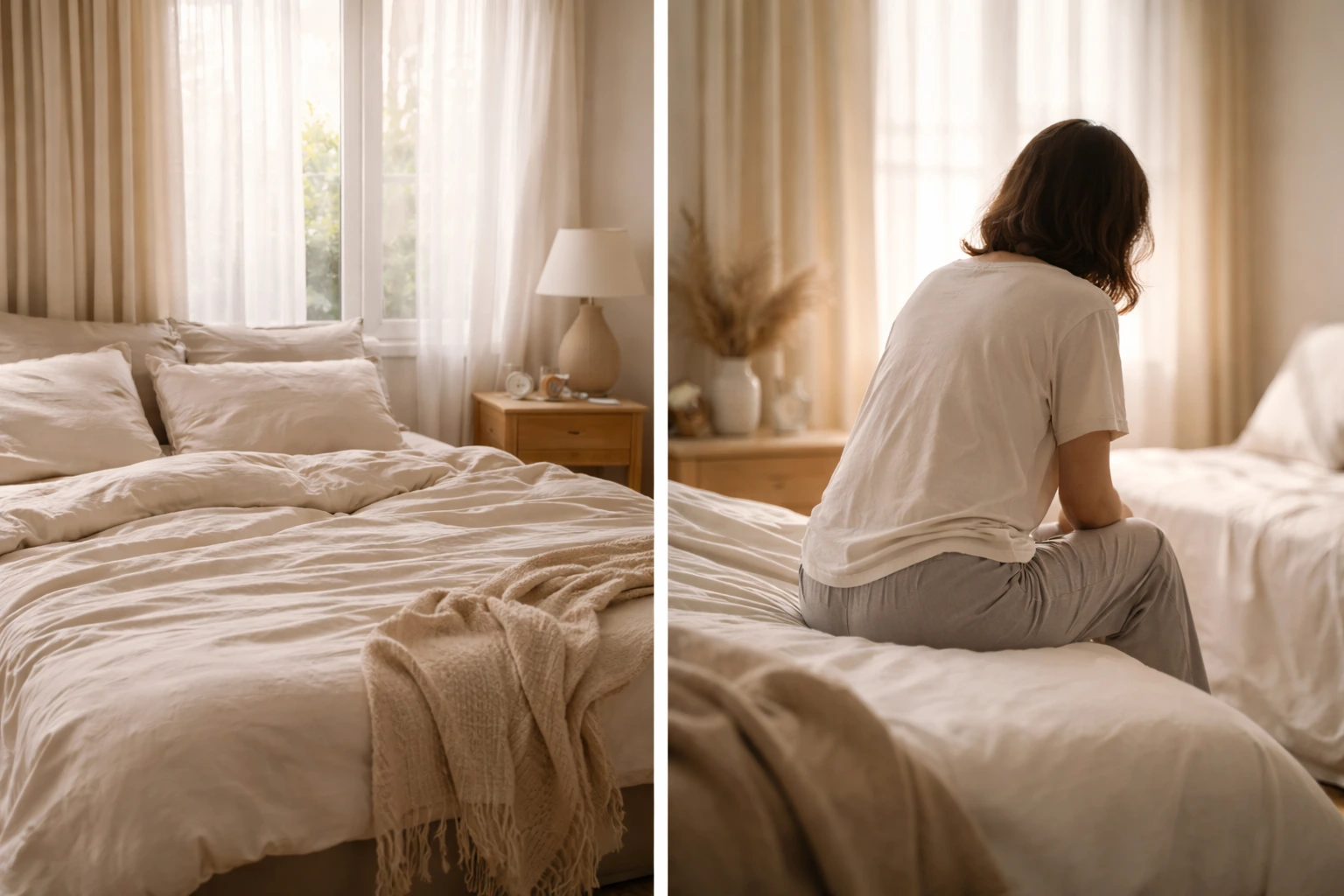
Waking up tired is often linked not to how long you sleep but to how well your sleep environment supports rest. Sleep experts say a common bedroom mistake—poor light and temperature control—can interfere with normal sleep cycles, making mornings feel heavier even after a full night in bed.
Why Many People Still Feel Tired in the Morning
Feeling exhausted after what seemed like a full night’s sleep is more common than most people realise. Many adults assume tired mornings mean they simply need more hours in bed. In reality, sleep quality matters just as much as sleep duration.
Several everyday factors can affect how restorative sleep feels, including stress levels, evening routines, caffeine intake, and bedroom conditions. Even small disruptions—ones you may not consciously notice—can reduce the amount of deep, refreshing sleep your body gets overnight.
Sleep experts often point out that people focus heavily on bedtime but overlook the environment they sleep in. The bedroom is not just a place to rest; it actively influences how the brain and body move through the night.
The Bedroom Setup Mistake Experts Highlight
One of the most common bedroom mistakes experts mention is sleeping with too much light and heat, especially light from screens, lamps, or outdoor sources combined with a room that stays too warm overnight.
This mistake often looks harmless. A small bedside lamp left on, light leaking through curtains, or a bedroom that feels “cosy” rather than cool may not seem like problems. However, these conditions can interfere with the body’s natural signals that support restful sleep.
Light and temperature play a key role in how the brain understands when it is time to rest deeply and when it is time to wake. When these signals are blurred, sleep may feel lighter and less refreshing, even if you are not waking fully during the night.
How This Factor Affects the Sleep Cycle
Sleep happens in repeating cycles that include lighter sleep, deeper sleep, and periods of dreaming. These cycles rely on cues from your environment to stay on track.
Darkness supports the release of melatonin, a hormone involved in regulating sleep timing. Excess light—especially in the evening and overnight—can reduce melatonin signals and make sleep feel more fragmented.
Temperature also matters. As you fall asleep, your body naturally cools slightly. A bedroom that stays too warm can interfere with this process, making it harder to remain in deeper stages of sleep.
When light exposure and warmth persist through the night, the brain may shift toward lighter sleep stages more often. This does not always cause full awakenings, but it can reduce how restored you feel in the morning.
Practical Adjustments You Can Try Tonight
Improving bedroom conditions does not require expensive equipment or major lifestyle changes. Sleep experts often recommend starting with small, practical adjustments that support the body’s natural rhythms.
Reduce Light Exposure
- Use blackout curtains or thicker blinds to block outdoor light.
- Turn off unnecessary lamps and electronic displays before bed.
- Avoid sleeping with the television on, even at low volume.
- If a night light is needed, choose a dim, warm-toned option placed low to the ground.
Adjust Bedroom Temperature
- Aim for a slightly cooler bedroom rather than a warm one.
- Use breathable bedding materials that do not trap heat.
- Consider opening a window slightly if outdoor noise and air quality allow.
- Avoid heavy blankets unless the room is cool enough to balance them.
Limit Screen Light Before Bed
- Reduce screen use in the hour before sleep when possible.
- Dim device brightness and use night-mode settings in the evening.
- Keep phones and tablets off the bed to reduce temptation and light exposure.
Create a Clear Sleep Zone
- Reserve the bed for sleep rather than scrolling or working.
- Keep clutter to a minimum to support a calmer mental state.
- Maintain consistent sleep and wake times to reinforce routine.
These adjustments may feel subtle, but together they can support more stable sleep patterns over time.
Why This Mistake Often Goes Unnoticed
Many people adapt to their bedroom environment gradually. Because the effects build slowly, it is easy to assume that morning tiredness is simply part of adult life.
Light exposure and warmth rarely cause dramatic sleep disruption. Instead, they tend to reduce sleep quality quietly, night after night. This makes the connection harder to spot without intentionally changing the environment.
Another reason this mistake is overlooked is that people often sleep “through the night” without remembering awakenings. Sleep can still be shallow or fragmented without obvious waking episodes.
Experts note that when people improve their bedroom setup, they are often surprised by how different mornings feel—even without changing bedtime or total sleep hours.
When to Look Beyond Bedroom Factors
While bedroom conditions matter, they are not the only influence on morning energy. If tiredness persists despite improving the sleep environment, other factors may be involved.
These can include irregular sleep schedules, high stress, late caffeine intake, limited daytime movement, or inconsistent routines. Lifestyle patterns often interact with sleep quality rather than acting alone.
In the UK, it may be sensible to speak with a GP if tiredness is ongoing, unexplained, or affecting daily functioning. This is especially relevant if fatigue is accompanied by symptoms such as mood changes, persistent low energy, or difficulty concentrating.
A professional can help explore whether sleep habits, stress, or other health factors may be contributing.
FAQs
Does bedroom temperature affect how tired I feel?
Yes, bedroom temperature can affect sleep quality. A room that is too warm may interfere with deeper sleep stages, which can contribute to feeling less refreshed in the morning.
Can light exposure at night make mornings harder?
Light exposure at night can affect the body’s sleep signals. Even low levels of light may reduce sleep depth, which can make waking up feel more difficult.
Is waking up tired always linked to bedroom setup?
Not always. Bedroom conditions are one factor among many. Stress, routines, and daily habits can also influence how rested you feel.
How soon can changing the bedroom help?
Some people notice subtle improvements within a few nights, while for others it may take a couple of weeks. Consistency matters more than quick results.
This article is designed to inform, not alarm. Small environmental changes often support better sleep quality, but everyone’s experience is different. Paying attention to how your bedroom supports rest is one practical step toward waking up feeling more restored.
Disclaimer
This article is for general information only. It does not provide medical advice or diagnosis. Individual sleep needs vary. If tiredness persists or affects daily life, consult a GP or qualified healthcare professional.
Latest Posts:
- What Happens to Your Skin When You Add a 5-Seed Trail Mix to Your Daily Diet
- Jogging vs Brisk Walking: Which Is Better for Weight Loss?
- 7 Homemade Drinks That May Help Improve Iron Deficiency and Boost Energy Levels
- Drinking Olive Oil Daily: Real Benefits, Side Effects & What Experts Want You to Know
- What are people thinking about Zepbound and sleep apnea?








Leave a comment