




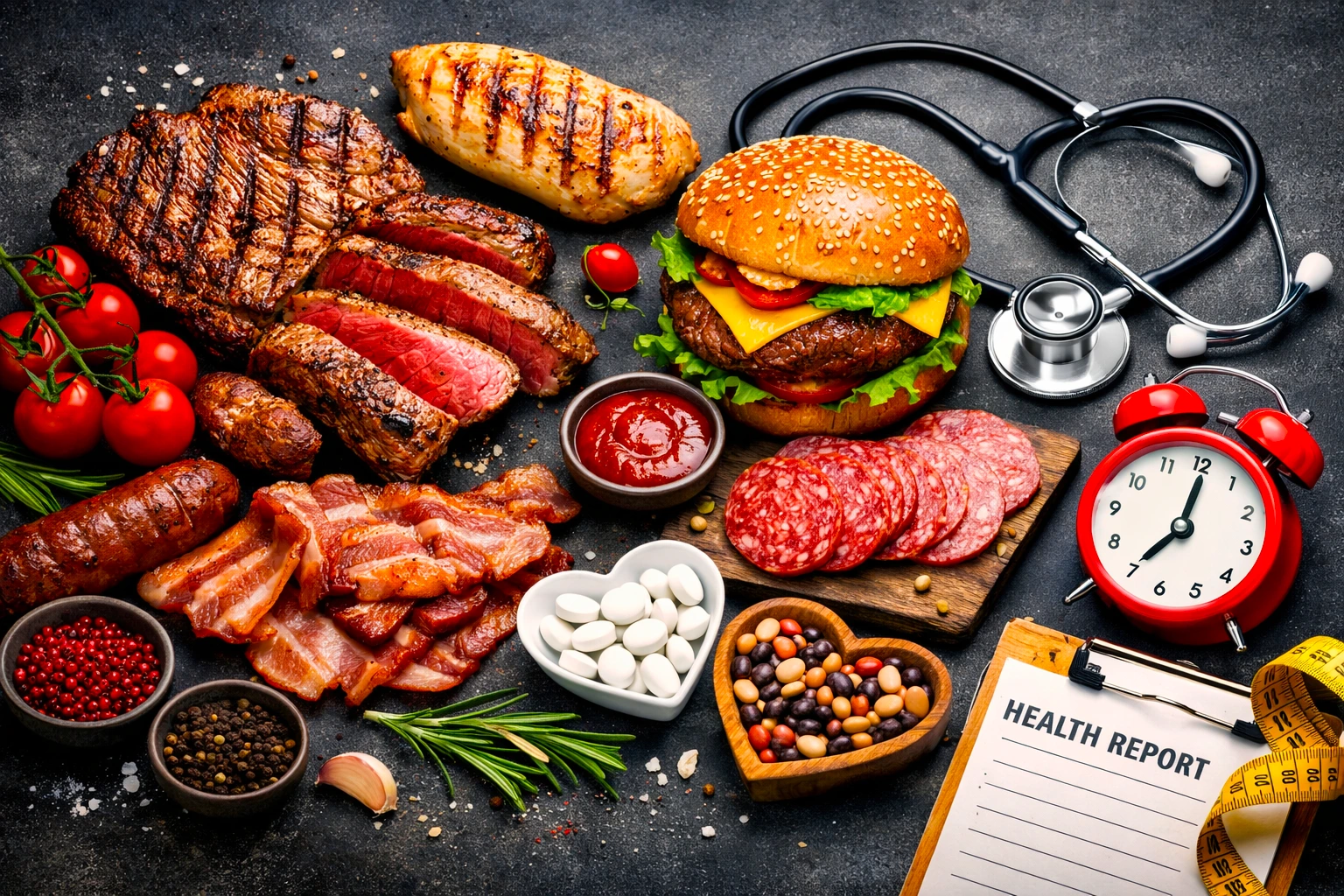
🔥 Key Takeaways:
- Eat 3–6 ounces of meat per day for balance.
- Limit red meat to 12–18 ounces per week.
- Processed meat should be kept minimal.
- Include eggs, lentils, fish, and dairy for protein variety.
- Watch for early signs: fatigue, digestion issues, low fiber intake.
Daily Meat Consumption: If you eat chicken, eggs, or mutton every day, you might be making a small mistake that slowly grows into a bigger health problem. Initially, meals feel satisfying, energy seems fine, and your diet appears balanced. But over time, meat portions often increase without noticing it, and the body slowly starts losing balance. Fiber intake drops, fruits and vegetables are eaten less, and meals start relying heavily on one type of food.
The challenge is that all of this happens subtly, without obvious warning signs. By the time you realize it, the habit has already set in. The good news? You don’t need to eliminate meat completely; understanding the right limits is enough to prevent today’s habits from becoming tomorrow’s problems.
What Is the Recommended Daily Meat Intake?
When people look for daily meat guidelines, they want a specific number. Nutrition experts, however, prefer a simple visual approach over grams, because most people do not weigh their food daily. At first glance, it may seem that eating more meat improves nutrition, but in reality, the body can efficiently use only a certain amount of protein. Beyond that, extra intake doesn’t provide real benefits.
Portion Concept (Simple Way to Understand):
- One standard serving: about 3 ounces (85 grams) cooked
- Visual reference: roughly the size of your palm (excluding fingers)
- Recommended daily servings: 1–2 for most adults
- Total meat per day: 3–6 ounces (85–170 grams)
What most people don’t realize is that protein isn’t just in meat. Eggs, lentils, and dairy also contribute significantly. Including these naturally reduces dependency on meat.
How Much Meat Is Too Much Per Day?

At first, eating slightly more meat might seem harmless, especially when trying to feel full or boost protein intake. But benefits plateau beyond a certain limit, and risks start rising. Overconsumption is often unnoticed because slightly larger portions or extra servings feel normal, gradually forming an unhealthy habit.
Intake Levels:
- Healthy range: 3–6 ounces per day
- High intake: 7–8 ounces per day
- Excessive pattern: multiple large portions in a day
- Risk factor: regular processed meat consumption
It’s not just quantity — consistency matters. Occasional extra meat is fine, but daily overconsumption gradually increases saturated fat, reduces plant-based nutrients, and raises total calories, subtly affecting long-term health.
Weekly Meat Consumption Guidelines (Backed by Experts):
Daily intake snapshots are useful, but the body responds more to long-term patterns. Weekly tracking provides better insights into overall balance. Experts suggest:
- Red meat (beef, lamb, pork): 12–18 ounces per week
- Poultry: moderate amounts
- Fish: at least twice per week
- Processed meat: as little as possible
Even small changes, like skipping meat 1–2 days a week, improve long-term health. This approach is simple and sustainable without extreme restriction.
What Happens If You Eat Too Much Meat?

Initially, eating a high amount of meat feels normal — energy levels are fine, meals feel satisfying, and fullness is achieved. Because of this, many people assume their diet is perfectly balanced. In reality, effects build slowly.
When meat dominates the diet, intake of other essential nutrients — fiber, antioxidants, and plant-based vitamins — decreases. These imbalances aren’t visible at first but gradually contribute to serious health issues. The important takeaway is that damage doesn’t happen overnight; it results from consistent habits over time.
Heart Health and Cholesterol
At first glance, meat seems like a strong source of protein that energizes the body. But regular consumption of red and processed meat increases saturated fat, which affects heart health. This happens silently — early symptoms are rare, but cholesterol balance starts shifting, arteries stiffen, and blood flow can be impacted.
Key effects include:
- Increase in LDL (bad cholesterol)
- Reduced flexibility in arteries
- Higher risk of heart disease
Because these changes develop slowly, most people notice only when the condition becomes serious.
Cancer Risk (Processed & Red Meat)
Meat feels natural and safe, so risk is often underestimated. However, processed and red meat, when eaten regularly in high amounts, can affect long-term health. The issue isn’t just the meat but also how it’s prepared. High-heat cooking and preservatives can create harmful compounds.
Factors that increase cancer risk:
- Chemicals in processed meat
- Compounds from high-heat cooking
- Long-term habitual consumption
Occasional consumption is generally safe, but daily overconsumption raises risk significantly.
Weight Gain and Metabolism Issues
Many assume meat helps with weight control because of its protein content. While partially true, overconsumption can have the opposite effect. High-calorie cuts and oil-heavy cooking methods increase total intake, while fiber-rich foods like vegetables often decrease.
Consequences over time:
- Higher total calorie intake
- Lower fiber consumption
- Slower digestion and metabolism
These changes can gradually contribute to weight gain and other metabolic challenges.
High Blood Pressure Connection
Processed meat is particularly concerning for blood pressure. High sodium content affects fluid balance, gradually increasing blood pressure.
Effects include:
- Gradual rise in blood pressure
- Extra strain on the heart and vessels
- Increased long-term cardiovascular risk
The key insight: not just quantity, but quality and preparation of meat, impacts heart health.
Eating Too Much Meat: Side Effects You Should Know

Initially, side effects may be subtle. Small discomforts, often ignored, are early warnings from the body that the diet is unbalanced. Over time, these signs become more noticeable.
Common early indicators:
- Digestive problems (constipation, bloating)
- Feeling heavy after meals
- Low intake of fiber-rich foods
- Energy fluctuations
- Overall diet imbalance
Recognising these signs early allows for adjustments before major health issues develop. They are important early warnings.
How Much Meat Per Day to Build Muscle?
During fitness goals, many increase their meat intake, thinking more meat equals faster muscle growth. At first glance, this seems logical, but muscle development depends on total protein intake, not just meat. The body absorbs protein more efficiently when it comes from varied sources.
Recommended protein intake:
- Sedentary individuals: 0.36 grams per pound of body weight
- Active individuals: 0.5–0.9 grams per pound of body weight
Smart ways to meet this goal:
- 1–2 servings of meat per day
- Include eggs, dairy, and plant-based proteins
- Spread protein intake throughout the day
What most people don’t realize is that variety improves protein absorption and overall effectiveness.
Meat Consumption by Country: How Your Diet Compares Globally
At first glance, personal diet may feel unrelated to global trends. In reality, comparing meat consumption across countries highlights important health patterns. Higher meat intake often corresponds with more lifestyle-related diseases, while lower intake is associated with plant-based diets and fewer health risks.
📊 Global Meat Consumption Comparison (Simple Table)
| Region / Country | Meat Consumption Level | Common Pattern |
| United States | High | More red & processed meat |
| Australia | High | Large portion sizes |
| Europe | Moderate | Balanced diet with variety |
| India | Low | More plant-based diet |
| Asia (general) | Low to Moderate | Mixed diet, meat in small portions |
This table shows a clear link: where consumption is high, health risks like obesity, heart disease, and diabetes are more common. Moderation, rather than extremes, is the key takeaway.
How to Eat Meat in a Healthy Way (Without Overdoing It)
Healthy eating doesn’t require avoiding meat completely. The focus should be on smart consumption — quantity, quality, and balance. Small daily habits shape long-term health. Proper portions, mindful cooking methods, and variety can improve nutrition without drastic restrictions.
Portion Control Tips
Portion control is crucial because overconsumption often starts with underestimated serving sizes. Efficient protein use has a limit, and extra meat adds calories and disturbs dietary balance.
Practical tips:
- Follow a palm-size portion
- Avoid repeated extra servings
- Increase vegetable portions on the plate
Best Cooking Methods
How meat is cooked significantly impacts nutrient quality and long-term health. High-heat and oil-heavy methods can create harmful compounds, while simple methods preserve nutrition.
Better options:
- Grilling, baking, or steaming
- Avoid deep frying
- Keep oil usage minimal
Healthier Alternatives
Relying solely on meat reduces variety and nutrients. Mixing protein sources improves digestion and nutrient absorption, and makes adherence easier long-term.
Suggested alternatives:
- Include fish for healthy fats
- Add lentils and beans for fiber
- Use plant-based proteins for balance
7 Signs You’re Eating Too Much Meat
The body often gives signals when the diet is not balanced. The problem is that people ignore these signs or consider them normal. These signals actually show that your eating pattern needs adjustment.
Common signs:
- Frequent digestive issues
- Feeling heavy after meals
- Low vegetable intake
- Rising cholesterol levels
- Constant fatigue
- Gradual weight gain
- Craving light, fresh foods
Recognizing these allows small adjustments that prevent long-term problems.
Common Mistakes People Make with Meat Consumption
Even with good intentions, people make some common mistakes that make their diet unbalanced. These mistakes usually happen because of lack of awareness. They may look small, but when they become part of a daily routine, they create a long-term impact.
Common mistakes:
- Believing more protein always equals better health
- Ignoring portion sizes
- Relying heavily on processed meat
- Skipping plant-based foods
- Using unhealthy cooking methods
Awareness and small changes correct these habits effectively.
How Much Meat Should You Really Eat?
When you look at all factors together, the answer becomes simple — balance is the most important thing. Most people look for extreme solutions, but a sustainable approach works in the long term. You do not need to avoid meat; you just need to control its quantity and frequency.
Healthy approach:
- 3–6 ounces per day
- Limit red meat weekly
- Minimize processed meat
Consistency is key. Maintaining control daily improves health naturally over time.
Conclusion: The Smart Way to Balance Meat in Your Diet
Meat is valuable when consumed in the right amount. Problems arise only when it dominates the diet. Smart eating is about balance, variety, and mindful choices. Proper portions, diversified protein sources, and healthy cooking improve long-term health and well-being.
Small, consistent changes make the biggest difference, creating lasting health benefits without sacrificing enjoyment.
Real-Life Experience Example
“I used to eat chicken and eggs every day. At first, everything felt fine — energy was good, and meals were satisfying. Slowly, my portions increased without me noticing, and I started eating fewer vegetables and less fiber. My digestion slowed down, and I felt heavy after meals. At the gym, I thought eating more meat would help me gain muscle faster, but after a month or two, my weight and cholesterol started rising. Then, I adjusted my diet — keeping daily meat to 3–6 ounces, limiting red meat weekly, and adding eggs, lentils, and dairy for protein. Within 2–3 weeks, my energy stabilised, digestion improved, and workouts became more effective without overdoing meat.”
People Also Ask
Is 200g of meat a day too much?
Yes, 200g (around 7 ounces) is on the higher side for daily consumption. Most adults do well with 85–170g (3–6 ounces) per day. Eating more consistently can increase saturated fat, reduce fiber intake, and gradually affect long-term health.
How much meat should I eat per week?
A balanced weekly intake is recommended:
Red meat (beef, lamb, pork): 12–18 ounces (340–510g)
Poultry: moderate portions
Fish: at least 2 servings per week
Processed meat: minimal
Small adjustments, like skipping meat 1–2 days a week, improve overall health without strict restrictions.
Is eating beef every day bad?
Eating beef daily isn’t ideal. Frequent red meat, especially processed cuts, can raise cholesterol, blood pressure, and heart disease risk over time. It’s better to limit red meat and include other protein sources like poultry, fish, eggs, or plant-based proteins.
What diseases are caused by eating too much meat?
Overeating meat regularly can increase the risk of:
Heart disease (due to saturated fat and cholesterol)
High blood pressure (especially from processed meat)
Weight gain and slower metabolism
Certain cancers (linked to processed and red meat)
Digestive issues (low fiber intake)
How much meat per day is healthy?
For most adults, a healthy daily intake is 3–6 ounces (85–170g) of cooked meat. Portion control, variety, and balanced meals with vegetables, legumes, and plant proteins make meat consumption safe and beneficial.









Leave a comment