




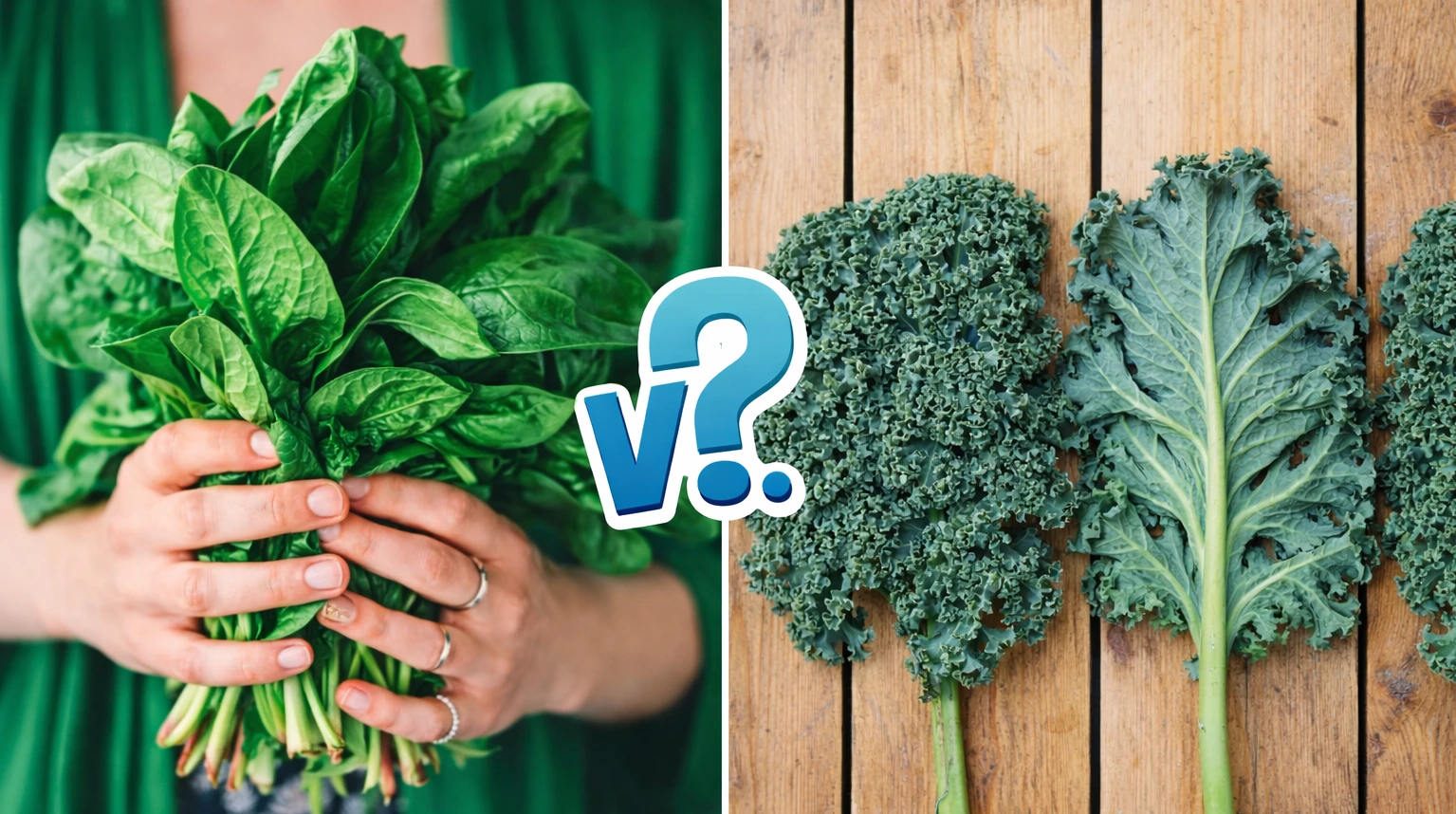
When it comes to leafy greens, spinach vs kale is a comparison many people think about while planning meals or grocery shopping. Both spinach and kale are nutrient-dense greens that offer vitamins, minerals, and fiber. However, their role in everyday meals is not the same. Spinach has been a regular part of daily cooking for decades and is still more commonly used in home kitchens around the world. Kale, on the other hand, has become more popular in recent years, especially in health-focused recipes. While both are healthy choices, spinach tends to appear more often in everyday meals because of its mild taste, versatility, and ease of cooking.
Quick Nutritional Comparison
Both spinach and kale are low in calories and rich in nutrients, but they are not identical.
- Calories: Both are very low in calories, making them easy to include in daily meals.
- Fiber: Kale generally contains slightly more fiber per serving, while spinach still contributes a moderate amount.
- Vitamin A: Spinach and kale are both good sources, with spinach often providing slightly more in cooked form.
- Vitamin C: Kale tends to have more vitamin C per serving than spinach.
- Vitamin K: Both are rich in vitamin K, but kale usually contains a higher amount.
- Iron: Spinach contains more iron, though it is not all easily absorbed.
- Antioxidants: Both contain antioxidants that support overall health.
Overall, the nutritional differences are real but not extreme. Both fit well into a balanced diet.
Which One Is More Common in Daily Meals?
Spinach in Everyday Cooking
Spinach is one of the most commonly used leafy greens in daily meals. One major reason is its mild flavor, which blends easily into many dishes without overpowering other ingredients.
Spinach is often:
- Added to omelets and scrambled eggs
- Mixed into curries, soups, and stews
- Blended into smoothies
- Used in sandwiches and wraps
- Stirred into pasta or rice dishes
Spinach cooks quickly and softens easily, which makes it convenient for busy home cooks. It is also widely available year-round and commonly used across many cultures. Because it works well in both raw and cooked dishes, spinach naturally fits into everyday meals.
Kale’s Growing Popularity
Kale was once less common in daily cooking but gained popularity over the last decade. It became widely known through health-focused recipes and restaurant menus.
Kale is often used in:
- Salads
- Smoothie bowls
- Baked kale chips
- Grain bowls
- Meal prep dishes
Kale’s popularity grew as more people looked for hearty greens that hold their texture well. While it is now easier to find in grocery stores, it is still used less often than spinach in everyday home cooking. Cultural food habits also play a role, as kale is more common in certain cuisines than others.
Taste and Texture Differences
Taste and texture strongly influence how often a vegetable is used.
Spinach has a soft texture and a mild, slightly earthy flavor. When cooked, it becomes tender and easy to chew. Raw spinach is also gentle on the palate, which makes it appealing to a wide range of people, including children.
Kale has a firmer texture and a slightly bitter taste, especially when eaten raw. Cooking softens kale, but it still remains more structured than spinach. Massaging raw kale or cooking it longer helps reduce bitterness and toughness.
These differences explain why spinach is often chosen for quick meals, while kale is more common in dishes that need a heartier green.
Which Is Easier to Cook Daily?
From a practical standpoint, spinach is usually easier to prepare for daily meals.
Spinach:
- Requires minimal prep
- No stem removal needed
- Cooks very quickly
- Can be eaten raw or cooked
- Wilts easily into dishes
Kale:
- Needs thorough washing
- Often requires stem removal
- Takes longer to cook
- Holds its shape when cooked
- Stores longer in the refrigerator
Spinach is ideal for quick meals, while kale works better when you have time for preparation. This difference alone explains why spinach appears more often in daily cooking routines.
Health Benefits Comparison
Both spinach and kale offer health benefits when eaten as part of a balanced diet.
They both:
- Provide antioxidants that help protect cells
- Support heart health when included regularly
- Contribute fiber for digestive health
- Supply important vitamins and minerals
Spinach may support hydration due to its high water content, while kale’s higher fiber content may help some people feel fuller. Neither vegetable should be seen as a cure or treatment for disease. Their benefits come from consistent inclusion in a varied diet.
Which Is Better for Weight Management?
For weight management, both spinach and kale can be helpful.
They are:
- Low in calories
- High in volume
- Filling due to fiber and water content
Spinach is easy to eat in larger amounts because of its mild flavor. Kale’s firmer texture may increase chewing and promote fullness. Cooking methods matter more than the vegetable itself. Adding large amounts of oil, cheese, or creamy dressings can increase calorie intake regardless of which green you choose.
Who Might Prefer Spinach?
Spinach may be a better choice for:
- People sensitive to bitter flavors
- Children or picky eaters
- Quick weekday meals
- Light cooking and simple dishes
Its soft texture and neutral taste make it easy to include without changing the overall flavor of a meal.
Who Might Prefer Kale?
Kale may be preferred by:
- People who enjoy hearty salads
- Those who meal prep for several days
- Fans of crunchy textures
- Individuals who want a higher vitamin K intake
Kale’s sturdiness makes it suitable for dishes that need to hold up over time.
Is One Healthier Than the Other?
When people ask which is healthier, the honest answer is that both are highly nutritious. While there are small differences in vitamin and mineral content, neither spinach nor kale is clearly superior overall.
Eating a variety of leafy greens is more beneficial than choosing one exclusively. Rotating between spinach, kale, and other greens helps provide a broader range of nutrients.
FAQs
Is spinach healthier than kale?
Spinach and kale are both very nutritious. Kale contains more fiber and vitamin K, while spinach has more iron and a milder taste. Neither is clearly healthier overall.
Which has more iron, spinach or kale?
Spinach contains more iron than kale, but not all of it is easily absorbed. Pairing spinach with vitamin C-rich foods may help with absorption.
Can you eat kale every day?
Many people can eat kale daily in moderate amounts. However, variety is important, and rotating leafy greens helps maintain a balanced diet.
Is spinach easier to digest than kale?
Spinach is generally easier to digest because of its softer texture. Kale may cause bloating in some people if eaten raw or in large amounts.
DISCLAIMER
This article is for informational purposes only and is not intended as medical or nutritional advice. Individual dietary needs vary. Always consult a qualified healthcare or nutrition professional before making significant changes to your diet, especially if you have a medical condition.
Latest Posts: –
- Pumpkin Seeds: 5 Benefits, Nutrition Facts, and Easy Ways to Eat Them
- ABC Juice Benefits: What This Nutrient-Rich Drink Really Does for Your Body
- Papaya vs Avocado: Which Fruit Is Better for Weight Loss, Digestion, and Overall Health?
- Papaya Benefits for Women: Skin, Hormones & Weight Loss Explained
- Fig Benefits for Men: Can Figs Really Help Boost Energy and Stamina?







Leave a comment