




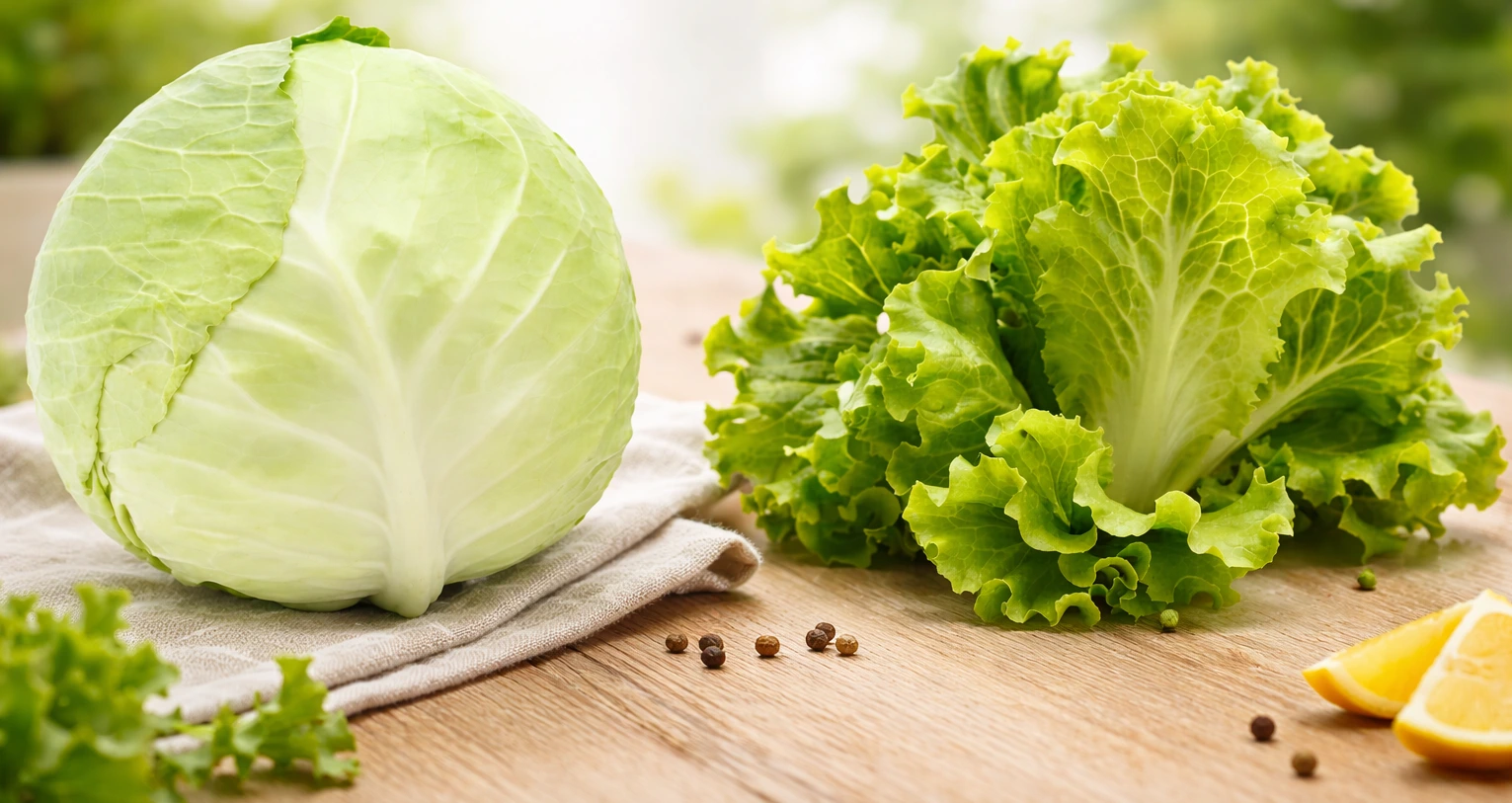
When choosing ingredients for everyday salads, most people end up deciding between cabbage and lettuce. Both are common, affordable, and easy to find. But they behave very differently once they hit your bowl. In practical terms, cabbage works better for long-lasting, crunchy salads, while lettuce is better for soft, light, quick salads that are eaten right away. Texture, fiber content, and water levels all play a role in how each one performs.
This is why the question “Cabbage vs lettuce” comes up so often for people who meal prep or make salads regularly. The better choice depends less on nutrition charts and more on how you actually eat, store, and prepare your salads day to day.
Quick Differences at a Glance
Cabbage and lettuce may look similar in the produce aisle, but they act very differently once prepared.
Cabbage has a firm, dense texture and a mild but slightly earthy flavor. It holds up well after cutting and stays crunchy for days. Lettuce is softer, lighter, and more watery. It tastes mild and fresh but wilts quickly once chopped.
Nutritionally, both are low in calories. Cabbage provides more fiber and vitamin C, while lettuce offers more vitamin A and hydration due to its high water content.
Shelf life is another big difference. A whole cabbage lasts much longer in the fridge than lettuce. In short, cabbage is better for durability, while lettuce is better for immediacy.
Texture and Crunch Factor
Texture is one of the biggest reasons people prefer one over the other.
Cabbage is dense and firm. When sliced thin, it adds a strong crunch that stays intact even after sitting in dressing. This makes it ideal for slaws and hearty salads. The structure of cabbage leaves allows them to hold their shape, which is why they work well in packed lunches or meal-prepped salads.
Lettuce, on the other hand, is tender and delicate. Its leaves are mostly water, which gives salads a light and fresh feel. This is appealing when you want something crisp but not heavy. However, that same water content causes lettuce to wilt quickly once dressed.
If you like salads with texture that lasts through the day, cabbage usually performs better. If you prefer soft, airy salads eaten immediately, lettuce feels more natural.
Which Lasts Longer in the Fridge?
Shelf life is where cabbage clearly stands out.
A whole head of cabbage can last two to three weeks in the refrigerator when stored properly. Even after cutting, cabbage often stays usable for several days if kept in an airtight container. This makes it ideal for meal prep or households that do not cook daily.
Lettuce is much more delicate. Whole heads may last about a week at best. Once washed and chopped, lettuce often wilts within three to five days, sometimes sooner. Moisture buildup speeds up spoilage, even when stored carefully.
For people who prepare salads ahead of time, cabbage offers a clear advantage. Lettuce works best when bought and used quickly.
Nutrition Comparison (Balanced View)
From a nutritional standpoint, both cabbage and lettuce can be part of a balanced diet.
Cabbage tends to be higher in fiber and vitamin C. Fiber may support digestion and help you feel full longer. Vitamin C plays a role in general immune function and tissue health.
Lettuce, especially darker varieties like romaine, contains more vitamin A and is very high in water content. This contributes to hydration and adds volume to meals without many calories.
Calorie differences between the two are small. Neither provides significant fat or protein. The nutritional gap is not extreme, which is why choosing one over the other usually comes down to texture, taste, and convenience rather than health benefits alone.
Which Is Better for Weight-Friendly Salads?
Both cabbage and lettuce can work well for weight-friendly meals, but they do so in different ways.
Cabbage’s higher fiber content means it takes longer to chew and digest. This can increase satiety, especially in salads that include protein and healthy fats. Because cabbage absorbs dressing slowly, you may also use less dressing overall.
Lettuce is mostly water, which allows you to eat a large volume for very few calories. This can be satisfying for people who like big salads. However, lettuce tends to soak up dressing quickly, which can add calories faster than expected.
Neither vegetable causes weight loss on its own. The overall balance of ingredients and portion sizes matters more than whether you choose cabbage or lettuce.
Which Is Easier to Prepare?
Ease of preparation is another practical factor.
Cabbage usually requires removing the outer leaves and cutting around a firm core. Once that is done, it can be sliced quickly and stored without much fuss. Red cabbage may stain cutting boards or hands, which some people find inconvenient.
Lettuce often needs more careful washing because dirt can hide between the leaves. Separating, drying, and storing lettuce takes more time, especially if you want it to stay crisp.
In everyday cooking, cabbage is often simpler to manage, especially for people who cook in batches. Lettuce is easy when used immediately but more fragile during storage.
Taste and Dressing Compatibility
Taste plays a big role in salad enjoyment.
Cabbage has a mild, slightly peppery or earthy taste when raw. This makes it a good match for bold flavors. Creamy dressings, yogurt-based sauces, vinegar-heavy dressings, and citrus all pair well with cabbage. Because cabbage absorbs dressing slowly, flavors develop over time rather than all at once.
Lettuce has a clean, neutral flavor. It works best with light vinaigrettes, olive oil, or simple lemon-based dressings. Heavier dressings tend to overpower lettuce and cause it to wilt quickly.
If you like salads that improve after sitting for a few hours, cabbage is usually the better option.
When Should You Choose Cabbage?
Cabbage is a strong choice when you want structure and durability.
It works well for meal prep salads that need to last several days. It is ideal for slaws, packed lunches, and barbecue side dishes. Cabbage also holds up well when mixed with grains, beans, or proteins.
People who enjoy crunch and bold dressings often prefer cabbage-based salads. It is also useful when you want a salad that does not need to be eaten immediately.
When Should You Choose Lettuce?
Lettuce shines in quick, fresh meals.
It works best for salads made and eaten right away. Lettuce is great for sandwiches, wraps, and light side salads where a soft texture is preferred. Its mild flavor makes it appealing to people who do not enjoy strong-tasting vegetables.
Lettuce is also useful when you want something refreshing and light, especially in warm weather.
Final Practical Verdict
There is no dramatic winner in the cabbage vs lettuce debate. Each has a clear role in everyday salads.
For meal prep, packed lunches, and salads that need to last, cabbage often works better. It stays crunchy, holds dressing well, and stores longer.
For quick meals, fresh salads, and light textures, lettuce feels more natural and refreshing.
The most practical approach is to use both. Rotating between cabbage and lettuce adds variety, texture, and flexibility to everyday meals.
FAQs:
Is cabbage healthier than lettuce?
Both are nutritious. Cabbage offers more fiber and vitamin C, while lettuce provides more vitamin A and hydration. Neither is clearly healthier overall.
Can you use cabbage instead of lettuce in salads?
Yes. Cabbage works well in many salads, especially when you want crunch and longer shelf life. It pairs best with stronger dressings.
Why does lettuce wilt faster than cabbage?
Lettuce contains more water and has thinner leaves, which makes it lose structure quickly once cut or dressed.
Is cabbage good for raw salads?
Yes. When sliced thin, raw cabbage is crunchy, mild, and easy to digest for most people.
Which is better for weight loss, cabbage or lettuce?
Both can support weight-friendly meals. Cabbage may increase fullness due to fiber, while lettuce adds volume with very few calories.
DISCLAIMER
This content is for informational purposes only and is not intended as medical or dietary advice. Individual needs vary. Consult a qualified professional for personalized guidance.
Latest Posts:
- ABC Juice Benefits: What This Nutrient-Rich Drink Really Does for Your Body
- Papaya vs Avocado: Which Fruit Is Better for Weight Loss, Digestion, and Overall Health?
- Papaya Benefits for Women: Skin, Hormones & Weight Loss Explained
- Fig Benefits for Men: Can Figs Really Help Boost Energy and Stamina?
- Papaya for Digestion: How This Enzyme-Rich Fruit Fixes Your Gut Naturally






Leave a comment