



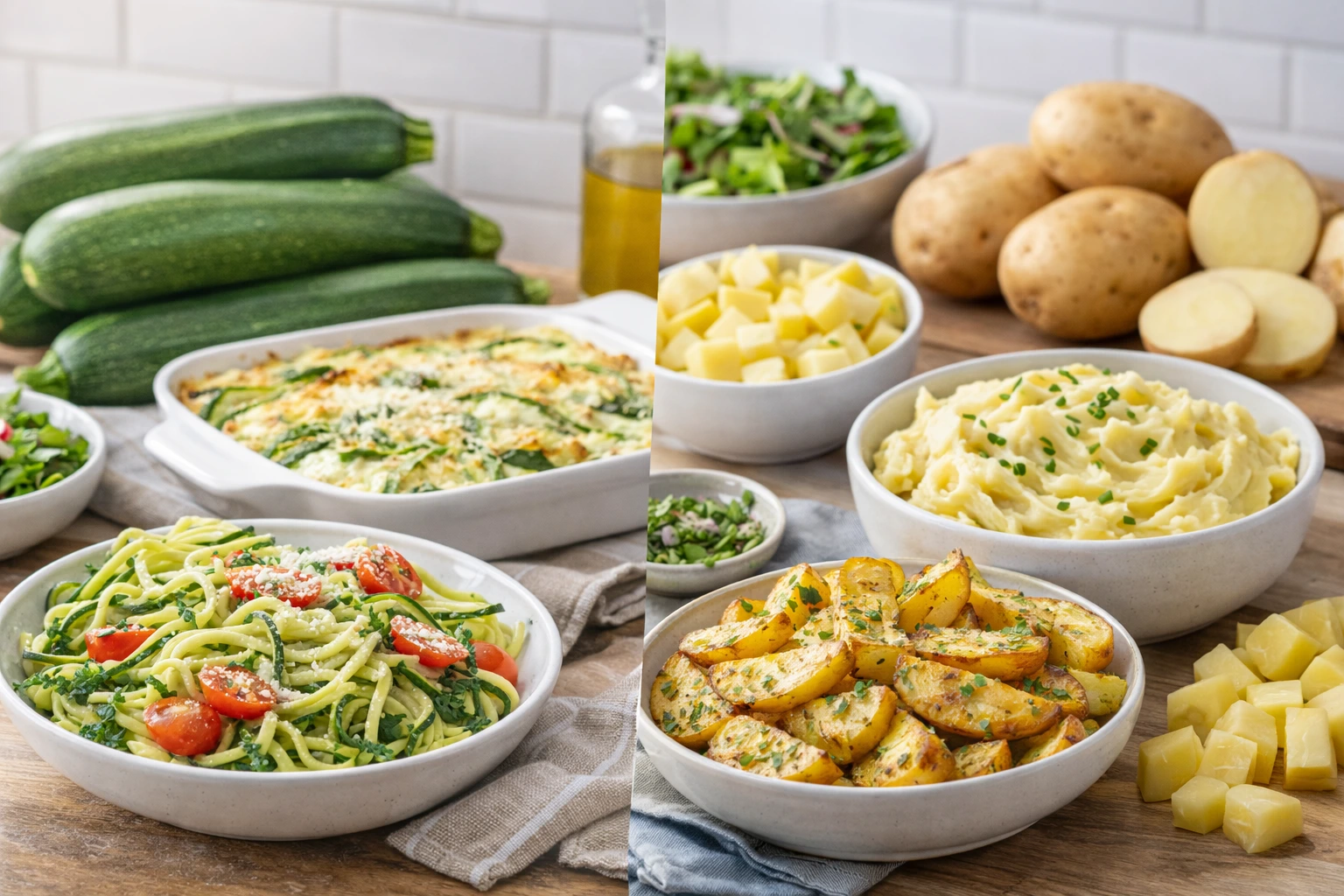
Courgettes are generally lighter because they contain fewer calories and more water, making the meal less heavy. Potatoes are more filling and satisfying, and which of the two works better depends on whether the goal is lightness or sustainability.
When people try to lighten their daily meals, potatoes are often the first thing they think of. Courgettes, on the other hand, are generally seen as an easier option. Both appear in similar dishes, but once cooked and eaten, they perform very differently.
Instead of labelling one “good” and the other “bad”, it’s helpful to look at how each ingredient performs in real food—how filling it is and how it fits into familiar home dishes.
Why does this comparison come up so often
Courgettes and potatoes are both versatile vegetables used in roasting, mashing, tray bakes, and side dishes. When someone wants to reduce calories or avoid overly heavy meals, the question often becomes whether courgettes can replace potatoes entirely.
In practice, these two foods serve different purposes. One adds volume and freshness, while the other adds substance and comfort.
Calories and carbohydrates
Courgettes are naturally low in calories because most of their weight comes from water. Even a generous portion contributes relatively little energy to a meal.
Potatoes are more calorie-dense. They contain more carbohydrates and less water, which means smaller portions deliver more energy.
This difference explains why meals built around courgettes tend to feel lighter, while potato-based meals feel more substantial.
Fibre and digestion
Both vegetables provide fibre, but in different ways.
Potatoes contain fibre that contributes to fullness and slower digestion, especially when eaten with the skin. Courgettes contain fibre as well, but because they are mostly water, the overall effect on digestion is gentler.
For people sensitive to heavy meals, courgettes may feel easier to digest. For those who find themselves hungry soon after eating, potatoes may feel more satisfying.
Fullness: which keeps you satisfied longer?
Potatoes generally keep people full for longer. Their density and carbohydrate content slow digestion and provide steady energy.
Courgettes can fill the plate visually, but because they are lighter, hunger may return sooner. This is not necessarily a drawback — it depends on the meal.
For lunch or dinner meant to last several hours, potatoes often help meals feel complete. For lighter evening meals or sides, courgettes may be enough.
Portion size makes the biggest difference
The effect of either vegetable depends heavily on portion size.
A small portion of potatoes can feel just as satisfying as a large portion of courgettes. Problems tend to arise when potatoes are served in large amounts or cooked with heavy additions like butter or oil.
Lighter cooking is often about adjusting portions rather than eliminating ingredients.
Taste and texture in everyday meals
Courgettes have a mild flavour and soft texture when cooked. They absorb seasoning easily and work well alongside stronger ingredients such as garlic, herbs, and cheese.
Potatoes have a naturally richer taste and firmer texture. Even when simply boiled or roasted, they provide a sense of comfort that many people associate with home cooking.
This difference shapes how each vegetable feels in a meal.
Roasting courgettes vs roasting potatoes
Roasted courgettes cook quickly and soften easily. They brown lightly but release water as they cook, which can make them less crisp unless spaced well on the tray.
Roasted potatoes take longer but develop a crisp exterior and fluffy interior. They are more forgiving and maintain texture even when cooked in batches.
For lighter tray bakes, many cooks use a mix — fewer potatoes for structure and more courgettes for volume.
Mash and creamy sides
Potatoes are well suited to mashing because they break down smoothly and create a creamy texture without much effort.
Courgettes can be mashed or blended, but their water content means they require draining and strong seasoning to avoid a loose result.
Some people combine the two to create a lighter mash that still feels familiar.
Chips and wedges
Potato chips and wedges are calorie-dense, especially when fried or heavily oiled. They are enjoyable but easy to overeat.
Courgette fries use less oil and cook faster, but they are softer and less filling. They work best as a side rather than a direct replacement.
Mixing both often leads to a more balanced plate.
Weeknight cooking and convenience
Courgettes are quick to prepare and cook, making them useful for last-minute meals. They suit stir-fries, pasta dishes, and quick tray bakes.
Potatoes take longer but are reliable for batch cooking and family meals. They also reheat well, which suits leftovers.
Time and routine often determine which vegetable feels more practical.
Which is better for calorie-aware meals?
Courgettes make calorie control easier because large portions add minimal energy to a dish. They help meals feel abundant without feeling heavy.
Potatoes require more mindful portions, but they can still fit into lighter cooking when boiled or lightly roasted.
Neither needs to be avoided—they simply need to be used differently.
Who might prefer each?
Courgettes often suit people who enjoy vegetable-forward meals and lighter evening dishes.
Potatoes often suit families, colder weather cooking, and meals built around comfort and fullness.
Preference is shaped by habit as much as nutrition.
Using both together
Many balanced meals include both vegetables.
Combining them allows cooks to reduce heaviness without losing satisfaction. Courgettes add volume and freshness, while potatoes provide structure and familiarity.
This approach often feels more sustainable than strict swaps.
Frequently asked questions: –
Is courgette healthier than potato?
Courgettes and potatoes serve different purposes in everyday cooking. Courgettes are lower in calories and higher in water, which makes meals feel lighter. Potatoes provide more energy and natural starch, which helps people feel full for longer. One is not “better” overall — it depends on what the meal needs.
Do potatoes always mean high calories?
No. Potatoes themselves are not high in calories. How they are cooked matters more. Boiled, baked, or air-fried potatoes are far lighter than chips or buttery mash. The extras added during cooking usually increase the calorie load, not the potato itself.
Can courgettes replace potatoes in most meals?
Courgettes can replace potatoes in some meals, especially when the goal is a lighter plate. They work well in tray bakes, stir-fries, pasta-style dishes, and side vegetables. However, they do not fully replace potatoes in meals where fullness and structure are important, such as roasts or mash-based dishes.
Which is better for weight-conscious cooking?
For calorie-aware cooking, courgettes are easier to use in larger portions without making meals feel heavy. Potatoes can still fit into weight-conscious meals, but portion size and cooking method matter more. Many people find success by using both together rather than choosing only one.
Disclaimer
This article is for general information only and does not replace personalised dietary advice.
Latest Posts: –
- ABC Juice Benefits: What This Nutrient-Rich Drink Really Does for Your Body
- Papaya vs Avocado: Which Fruit Is Better for Weight Loss, Digestion, and Overall Health?
- Papaya Benefits for Women: Skin, Hormones & Weight Loss Explained
- Fig Benefits for Men: Can Figs Really Help Boost Energy and Stamina?
- Papaya for Digestion: How This Enzyme-Rich Fruit Fixes Your Gut Naturally





Leave a comment