



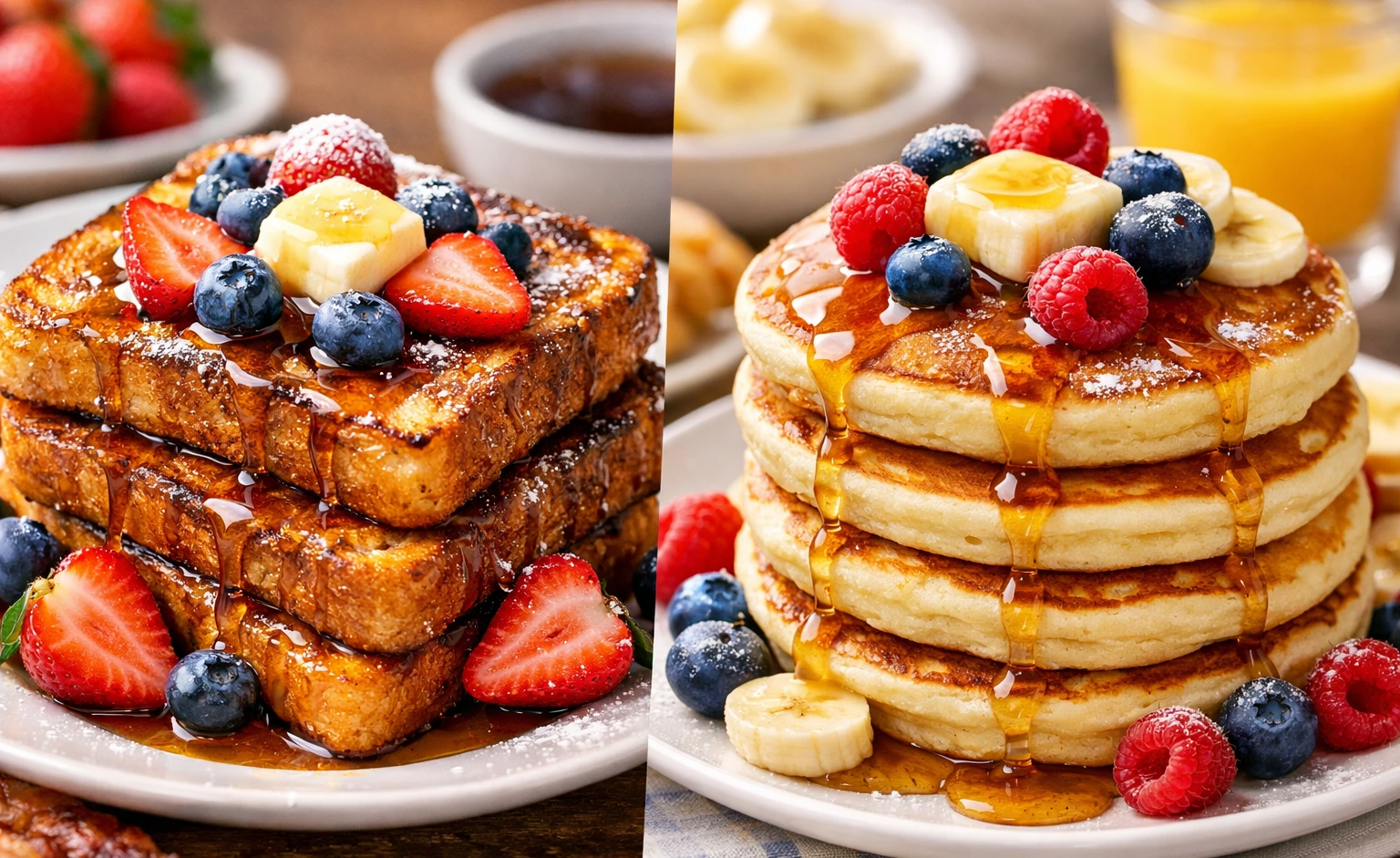
Breakfast is often described as the most important meal of the day, but for many people, it is also the most personal one. Some mornings call for speed and simplicity, while others invite something warm, familiar, and comforting. Among the many breakfast favourites, French toast and pancakes remain two of the most commonly chosen options in UK households.
Both sit somewhere between everyday food and a weekend treat. Both can be simple or indulgent. And both spark quiet debates at kitchen tables: which one actually fits better into daily life?
Rather than asking which is “healthier” or “better”, this comparison looks at how French toast and pancakes really fit into modern routines — considering preparation, flexibility, fullness, and how people actually eat breakfast in real life.
Why These Two Breakfasts Are So Often Compared
French toast and pancakes share a similar role. They are warm, familiar, and adaptable. Neither is strictly savoury or sweet, which allows people to customise them based on mood, time, and ingredients already at home.
But the way people experience them can feel quite different.
French toast often feels like a solution — a way to use bread that is no longer fresh. Pancakes, on the other hand, feel more like a choice — something you decide to make rather than something you rescue from the cupboard.
That difference alone changes how they fit into everyday breakfast habits.
Preparation: What Mornings Really Allow
French Toast in Real Life
French toast works with what most kitchens already have: bread, eggs, and milk. It does not demand perfect ingredients. Slightly dry bread often works better, soaking up the mixture without falling apart.
The process is quick and forgiving. A bowl, a fork, and a frying pan are usually enough. There is no batter consistency to worry about and no resting time required.
This makes French toast surprisingly practical on busy mornings, especially when breakfast needs to happen between getting dressed and leaving the house.
Pancakes in Real Life
Pancakes feel simple, but they ask for more attention. Batter needs to be mixed carefully to avoid lumps or overly thick texture. The pan temperature matters more, and flipping at the wrong moment can quickly turn a pancake into a mess.
They are not difficult, but they are less flexible. Pancakes tend to work better when there is a bit of time to focus, which is why many people associate them with weekends or slower mornings.
Texture and Eating Experience
Texture plays a bigger role in breakfast satisfaction than many people realise.
French toast offers contrast. A lightly crisp outside with a soft, custard-like centre gives each bite a balance of comfort and structure. It feels filling without feeling heavy, especially when cooked gently.
Pancakes are softer and more uniform. Their appeal lies in fluffiness and warmth. When stacked, they feel indulgent and slow, encouraging people to sit down rather than eat on the move.
Neither is better — they simply suit different mornings.
How Filling Do They Actually Feel?
One common reason people rethink their breakfast choices is how long they stay full afterwards.
French toast tends to feel more satisfying for many people because it is built around bread and eggs together. The combination often feels more grounding, especially when eaten without excessive toppings.
Pancakes can be filling too, but they often invite extras — syrup, butter, spreads — which can turn a light breakfast into something heavier without necessarily increasing fullness.
People who prefer a steady, settled feeling often lean towards French toast, while those who enjoy a more indulgent start often choose pancakes.
Customisation Without Overthinking
French Toast Flexibility
French toast adapts quietly. It works just as well with fruit as it does with savoury additions. A simple sprinkle of cinnamon, a slice of banana, or even a pinch of salt can change the entire feel of the dish.
It also adjusts easily to portion size. One slice can be enough. Two slices can feel generous. There is no pressure to make a full batch.
Pancake Flexibility
Pancakes offer visual flexibility. Stacks, toppings, drizzles, and spreads allow people to create a breakfast that feels special.
However, pancakes are less forgiving in terms of quantity. Batter usually makes more than one pancake, which often leads to eating more than originally planned — not because of hunger, but because it feels wasteful not to finish them.
Breakfast and Daily Routines
In everyday life, breakfast often competes with time.
French toast fits naturally into weekday routines. It can be cooked quickly, eaten slowly or fast, and adjusted without much thought.
Pancakes fit better into intentional moments. They encourage sitting down, setting plates, and enjoying the process. That is not a drawback — it simply means they suit different days.
Many people do not choose one over the other permanently. They choose based on the rhythm of their week.
Cost and Practicality
From a cost perspective, both breakfasts are affordable, but French toast often edges ahead simply because it makes use of ingredients already at home. Bread that might otherwise be thrown away becomes the base of a meal.
Pancakes sometimes require additional ingredients or fresh supplies, especially if made from scratch rather than a mix. Over time, this can make them feel more like an occasional treat rather than a default option.
How They Fit Into Modern Eating Habits
Modern breakfast habits are less about perfection and more about consistency.
French toast aligns well with this shift. It feels practical, adaptable, and easy to repeat without becoming boring.
Pancakes align with enjoyment and balance. They remind people that breakfast does not always need to be rushed or optimised. Sometimes, it can simply be enjoyed.
When French Toast Makes More Sense
- On busy mornings
- When using ingredients already available
- When portion control matters
- When breakfast needs to feel steady and grounding
When Pancakes Make More Sense
- On slower mornings
- When sharing breakfast with others
- When food is part of the experience, not just fuel
- When breakfast feels like a small celebration
A More Realistic Way to Look at Breakfast Choices
It is easy to compare foods on paper. It is harder — and more useful — to compare how they fit into real lives.
French toast and pancakes are not rivals. They are tools. Each serves a different purpose depending on time, mood, and routine.
Rather than asking which one is “better”, the more helpful question is: Which one fits today?
For many people, that answer changes from one morning to the next — and that is exactly how breakfast should work.
Disclaimer
This article is for general lifestyle and food awareness only. It does not provide medical, nutritional, or professional dietary advice. Individual preferences and needs may vary.
Latest Posts: –
- ABC Juice Benefits: What This Nutrient-Rich Drink Really Does for Your Body
- Papaya vs Avocado: Which Fruit Is Better for Weight Loss, Digestion, and Overall Health?
- Papaya Benefits for Women: Skin, Hormones & Weight Loss Explained
- Fig Benefits for Men: Can Figs Really Help Boost Energy and Stamina?
- Papaya for Digestion: How This Enzyme-Rich Fruit Fixes Your Gut Naturally







Leave a comment