





Tight hip flexors can pull the pelvis forward and put excessive pressure on the lower back. This often develops after long hours of sitting. Gentle hip flexor stretching can improve hip mobility, reduce muscle imbalance, and promote more comfortable movement of the lower back during daily activities.
Why Hip Flexors Matter More Than Most People Realise
Hip flexors are a group of muscles at the front of the hips that help lift the knee and bend the waist. They play a key role in walking, standing, and maintaining posture.
When you sit for long periods, these muscles stay in a shortened position. Over time, they may lose flexibility and stop working efficiently, especially if movement is limited during the day.
How Tight Hip Flexors Affect the Lower Back
When hip flexors become tight, they can gently pull the pelvis forward into a tilted position. This changes how the lower back supports your body.
Instead of sharing the workload evenly with the hips and core, the lower back may take on extra strain. This does not mean injury, but it can contribute to stiffness, fatigue, or reduced comfort with everyday movement.
This muscle imbalance is common in people with desk jobs or low activity levels.
5 Safe Hip Flexor Stretches to Try at Home
These stretches are gentle and suitable for most adults. Move slowly and stop if anything feels sharp or uncomfortable.
1. Kneeling Hip Flexor Stretch
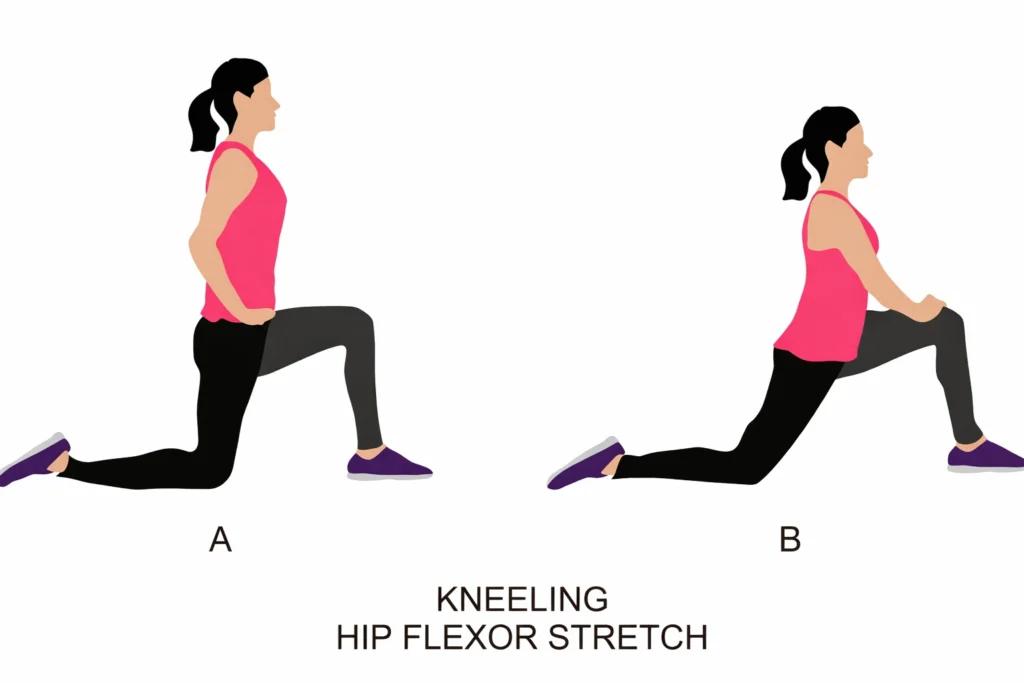
How to do it
Kneel on one knee with the other foot in front. Keep your chest upright and gently shift your hips forward.
Duration
20–30 seconds per side
Common mistakes
Overarching the lower back or leaning forward
Who should avoid
Anyone with knee discomfort without padding
2. Standing Lunge Stretch

How to do it
Step one foot back into a shallow lunge. Keep your back heel lifted and hips facing forward.
Duration
20–30 seconds per side
Common mistakes
Twisting the hips or bouncing
Who should avoid
People with balance issues, unless holding support
3. Gentle Pigeon Pose (Modified)

How to do it
From a seated or supported position, place one leg bent in front while the other stays extended behind. Stay upright.
Duration
20 seconds per side
Common mistakes
Forcing depth or leaning heavily into the stretch
Who should avoid
Those with hip or knee conditions
4. Figure-4 Stretch (Seated or Lying)

How to do it
Cross one ankle over the opposite knee and gently press the knee outward.
Duration
20–30 seconds per side
Common mistakes
Pulling aggressively
Who should avoid
People with hip joint discomfort
5. Couch Stretch (Modified Version)

How to do it
Place one knee on the floor near a sofa or chair, with the foot resting lightly behind. Keep the torso upright.
Duration
15–20 seconds per side
Common mistakes
Letting the ribs flare or lower back arch
Who should avoid
Anyone with knee or lower back sensitivity
How Often Should You Stretch Hip Flexors?
For most people, stretching hip flexors 3–5 times per week is enough. Short, consistent sessions are more effective than occasional long stretches.
Stretching after work or in the evening often feels more comfortable, as the body is warmer and less stiff.
Signs Your Hip Flexors May Be Contributing to Lower Back Tightness
You may notice:
- Stiffness after sitting
- Discomfort when standing upright after long periods
- Tightness across the front of the hips
- Reduced ease with walking or bending
These signs do not mean something is wrong, but they suggest mobility may benefit from gentle attention.
When Stretching May Not Be Appropriate
Avoid stretching and speak to a GP if you experience:
- Persistent or worsening pain
- Pain following a fall or accident
- Numbness, tingling, or weakness
- Discomfort that does not improve with rest
🔹 FAQs
Can tight hip flexors really affect the lower back?
Yes. Tight hip flexors can alter pelvic position, which may increase strain on the lower back over time.
How long does it take to notice improvement?
Many people notice easier movement within a few weeks of consistent stretching, though this varies.
Should hip flexor stretches be painful?
No. A stretch should feel gentle and controlled, never sharp or forced.
Is stretching alone enough?
Stretching helps mobility, but balanced movement and regular activity also matter.
Disclaimer
This article is for general informational purposes only and does not replace personalised medical advice. Individual needs vary. If symptoms persist or worsen, consult a qualified healthcare professional.
Latest Posts: –
- ABC Juice Benefits: What This Nutrient-Rich Drink Really Does for Your Body
- Papaya vs Avocado: Which Fruit Is Better for Weight Loss, Digestion, and Overall Health?
- Papaya Benefits for Women: Skin, Hormones & Weight Loss Explained
- Fig Benefits for Men: Can Figs Really Help Boost Energy and Stamina?
- Papaya for Digestion: How This Enzyme-Rich Fruit Fixes Your Gut Naturally







Leave a comment