




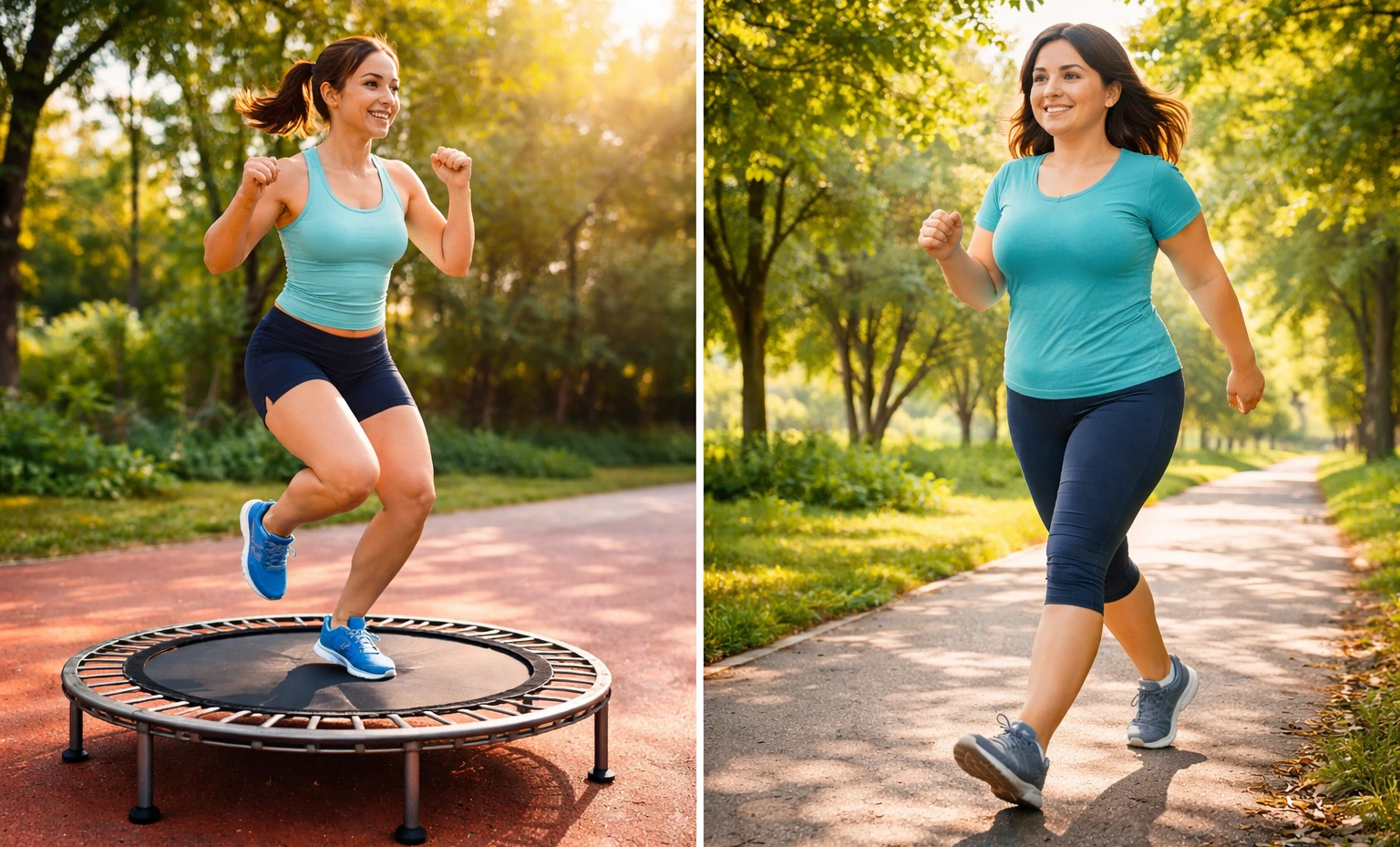
Mini trampoline workouts and walking can both support fat loss, but neither works on its own. Fat loss depends on burning more calories than you eat over time. Walking is easier to sustain daily, while mini trampolines may feel more intense. The better choice is the one you can do consistently.
Why Do People Compare Mini Trampolines and Walking?
Walking is one of the most common forms of exercise in the world. It is free, simple, and easy to fit into daily life. Almost anyone can do it, and it does not require special skills or equipment.
Mini trampolines, often called rebounders, are popular on social media. Short bouncing workouts look fun and easy. Many people like the idea of exercising at home without going outside.
Both options are low-impact compared to running or jumping on hard ground. This makes them appealing to people who want to lose fat without stressing their joints. When people search for easy workouts that feel doable, “mini trampoline vs walking” naturally comes up.
What Actually Causes Fat Loss?
Fat loss is not about one special exercise. It comes from a calorie deficit. That means your body uses more energy than it gets from food over time.
Exercise helps because it increases daily calorie burn. But food intake plays a big role too. You can walk or bounce every day and still not lose fat if you eat more than your body needs.
Daily movement also matters. Someone who moves often throughout the day may burn more calories than someone who only works out for 20 minutes and sits the rest of the time.
Sleep and stress matter as well. Poor sleep can increase hunger. High stress can lead to overeating. These factors do not get much attention, but they strongly affect fat loss.
No exercise can overcome poor habits in all other areas. Walking and mini trampoline workouts both work best when they are part of a balanced routine.
How Do Movement and Intensity Affect Results?
Walking usually keeps your heart rate steady. A relaxed walk feels easy, while a fast walk can feel challenging. Hills, speed, and distance all change how hard it feels.
Mini trampoline workouts often feel more intense in a shorter time. The constant bouncing can raise your heart rate faster, especially if you add arm movements or faster rhythms.
The effort you put in matters more than the tool you use. A slow walk and light bouncing may burn similar calories. A brisk walk or energetic bouncing session will burn more.
Body weight also affects calorie burn. Heavier people usually burn more calories doing the same activity than lighter people. This applies to both walking and trampoline workouts.
Instead of asking which is better in theory, it helps to ask which one you will do with enough effort, often enough, to matter.
What About Joint Impact and Comfort?
Walking is low-impact, especially on flat ground with good shoes. Most people find it gentle on the joints. Long walks on hard surfaces may bother knees or hips for some people, but many can adjust pace or distance.
Mini trampolines are cushioned, which reduces impact compared to jumping on the floor. However, bouncing requires balance and coordination. Some people feel unsteady at first.
Those with ankle or balance issues may need time to feel comfortable on a trampoline. Holding a support bar or moving slowly can help.
Injury risk exists with both options, but it is usually low when done properly. Overuse injuries can happen with too much walking. Falls can happen if bouncing is done carelessly.
Comfort often decides what people stick with. Pain or fear of injury can stop progress faster than anything else.
Can You Really Stick With It in Real Life?
This is where many fitness plans fail.
Walking depends on weather, safety, and access to outdoor space. Cold, heat, rain, or busy schedules can make it harder to go out. Still, walking can be done almost anywhere, even indoors in short bouts.
Mini trampolines need space at home. Not everyone has room for equipment. Some people worry about noise, especially in apartments. Others enjoy the privacy of exercising at home.
Motivation matters. Some people enjoy walking because it clears their minds. Others get bored unless they listen to music or podcasts. Bouncing feels playful to some people but repetitive to others.
Long-term consistency matters more than short-term excitement. A workout that fits your daily life usually wins. If you skip workouts often, even the “better for fat loss” option will not help.
Muscle Use and Overall Fitness Level
Walking mainly uses the muscles of the legs and hips. It also works posture muscles and supports basic endurance. It does not build much muscle, but it helps keep the body active.
Mini trampoline workouts involve balance. This can engage the core muscles more, especially if movements are controlled. Arms are often used to help with rhythm and balance.
Neither option replaces strength training. Building muscle helps support fat loss because muscle uses more energy at rest. Even simple bodyweight exercises can help.
Walking and trampoline workouts work well as part of a broader routine. They support movement, calorie burn, and heart health, but they are not complete solutions on their own.
Common Myths That Cause Confusion
You may have heard claims like “10 minutes on a trampoline equals one hour of running.” This idea spreads easily online, but it is misleading. Calorie burn depends on effort, body size, and time. Short workouts can help, but they are not magic.
Another common myth is that walking does not burn fat. Walking absolutely burns calories. Over time, those calories add up. Many people lose fat with walking because they can do it often.
Viral before-and-after photos can create unrealistic expectations. Changes usually come from a mix of diet, movement, and time. One piece of equipment rarely explains the full story.
Simple workouts are often underestimated because they do not look exciting. In reality, boring and steady habits often lead to the best results.
Who Might Prefer Walking?
Walking often works well for beginners. It feels natural and does not require learning new skills. Older adults often prefer it because it feels safe and familiar.
People who enjoy fresh air and quiet time may find walking relaxing. It can also be social. Walking with friends or family makes it feel less like exercise.
Those with joint discomfort may find walking easier to control. You can adjust pace, distance, and terrain as needed.
Busy people can break walking into short sessions. Ten minutes here and there still count.
Who Might Prefer a Mini Trampoline?
Mini trampolines appeal to people who want to exercise at home. They can be useful when weather or safety makes outdoor walking difficult.
Some people enjoy the fun, playful feeling of bouncing. This can help with motivation, especially for those who get bored easily.
Short workouts may feel more efficient. A quick bounce session can raise the heart rate fast, which some people like.
People who enjoy guided videos may prefer trampoline workouts because many routines are designed for home use.
So, which is better for fat loss?
The question “mini trampoline vs walking” does not have one winner. Both can be better for fat loss when done regularly and paired with reasonable eating habits.
Walking is simple, reliable, and easy to repeat daily. Mini trampolines offer variety and intensity in a small space. Neither works without consistency.
The best choice is the one you will actually do week after week while paying attention to how much you eat. Trends fade, but habits last. When fat loss is the goal, steady effort beats fancy equipment every time.
🧩 FAQs
Is a mini trampoline better than walking for fat loss?
Neither is automatically better. Fat loss depends on consistency, effort, and overall lifestyle habits, not on any single exercise.
Can walking help with fat loss?
Yes. Regular walking can support fat loss when combined with a balanced diet and consistent movement.
Do mini trampolines burn more calories than walking?
It depends on intensity. Active trampoline workouts may raise heart rate faster, while brisk walking burns calories steadily over time.
Which is easier to stick with long-term?
Walking is easier for most people because it requires no equipment. Trampolines may work better for those who prefer indoor workouts.
Is one safer for joints?
Both are considered low-impact. Comfort depends on balance, surface, and personal preference rather than the exercise itself.
DISCLAIMER
This article is for general information only and does not replace professional medical advice. Fat loss results vary based on individual habits, diet, and lifestyle factors.
Latest Posts:
- What Happens to Your Skin When You Add a 5-Seed Trail Mix to Your Daily Diet
- Jogging vs Brisk Walking: Which Is Better for Weight Loss?
- 7 Homemade Drinks That May Help Improve Iron Deficiency and Boost Energy Levels
- Drinking Olive Oil Daily: Real Benefits, Side Effects & What Experts Want You to Know
- What are people thinking about Zepbound and sleep apnea?
- best cardio for beginners
- cardio exercise comparison
- daily walking benefits
- fat loss exercises at home
- fat loss without gym
- home workouts for fat loss
- joint friendly exercises
- low impact cardio exercise
- mini trampoline vs walking
- mini trampoline workout
- rebounding exercise benefits
- simple workouts for weight loss
- walking for fat loss
- walking vs trampoline workout








Leave a comment