




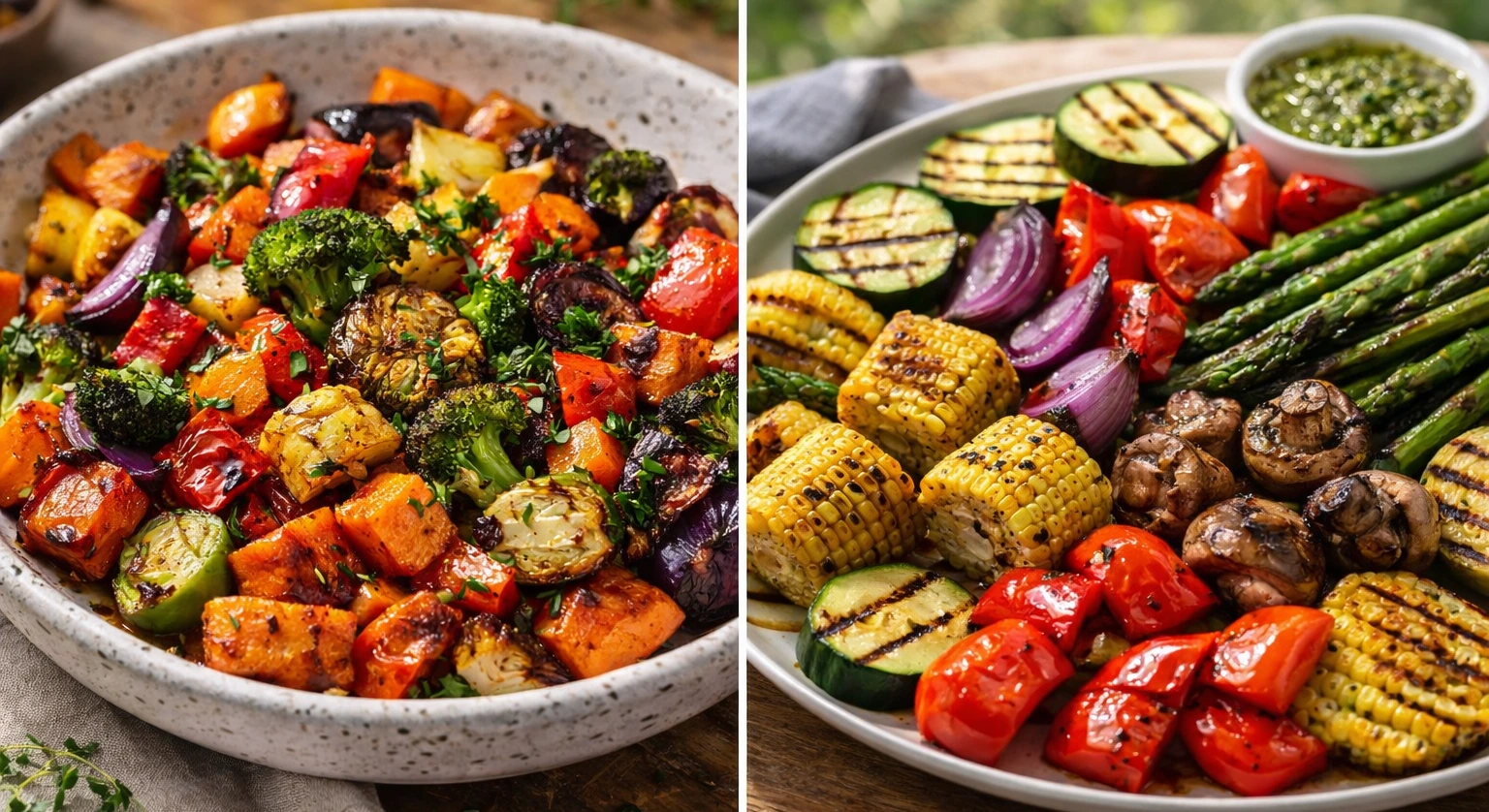
When people compare roasted vegetables vs grilled vegetables, they’re usually reacting to how heat changes food. Roasting uses dry, surrounding heat inside an oven, while grilling relies on direct heat or open flame. That difference affects everything—from texture to flavor. Roasted vegetables tend to brown evenly, turning soft inside with lightly crisp edges. Grilled vegetables cook faster on the surface, often developing charred spots and a smokier taste. Roasting typically brings out deeper caramelized sweetness, while grilling adds a lighter, smoky profile. Neither method is inherently healthier. The outcome depends on temperature, oil use, and how much charring occurs. Understanding how each technique works helps you choose the right method for taste, convenience, and everyday nutrition goals—without turning cooking into a health debate.
How the Cooking Method Changes Texture and Flavor
Heat doesn’t just cook vegetables—it reshapes their chemistry. Roasting encourages the Maillard reaction, a natural process where sugars and proteins react under steady heat. This creates browning and complex flavors that many people describe as nutty or sweet. Because the oven surrounds food with hot air, the surface browns gradually while moisture evaporates slowly. That’s why roasted carrots or Brussels sprouts often taste richer and slightly sweet.
Grilling works differently. Vegetables are exposed to high, direct heat, often from below. This causes faster surface caramelization and occasional char. Smoke from the grill adds aroma, while brief contact with very high heat can introduce a mild bitterness—especially if sugars burn. The inside may remain firmer, which is why grilled zucchini or peppers feel lighter and less dense than roasted versions.
Moisture loss also varies. Roasting drives off water steadily, concentrating flavors. Grilling evaporates moisture quickly at the surface, leaving interiors juicier if the timing is right. That balance explains why roasted vegetables often taste sweeter, while grilled vegetables taste brighter and smokier.
Temperature & Heat Distribution
Ovens provide controlled, even heat. When you roast vegetables, hot air circulates around the pan, cooking food from all sides. This predictability makes it easier to achieve consistent results, especially when vegetables are cut evenly. Root vegetables like potatoes or carrots benefit from this steady environment because they need time to soften all the way through.
Grills operate at higher temperatures with less uniformity. Hot spots are common, especially on charcoal grills. This isn’t a flaw—it’s part of the technique—but it means attention matters. Smaller cuts cook fast and can burn if left unattended. Vegetables with higher water content, like zucchini or bell peppers, handle direct heat better because their moisture buffers against burning.
Cut size plays a big role. Thick chunks roast well because heat penetrates slowly. Thin slices grill better because they cook through before the surface chars too much. Understanding this helps explain why some vegetables shine in one method but struggle in the other.
Nutrition Differences: Is One Healthier?
From a nutrition standpoint, the difference between grilling vs roasting vegetables is often smaller than people expect. Both methods preserve most minerals and fiber. Vitamin retention can vary slightly, but not dramatically, when cooking times are reasonable.
Vitamin C is sensitive to heat, so longer cooking times may reduce it somewhat. Roasting typically takes longer than grilling, which means certain vegetables may lose a bit more vitamin C in the oven. That said, the overall nutritional impact remains modest.
Calories are influenced more by added fats than by heat itself. Roasting often uses more oil to coat vegetables evenly, which can raise calorie content. Grilling may use less oil, especially if vegetables are brushed lightly or marinated sparingly.
Charring is worth mentioning, but without alarm. Heavy blackening can produce compounds that are associated with health concerns when consumed frequently. Occasional light char isn’t a major issue, but moderation matters. Avoiding excessive burning keeps both flavor and nutrition in balance.
Oil Usage & Calorie Impact
Oil is the quiet variable in this comparison. When roasting, vegetables are usually tossed in oil so they don’t dry out and so browning happens evenly. That coating improves flavor but can increase calorie density if portions aren’t measured.
Grilling typically uses oil differently. Vegetables may be brushed lightly or included in a marinade. Because excess oil drips away or isn’t fully absorbed, grilled vegetable calories can be lower—though this varies depending on technique.
What matters most isn’t the method, but control. A tablespoon of oil adds about 120 calories, regardless of whether it’s used in an oven or on a grill. Being mindful of oil quantity has a bigger nutritional impact than choosing roasting over grilling.
Which Is Better for Weeknight Cooking?
Roasting often wins on convenience. You can prep vegetables, spread them on a tray, and let the oven do the work. Batch roasting is efficient, especially when feeding multiple people or planning leftovers. Once in the oven, cooking is mostly hands-off.
Grilling requires more attention. Vegetables need to be flipped and monitored closely. Weather also plays a role for outdoor grills, while indoor grilling options may be limited by smoke or space.
For busy evenings, roasting is predictable and forgiving. Grilling can be faster for small portions, but it demands presence. The “better” option often depends on how much time and energy you have after a long day.
Meal Prep & Storage
This section matters more than many people realize. Roasted vegetables generally store better. Their texture holds up after refrigeration, especially for dense vegetables like potatoes or cauliflower. Reheating brings back much of their original flavor without turning them mushy.
Grilled vegetables tend to soften faster once stored. Because grilling preserves more internal moisture, refrigeration can lead to sogginess. Reheating may intensify charred flavors while reducing freshness.
For meal prep, roasting is often the more reliable choice. If you plan to cook once and eat over several days, roasted vegetables maintain quality longer and reheat more evenly.
Best Vegetables for Each Method
Choosing the right vegetable for the right method improves results more than any seasoning trick.
Roasting works well for:
- Potatoes
- Carrots
- Broccoli
- Cauliflower
- Brussels sprouts
These vegetables are dense or fibrous. They need sustained heat to soften fully and benefit from gradual caramelization.
Grilling works well for:
- Zucchini
- Bell peppers
- Eggplant
- Corn
- Mushrooms
These have higher water content or flexible structures. They cook quickly and absorb smoky flavor without drying out.
This isn’t a strict rule—experimentation is part of cooking—but understanding structure and moisture helps explain why some vegetables feel “right” on the grill and others shine in the oven.
Flavor Pairing Differences
Roasted vegetables pair naturally with dry herbs and warming spices. Garlic, thyme, rosemary, paprika, and black pepper complement caramelized flavors. Roasting also works well alongside proteins like chicken, fish, or legumes where even heat and shared cooking time simplify meals.
Grilled vegetables lean toward brighter, acidic flavors. Marinades with lemon, balsamic vinegar, or yogurt balance smokiness. Smoked paprika, cumin, or chilli flakes enhance grilled notes. These vegetables pair well with grilled meats, tofu, or seafood, creating cohesive flavor profiles.
Choosing pairings based on cooking method keeps meals balanced and intentional rather than overwhelming.
Safety & Cooking Tips
Good technique keeps both flavor and nutrition intact:
- Avoid heavy black charring; aim for light browning.
- Use moderate heat rather than maximum flame.
- Flip vegetables regularly when grilling.
- Preheat ovens and grills for even cooking.
- Cut vegetables uniformly to prevent uneven doneness.
These simple habits improve consistency without complicating cooking.
Final Takeaway
Roasting produces evenly cooked vegetables with deeper, sweeter flavors and practical benefits for meal prep. Grilling creates lighter textures with smoky notes and faster surface cooking. From a health perspective, differences depend more on oil use and char level than on the method itself. Both roasting and grilling fit comfortably into balanced eating patterns. There’s no dramatic winner—just different tools for different meals.
FAQs
Are grilled vegetables healthier than roasted vegetables?
Grilled vegetables are not automatically healthier. Nutrition differences are usually small and depend more on oil use, cooking time, and charring level than the method itself.
Do roasted vegetables contain more calories?
Roasted vegetables may contain more calories if more oil is used. Measuring oil portions helps control calorie intake regardless of cooking method.
Which method tastes better, roasting or grilling?
Roasting often produces sweeter, caramelized flavors, while grilling adds smoky notes and light char. Taste preference varies by vegetable and seasoning.
Can vegetables be roasted instead of grilled?
Yes. Many vegetables roast well in the oven, especially dense ones like potatoes and carrots, though the smoky flavor from grilling will be absent.
Are grilled vegetables safe to eat?
Grilled vegetables are safe when lightly charred. Excessive black charring should be avoided for the best flavor and balanced nutrition.
Which cooking method is better for meal prep?
Roasted vegetables usually store and reheat better than grilled vegetables, making them more practical for meal prep.
DISCLAIMER
This article is for informational purposes only and does not substitute professional medical or nutritional advice. Individual dietary needs vary. Always consult a qualified healthcare or nutrition professional for personalized guidance.
Latest Posts:
- What Happens to Your Skin When You Add a 5-Seed Trail Mix to Your Daily Diet
- Jogging vs Brisk Walking: Which Is Better for Weight Loss?
- 7 Homemade Drinks That May Help Improve Iron Deficiency and Boost Energy Levels
- Drinking Olive Oil Daily: Real Benefits, Side Effects & What Experts Want You to Know
- What are people thinking about Zepbound and sleep apnea?
- best vegetables for grilling
- best vegetables for roasting
- grilled vegetable calories
- grilling vegetables at home
- grilling vs roasting vegetables
- healthy cooking methods
- oven roasting vegetables
- roasted vegetable nutrition
- roasted vegetables vs grilled vegetables
- vegetable cooking tips
- which is healthier roasting or grilling




Leave a comment