




You go to bed on time, get a full 7–8 hours of sleep, and expect to feel fresh in the morning. But instead, your body feels heavy, your mind feels slow, and even getting out of bed feels very difficult.
At first, this situation can feel confusing. You followed the basics—you got enough sleep, went to bed on time, and avoided distractions—yet something still doesn’t feel right.
This problem is more common than you think. Many people face it every day without knowing the real reason. And in most cases, the issue is not that you are sleeping too little—it is that your body is not recovering the way it should.
⚡ Quick Answer
Feeling tired even after a full night’s sleep usually happens because your sleep is not smooth and fully restorative. Stress, poor habits, hidden disturbances, or health issues can break your sleep flow, causing tiredness even after 7–8 hours.
Why do I feel tired even after sleeping 8 hours?
Feeling tired even after getting enough sleep often means your body didn’t fully recover overnight. Sleep isn’t just about time—it depends on how smoothly your body moves through deep and REM stages. If that process gets disturbed by stress, poor habits, or hidden interruptions, you may still wake up feeling low on energy.
Why Sleeping More Doesn’t Always Mean Feeling Rested
It feels natural to think that more sleep will fix tiredness. If you feel tired after 6 hours, then getting 8 or 9 hours should make you feel better. But sleep does not work that simply.
Your body does not measure rest only in hours—it also depends on sleep cycles. During the night, your brain moves through different stages, and each stage helps your body recover.
First, you enter light sleep. Then your body moves into deep sleep, where physical repair happens. After that comes REM sleep, which supports your mind, memory, and emotions.
If these cycles get disturbed—even for a short time—your body cannot properly reach these important stages. You may spend enough time in bed, but recovery stays incomplete.
Over time, this creates a pattern where increasing sleep time alone does not improve your energy.
The Difference Between Sleep Quantity vs Quality

Most people focus only on how many hours they sleep, but what really matters is what happens during those hours.
Sleep quantity means the total time you spend sleeping. Sleep quality means how smoothly and deeply your body moves through sleep stages without disturbance.
To understand this clearly:
- Sleep quantity means how many hours you stayed in bed
- Sleep quality means how refreshing those hours were
- Good quality sleep allows deep and REM cycles to complete naturally
- Poor quality sleep breaks these cycles, even if the total time is perfect
That is why one person can feel fresh after fewer hours, while another feels tired after sleeping longer.
In reality, your body does not just need sleep—it needs proper, uninterrupted sleep.
How Your Circadian Rhythm Affects Morning Energy
Your body does not depend only on sleep—it follows an internal clock called the circadian rhythm. This system controls when you feel sleepy and when you feel alert.
When your schedule keeps changing, your body loses its natural timing. You try to sleep at the same time, but your internal clock does not stay properly aligned.
When your circadian rhythm is disturbed:
- Sleep timing becomes irregular
- Hormones like melatonin are not released properly
- Your body finds it harder to enter deep sleep
- You feel low energy in the morning, even after full sleep
Even small changes in timing can confuse your body and slowly lead to tiredness.
Hidden Sleep Disruptors You Don’t Notice
Sometimes, the reason for tiredness is not obvious. You may feel like you slept well, but small factors quietly affect your sleep quality.
A simple overview:
| Cause | What It Does |
|---|---|
| Sleep apnea | Breaks deep sleep |
| Stress | Keeps the brain active |
| Screens | Delay sleep signals |
These are just surface-level factors. Many small things work in the background.
Micro-awakenings are a major hidden issue. Your body wakes up briefly many times during the night without you remembering. Each time this happens, your sleep flow gets disturbed.
Light exposure is also often ignored. Even small amounts of light tell your brain to stay alert, reducing deep sleep.
Noise—even low-level noise—keeps your brain in lighter sleep. You may not fully wake up, but your rest is affected. Temperature also matters. A room that is too warm can reduce sleep depth.
Individually, these may seem small. But together, they make your sleep incomplete.
Common Sleep Disorders That Drain Your Energy
When tiredness becomes a daily problem, it is important to consider that a deeper issue may be affecting your sleep.
Sleep disorders often go unnoticed because they happen during the night. You may not realize it, but your body feels the effect.
Some common conditions:
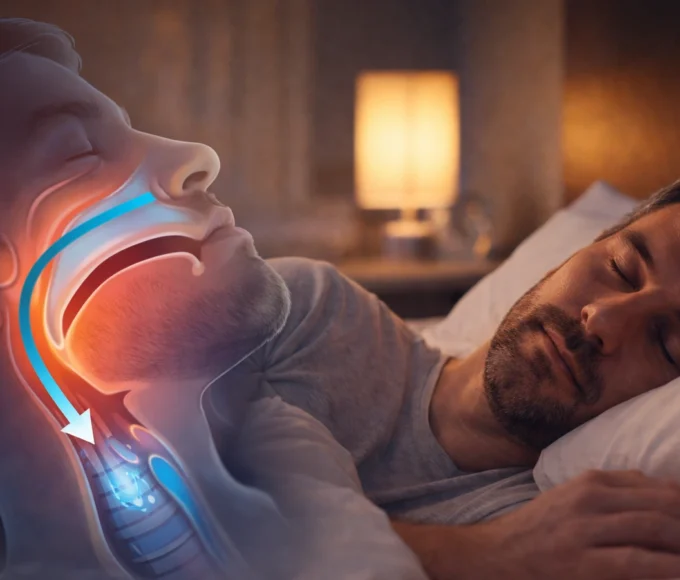
- Sleep apnea causes repeated pauses in breathing
- Restless legs syndrome creates an urge to move your legs at night
- Insomnia leads to light or broken sleep
Sleep apnea is especially important because it interrupts breathing again and again. Each pause briefly wakes your brain and disturbs your sleep cycles.
Restless legs syndrome makes it hard for your body to fully relax. Even small movements affect deep sleep.
Insomnia does not always mean staying awake all night. In many cases, it means your sleep is light or broken. Over time, these conditions reduce your body’s ability to recover.
The Role of Stress, Anxiety, and Cortisol
Your mind does not simply shut off when you lie down. During the day, your attention stays busy. But at night, when everything becomes quiet, your thoughts become stronger.
Stress and anxiety increase cortisol levels, which keep your body alert. Normally, cortisol should go down at night to support good sleep. But when stress is high, this process gets disturbed.
As a result:
- Your brain stays active instead of relaxing
- Reaching deep sleep becomes difficult
- Sleep becomes broken
The truth is, your body may be resting, but your mind stays active—and this slows down recovery.
Why Your Brain Remains Active During Sleep
Even when your body is resting, your brain does not completely shut down. In many cases, it continues to process thoughts and emotions in the background. This is slightly different from stress, because the issue here is hidden mental activity.
Effects include:
- Thoughts continue during sleep
- Sleep becomes lighter
- You feel mentally tired in the morning
- Emotional stress carries into the next day
At first, this may not be easy to notice. But over time, it creates a pattern of tiredness.
Lifestyle Habits That Ruin Your Sleep
Your daily habits affect your sleep more than you think. Many habits feel normal but slowly disturb sleep over time.
Key factors:
- Late-night screen use delays sleep signals
- Caffeine reduces sleep depth
- Alcohol disturbs REM sleep
- Irregular sleep timing confuses your body clock
- Lack of sunlight weakens your natural rhythm
Screens are one of the biggest modern problems. Blue light delays melatonin release.
Caffeine does not just keep you awake—it also reduces sleep depth. Alcohol may help you fall asleep faster, but later it makes sleep unstable.
An irregular schedule confuses your body about when to rest. Lack of sunlight weakens your internal clock.
These habits may not cause instant problems, but over time they reduce sleep quality.
The Link Between Poor Diet and Morning Fatigue
Your daytime meals—especially what you eat at night—can shape how you feel the next morning. Food does not just affect energy levels—it also affects how well your body recovers during sleep.
Effects include:
- The body does not get enough nutrients
- Repair processes stay incomplete
- Energy production becomes weaker
- Dehydration increases tiredness
Over time, a poor diet reduces the benefits of sleep itself.
Medical Reasons You Shouldn’t Ignore
Sometimes tiredness is not just a sleep issue—it is caused by something happening inside your body. If your sleep feels complete but your energy stays low, medical reasons should be considered.
Common conditions:
- Anemia reduces oxygen flow
- Thyroid imbalance affects energy and metabolism
- Vitamin deficiencies reduce energy production
- Depression disturbs sleep patterns
Anemia reduces oxygen supply, which causes constant tiredness. Thyroid problems can slow down or speed up your system.
Vitamin B12 and Vitamin D deficiencies are very common and often ignored. Depression does not just affect mood—it also affects sleep and recovery.
Ignoring these causes can make the problem last longer.
Could You Be Experiencing Hypersomnia?
In some cases, feeling tired even after sleeping more may be linked to a condition called hypersomnia. This condition causes excessive daytime sleepiness—even after getting enough rest.
Common signs:
- You may sleep longer than usual, yet still wake up feeling tired.
- Staying alert during the day feels difficult
- Naps do not improve energy
- You feel confusion or heaviness when waking up
Unlike normal tiredness, hypersomnia affects the brain’s sleep-wake system. If this pattern continues, medical help may be needed.
What Is Sleep Inertia (Morning Grogginess)?
Sometimes the problem is not the whole night—it is just the waking moment. Sleep inertia is the heavy and slow feeling you get right after waking up. It is the time when your brain has not fully become active yet.
Symptoms include:
- Mental fog and slow thinking
- Low motivation and alertness
- Difficulty focusing and reacting
This often occurs when you wake up from a deep stage of sleep.
In most cases, it improves within 30–60 minutes. But if sleep quality is poor, this feeling can last longer.
Why You Feel Worse After Oversleeping
It may seem logical that sleeping more will make you feel better. But in some cases, oversleeping actually increases tiredness. This happens because it disturbs your body’s natural rhythm.
Effects include:
- Your internal clock becomes confused
- You feel more heavy after waking up
- Sleep quality becomes worse
- Energy levels become unstable
In reality, your body works best with a consistent sleep schedule. Too much sleep can be just as unhealthy as not getting enough.
How to Actually Wake Up Feeling Refreshed
You do not need big changes to feel better in the morning. Small and consistent habits matter more.
Key focus areas:
- Keep a fixed sleep schedule
- Create a comfortable sleep environment
- Reduce screen use before bed
- Manage stress
- Improve daily habits
Sleeping and waking at the same time helps your body stay balanced. A cool, dark, and quiet environment can enhance the quality of your sleep.
Cutting down on screen time supports your body’s natural melatonin production. Managing stress helps your mind relax.
Daily habits like physical activity and sunlight exposure improve your sleep cycle.
These changes may feel small, but over time they make a big difference.
When You Should See a Doctor
Not every sleep problem can be solved with lifestyle changes. In some cases, medical help is important. If tiredness is affecting your daily life, it should not be ignored.
Signs include:
- Feeling tired every day even with good habits
- Loud snoring or breathing problems
- Waking up many times without reason
- Constant low energy
A proper checkup can find the real cause and guide the right treatment. Sometimes, understanding the cause is the solution.
Conclusion
If you wake up tired every day, the problem is not just your sleep time—it is the quality of your sleep.
Feeling tired even after a full night’s rest can be frustrating, especially when you think you are doing everything right. But sleep depends on more than just time—it also depends on habits, environment, and your mental state.
The most important thing to understand is that your body is not failing. It is simply giving you a signal that something needs attention.
When you start focusing on sleep quality, your patterns slowly begin to improve. Small and consistent changes can lead to better mornings and more stable energy.
You do not need perfect sleep—you just need to move step by step toward better sleep.
FAQs:
Can poor sleep quality make you feel exhausted all day?
Yes, poor sleep quality can leave you feeling exhausted even if you slept long enough. If your body doesn’t reach deep and REM sleep stages properly, recovery stays incomplete, and fatigue continues.
What are the most common causes of waking up tired?
The most common causes include sleep disorders, stress, irregular sleep schedules, excessive screen use before bed, and lifestyle habits like caffeine or alcohol consumption late at night.
When should I worry about feeling tired after sleep?
You should consider medical advice if you feel tired every day despite good sleep habits, experience loud snoring, frequent night awakenings, or constant low energy throughout the day.
How can I stop feeling tired after waking up?
To feel more refreshed, maintain a consistent sleep schedule, reduce screen exposure before bed, create a dark and cool sleeping environment, and manage stress levels regularly.








Leave a comment