





- Anxiety feels worse at night because distractions disappear and your mind starts processing unresolved thoughts.
- Your brain shifts from activity to awareness, which increases overthinking and mental noise.
- An active nervous system can cause physical symptoms like a fast heartbeat, restlessness, and tension.
- Simple habits like journaling, deep breathing, and reducing screen time can help calm your mind.
- A consistent night routine trains your brain to associate bedtime with relaxation instead of stress.
You finally lie down on your bed after a long day, thinking that now your mind will slowly calm down. The lights go off, your body is already tired, and everything should naturally shift into rest mode.
But as soon as you try to relax, your mind becomes even more active.
Suddenly, thoughts start feeling louder, and small things that you ignored throughout the day begin to feel important. Past conversations start replaying in your mind, and worries about the future begin to appear without any clear reason.
And the most frustrating part is that the more you try to sleep, the more awake your mind feels. If this happens to you, it’s not random. And it’s not just “overthinking” or something imaginary either.
This is actually a very common pattern. Many people go through this exact phase every night without understanding why it happens. The simple truth is your brain is not broken. It is just reacting according to your natural day-and-night pattern.
Anxiety feels stronger at night because distractions disappear and your brain starts processing suppressed thoughts while your nervous system may still be active—making worries feel more intense.
Why Your Mind Feels Different at Night
During the day, your mind stays busy. You talk to people, check your phone, work, solve problems, and constantly move from one task to another. Because of this, your focus stays outward—on the external world.
At night, this entire pattern changes. The environment becomes quiet. Lights dim. Distractions almost disappear. And this is the most important point that many people miss: Your brain does not suddenly become more anxious at night.
Instead, it finally gets the time and space to notice the things that were building in the background all day. The thoughts you ignored during the day start coming back. The emotions you didn’t process begin to slowly surface. Understand it in simple terms:
Day = distraction
Night = awareness
This shift—from external focus to internal awareness—has a strong effect on your mind. And when this happens daily, your brain gradually starts linking nighttime with thinking and overanalysing. That’s when it feels like your mind becomes more active instead of calming down at night.
Why Do I Get Anxiety at Night and Cannot Sleep
Anxiety feels stronger at night because when you finally stop to rest, your brain starts processing instead of shutting down.
The unfinished thoughts, worries, and mental load from the entire day begin to surface all at once. Because of this, even when you are physically tired, you feel mentally alert, and sleep gets delayed instead of coming naturally.
The Real Reasons Anxiety Peaks After Dark

Night anxiety usually doesn’t come from just one reason. It is often a combination of multiple small factors activating together.
When distractions disappear, thoughts become louder. The stress of the day builds up and creates emotional overload. Screen usage delays your natural sleep signals. Another major factor is mental backlog.
Throughout the day, your brain collects unfinished thoughts, decisions, and emotional reactions. Because you stay busy, you don’t fully process them at that moment. At night, your brain finally tries to clear this “backlog”.
Silence also plays an important role. Silence does not create anxiety—but it removes everything that was covering it. When there is no external input, your mind turns inward and starts scanning for problems.
In many cases, a subtle fear related to sleep also develops. If you have struggled with sleep before, your brain may start linking bedtime with frustration. This creates a loop where anxiety begins even before you try to sleep.
What Causes Nighttime Anxiety Attacks
Nighttime anxiety attacks are usually not sudden—they build gradually. When stress accumulates throughout the day and gets released at night, your body enters a heightened state of alertness. This can include a faster heart rate, chest tightness, or a sudden feeling of fear. A quiet environment combined with overthinking makes this feeling even more intense.
The “Overthinking Loop” Explained
At night, your brain can enter a pattern known as the overthinking loop. This is not random thinking—it is a predictable cycle. It usually starts with a small, harmless thought, like remembering a conversation or something you need to do tomorrow.
Instead of passing, the thought sticks. Your brain starts analysing it, trying to understand or solve it. This triggers another thought, and then another. Within minutes, your mind begins jumping between the past and the future, and emotional intensity starts increasing. Along with this, your body also becomes more alert.
This loop continues because your brain believes it is helping. But in reality, it creates mental noise instead of clarity. Over time, this pattern becomes automatic, and nighttime turns into a trigger where your brain enters this loop without conscious effort.
How Your Body Keeps You Stuck in Anxiety
Anxiety is not just mental—it is deeply connected to your body. When your brain detects stress or uncertainty, it activates your nervous system. This is the same system responsible for your fight-or-flight reaction.
At night, this becomes more noticeable because your body is supposed to relax—but it remains alert. Your heart may beat faster, your breathing may become shallow, and your muscles may stay tense without you realising it. Sometimes, you may even feel sudden alertness while trying to sleep.
These physical sensations make your mind even more active. You notice your body, which creates more thoughts, and the anxiety cycle continues.
Physical Anxiety Symptoms That Feel Worse at Night
At night, physical symptoms of anxiety feel stronger because your body is still, and there are no distractions. You become more aware of your heartbeat, breathing, and body tension. These sensations are not dangerous, but because they feel unfamiliar, your mind may interpret them as a threat, causing anxiety to increase further.
Signs You’re Dealing With Night Anxiety
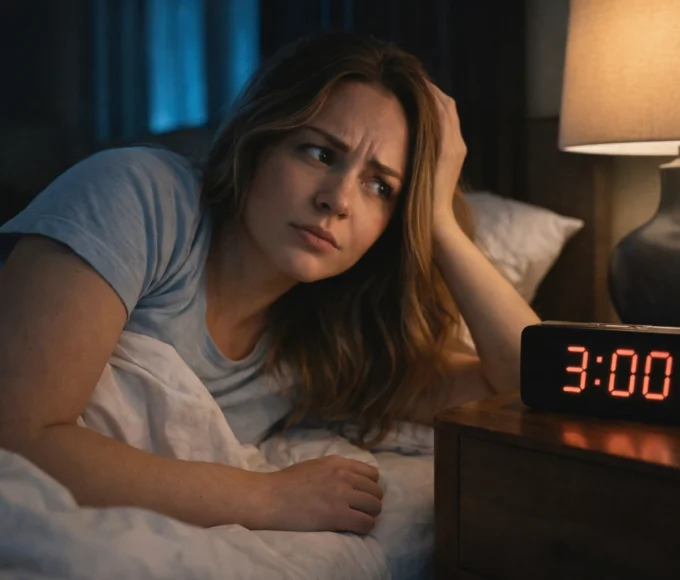
As soon as you lie down, your thoughts become active. Your body may feel exhausted, but your mind remains active. You replay conversations or imagine the future. Sometimes, you wake up in the middle of the night feeling worried. Feeling uneasy without a clear reason is also common.
Why Anxiety Wakes You Up in the Middle of the Night
Waking up with anxiety in the middle of the night is often linked to your body’s stress response. During certain sleep cycles, your brain becomes more active. If underlying stress is present, it can get triggered during this time. This is why you may wake up feeling uneasy, even if you initially fell asleep.
What Actually Helps Calm Anxiety at Night
Calming night anxiety does not mean forcing your thoughts to stop—that usually makes things worse. The real goal is to create conditions where your mind naturally slows down and your body feels safe.
Doing a brain dump through journaling before bed can be very helpful. Writing down whatever is on your mind reduces mental overload and repetitive thinking.
Reducing screen exposure is also important, as screens keep your brain active. Replacing this time with light reading, calm audio, or dim lighting works better.
Deep breathing is effective because slow breathing signals your body that it is safe to relax.
Creating a simple wind-down routine is also powerful. When you repeat the same calming activities every night, your brain starts associating them with sleep.
Grounding techniques also help by bringing your focus to the present moment—like noticing what you can see, feel, or hear. This helps break the overthinking loop.
How to Calm Anxiety at Night Naturally
To calm anxiety naturally, the focus should be on relaxing your nervous system. When you follow slow breathing, grounding, and calming routines, your body receives the signal that it is safe to relax. This is a gradual process, but with consistency, both your mind and body begin to feel more stable at night.
The 20-Minute Rule (And Why It Works)
If you are unable to fall asleep within about 20 minutes, it is better to leave your bed. Staying in bed while feeling anxious strengthens the problem because your brain starts linking the bed with stress.
Instead, get up calmly, go to a dimly lit space, and do a quiet, non-stimulating activity. Return to bed only when you feel sleepy. This helps your brain relearn that the bed is for sleep—not overthinking.
What Causes Sleep Anxiety and How It Happens
Sleep anxiety is a condition where you feel stressed just by the idea of sleeping. It usually develops after repeated sleep struggles. Your brain begins associating bedtime with pressure instead of rest, which makes sleep more difficult. Breaking this cycle is the key step toward recovery.
Mistakes That Make Night Anxiety Worse
Forcing sleep, using your phone for distraction, ignoring stress throughout the day, and staying in bed while feeling anxious—these habits gradually make anxiety stronger.
Simple Night Routine to Calm Your Mind
Before bedtime, gradually slow things down instead of stopping suddenly. Shift into calming activities that signal rest, and allow your mind to settle without pressure. Reduce light and stimulation, stay away from screens, do something calming, and give yourself quiet time before sleep. Consistency matters more than perfection.
How to Finally Feel Calm at Night
Anxiety feels stronger at night because your brain finally processes everything you carried throughout the day. Silence is not the problem—it simply makes what is already present more visible.
When you release mental pressure, calm your nervous system, and build a consistent routine, your nighttime experience slowly begins to change. Not instantly—but steadily. Over time, your brain learns that nighttime is safe. And that is when real calm finally starts to return.
FAQs:
What helps severe anxiety at night?
Severe anxiety at night can be managed by calming your nervous system rather than forcing sleep. Techniques like slow breathing, journaling, and reducing screen time help lower mental and physical tension. In more intense cases, building a consistent night routine can make a noticeable difference over time.
Why do I get anxiety at night and can’t sleep?
Anxiety feels stronger at night because your brain finally gets time to process thoughts you ignored during the day. With fewer distractions, your mind becomes more active, which makes it harder to relax and fall asleep.
What causes nighttime anxiety attacks?
Nighttime anxiety attacks are often caused by accumulated stress, overthinking, and an activated nervous system. When your body is still, but your mind is alert, even small worries can trigger strong physical reactions like a fast heartbeat or restlessness.
Why do I wake up with anxiety in the middle of the night?
Waking up with anxiety is usually linked to your body’s stress response during sleep cycles. If your mind is already under pressure, your brain can become active at certain points in the night, causing you to wake up feeling uneasy.
How can you reduce anxiety at night in a natural way?
You can calm anxiety naturally by reducing stimulation and helping your body relax. Simple habits like deep breathing, avoiding screens before bed, and following a calming routine can gradually train your mind to feel safe at night.




Leave a comment