



Vegetarian and vegan diets can both support good health when they are well planned. Neither is automatically “healthier” for everyone. Vegetarian eating is often easier to maintain and more forgiving nutritionally, while vegan eating can increase plant variety but requires more attention to key nutrients. The better choice depends on lifestyle, preferences, and consistency.
Why People Keep Comparing These Two Diets
Most people are not trying to win a nutrition debate. They just want to eat better without making life harder.
That is why vegetarian and vegan diets get compared so often. Both limit animal foods. Both are associated with plant-heavy eating. And both are often seen as “cleaner” or “healthier” than typical Western diets.
But these labels can be misleading. Health outcomes depend far more on what you regularly eat than on whether you include eggs, milk, or none at all.
What Vegetarians Eat vs What Vegans Eat
The difference sounds simple, but it affects daily nutrition more than people expect.
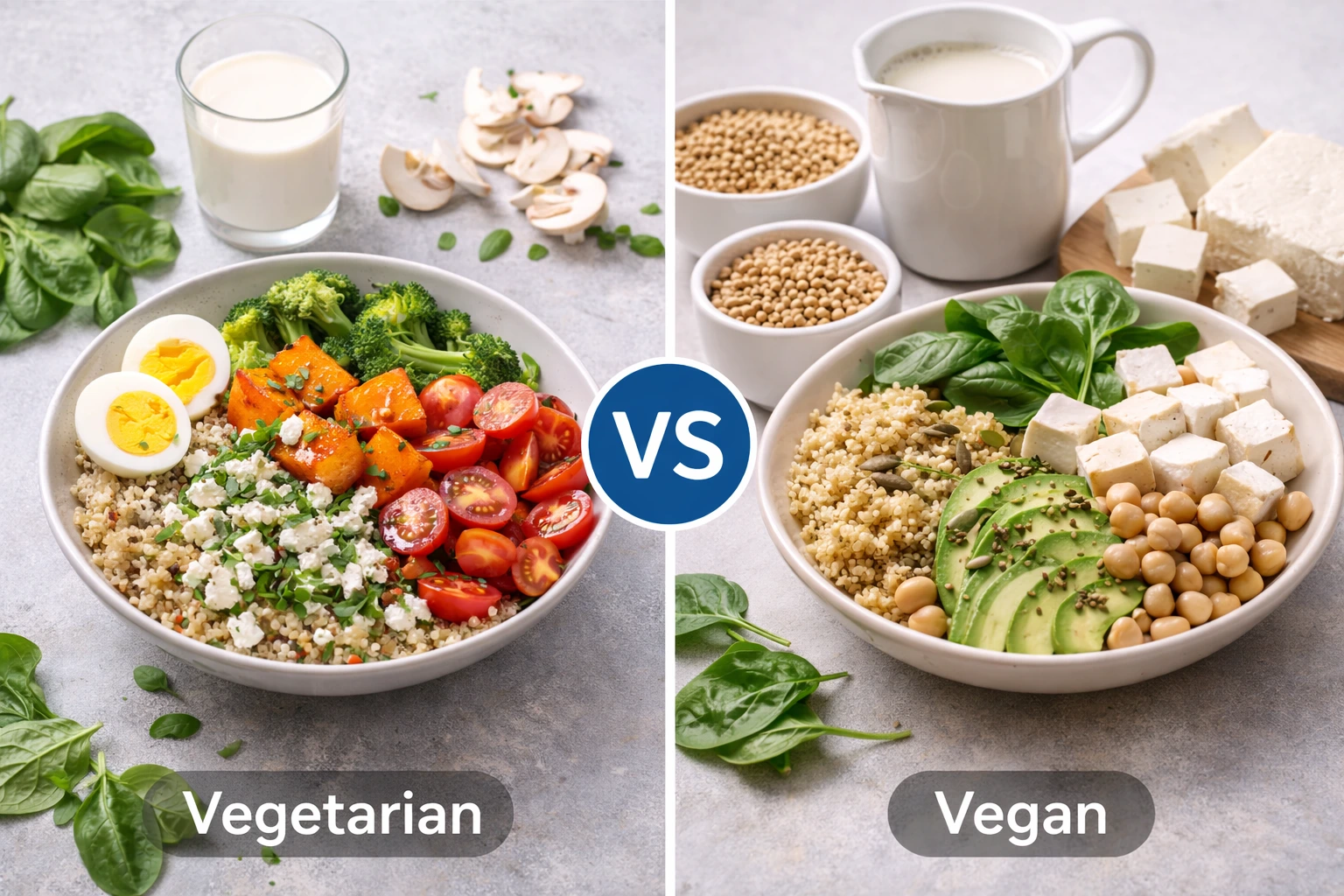
Vegetarians usually eat plant foods as the base of their diet but still include animal-derived products like dairy and eggs. This adds flexibility, especially for protein and certain vitamins.
Vegans remove all animal products completely. Their diet comes entirely from plants, including grains, beans, vegetables, fruits, nuts, seeds, and plant-based alternatives.
This single distinction shapes how easy or difficult it feels to meet nutrient needs.
Protein: Which One Has the Edge?
Protein is often easier to manage on a vegetarian diet.
Eggs, yogurt, cheese, and milk provide concentrated protein without much effort. Even small servings can make meals feel complete.
Vegan diets rely on plant proteins such as beans, lentils, tofu, tempeh, soy milk, nuts, seeds, and whole grains. These foods absolutely provide protein, but portions and variety matter more.
For many vegans, protein intake is adequate — it just requires intention rather than convenience.
Vitamin B12: A Real Difference Between the Two
Vitamin B12 is one of the clearest nutritional differences.
Vegetarians often get B12 naturally through eggs and dairy, even if they are not paying close attention.
Vegans, however, usually need fortified foods or supplements because reliable plant sources do not exist. This does not make vegan diets unhealthy — it simply means awareness is essential.
Skipping B12 is a common early mistake, not a flaw of the diet itself.
Iron, Calcium, and Omega-3s
Both diets can provide these nutrients, but they show up differently.
Plant-based iron is less easily absorbed, which means food pairing matters. Adding vitamin C–rich foods can help support intake.
Calcium is easy to obtain through dairy on vegetarian diets. Vegans depend more on fortified plant milks, calcium-set tofu, and certain greens.
Omega-3 fats come from similar sources in both diets, such as flaxseeds, chia seeds, walnuts, and algae-based oils. Intake depends more on habits than labels.
Fiber and Overall Plant Variety
Vegan diets often end up higher in fiber simply because every food comes from plants.
Higher fiber intake is commonly linked with feeling fuller after meals and having more regular eating patterns.
That said, vegetarians can match this easily if their meals focus on whole foods rather than relying heavily on cheese, white bread, or refined snacks.
Which Diet Feels Easier to Stick With?
For many people, vegetarian eating feels more realistic over time.
It tends to fit better into social situations, family meals, and restaurants. Grocery shopping is simpler, and fewer nutrients require close monitoring.
Vegan diets can feel more restrictive at first, especially when traveling or eating out. People who succeed long-term often enjoy cooking, reading labels, and planning meals.
Ease matters. A diet that fits your life is easier to maintain.
Eating Out and Grocery Shopping in Real Life
This is where theory meets reality.
Vegetarian options are widely available and usually require small adjustments rather than full substitutions.
Vegan options are improving quickly, but availability still varies by location. Shopping may involve speciality products, fortified foods, or extra label reading.
If a diet feels stressful to follow, its benefits are harder to sustain.
Weight Patterns People Often Notice
Neither diet guarantees weight change.
Some people experience weight loss on vegan diets because meals tend to be lower in calorie density and higher in fiber.
Others notice no change — or even weight gain — if meals rely heavily on refined vegan snacks and packaged foods.
Vegetarian diets show a wide range of outcomes, shaped mostly by portion size, food quality, and consistency.
Who May Prefer a Vegetarian Diet
Vegetarian eating often works well for people who want plant-forward meals without strict rules.
It suits those who enjoy dairy or eggs, value flexibility, and want a low-stress approach that still emphasizes whole foods.
For many, it is easier to maintain over years rather than months.
Who May Prefer a Vegan Diet
Vegan eating may appeal to people who enjoy structure and clear boundaries.
Those who like cooking, experimenting with plant foods, and paying attention to nutrition details often feel comfortable with this approach.
Education and consistency matter more than perfection.
Common Mistakes on Both Diets
No eating pattern is mistake-proof.
Common issues include relying too much on processed foods, overlooking protein variety, skipping healthy fats, or assuming that “plant-based” automatically means balanced.
Good nutrition still requires thoughtful choices.
A Flexible Middle-Ground That Many People Use
Many people do not stay strictly vegetarian or vegan forever.
Some eat mostly plant-based but include eggs or dairy occasionally. Others eat vegan at home and vegetarian when dining out.
Focusing on food quality instead of strict identity often reduces stress while still supporting healthy habits.
FAQs: –
Are vegans healthier than vegetarians?
Not automatically. Health depends more on food quality and consistency than diet labels.
Which diet usually provides more protein?
Vegetarian diets often make protein intake easier, though vegan diets can meet needs with planning.
Is it harder to get nutrients on a vegan diet?
Some nutrients require more attention, especially vitamin B12, but this can be managed.
Can vegetarians get enough B12?
Many do through eggs and dairy, though intake varies by diet quality.
Which is better for weight loss?
Neither guarantees weight loss. Results depend on overall eating habits.
Final Takeaway
Vegetarian and vegan diets are tools, not rankings. Both can support everyday health when meals are balanced, varied, and realistic. For most people, the healthiest approach is the one that fits daily life, meets nutrient needs, and feels sustainable over time.
Disclaimer
This article is for general informational purposes only. It is not intended to replace professional nutrition advice. Individual dietary needs vary based on lifestyle, preferences, and overall health.
Latest Posts: –
- ABC Juice Benefits: What This Nutrient-Rich Drink Really Does for Your Body
- Papaya vs Avocado: Which Fruit Is Better for Weight Loss, Digestion, and Overall Health?
- Papaya Benefits for Women: Skin, Hormones & Weight Loss Explained
- Fig Benefits for Men: Can Figs Really Help Boost Energy and Stamina?
- Papaya for Digestion: How This Enzyme-Rich Fruit Fixes Your Gut Naturally
- balanced plant diet
- diet comparison
- eating patterns
- everyday healthy eating
- flexible plant based diet
- healthy lifestyle choices
- nutrition basics
- plant based eating
- plant based nutrition
- plant forward diet
- sustainable eating
- vegan diet
- vegan food
- vegan nutrition
- vegetarian diet
- vegetarian food
- vegetarian nutrition
- vegetarian vs vegan





Leave a comment