




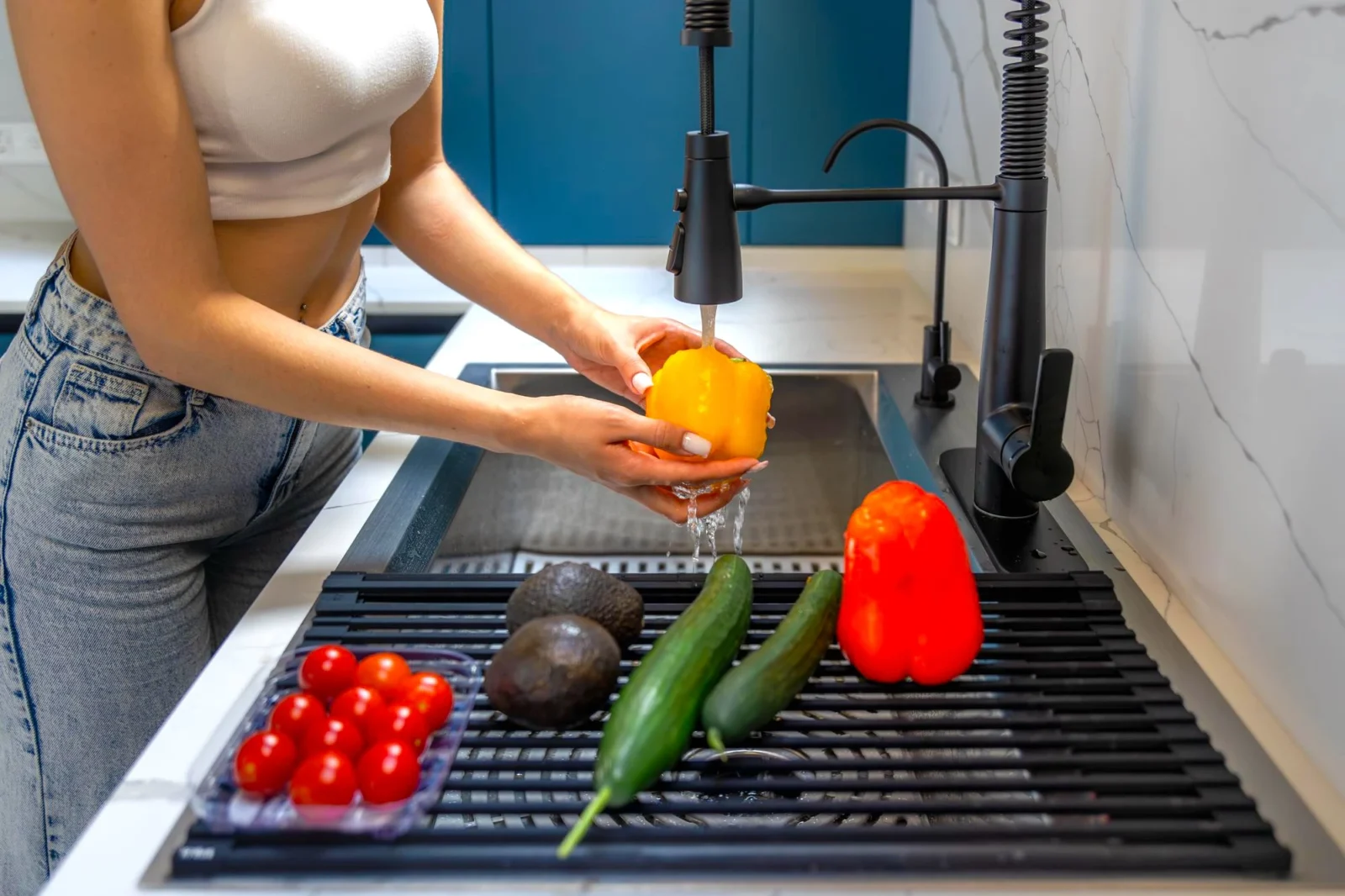
Eating fresh fruits and vegetables is one of the best ways to add healthy nutrients to your meals. They are packed with vitamins, minerals, and fiber that support everyday wellness. But before they reach your kitchen, most produce travels a long path from farm fields to grocery store shelves.
Along that journey, fruits and vegetables can collect dirt, bacteria, and traces of pesticide residue. They may also be handled by many people during harvesting, packaging, transportation, and display.
That is why food safety experts often recommend washing fresh produce before eating or cooking it. A few simple cleaning habits can help remove surface contaminants and make fruits and vegetables safer to enjoy.
The positive part is that you don’t need complex tools or costly products. In most cases, simple kitchen practices—like rinsing under running water and gently rubbing the surface—are enough to clean produce effectively at home.
What Is the Right Way to Clean Fruits and Vegetables?
The safest way to clean fruits and vegetables is to rinse them under cool running water while gently rubbing the surface. For firm produce, a clean produce brush can help remove dirt. Some people also soak certain foods in vinegar or baking soda solutions for extra cleaning.
Food safety specialists generally recommend simple washing methods. Running water helps rinse away loose dirt and some microbes that may be present on the surface of produce.
Gently rubbing fruits and vegetables with your hands can loosen particles that stick to the skin. For thicker skins—such as potatoes or cucumbers—a soft produce brush may help scrub away dirt trapped in small crevices.
Some households also use soaking methods with diluted vinegar or baking soda solutions. These approaches may help remove certain residues from the surface of produce, although plain water works well for most foods.
The key is consistency. Washing produce every time you prepare it helps lower the chance of bringing unwanted contaminants into your meals.
Why Is It Important to Wash Fruits and Vegetables?
Washing fruits and vegetables helps remove dirt, bacteria, and traces of chemicals that may remain on the surface. Cleaning produce before eating or cooking it is a basic food safety step that reduces exposure to unwanted contaminants.
Fresh produce often grows outdoors in soil and open environments. During harvesting, fruits and vegetables may pick up natural dirt, dust, and microorganisms from the surrounding environment.
After harvest, produce usually travels through several stages before reaching your kitchen. It may be sorted, packaged, transported, stored, and displayed in stores. At each stage, handling and contact with surfaces can introduce additional bacteria.
Another reason for washing produce is the possible presence of pesticide residue. Farmers sometimes use approved pesticides to protect crops from pests and diseases. While these products are regulated, small traces may remain on the outer surface of some fruits and vegetables.
Washing cannot remove every trace of pesticides or microbes, but it can reduce surface residue and improve food safety. This is why food safety organizations consistently recommend rinsing fresh produce before eating.
What Is the Best Way to Wash Fresh Produce?
The best way to wash produce is to rinse it under cool running water while gently rubbing the surface. A produce brush can be useful for cleaning firm vegetables and removing surface dirt. Always wash your hands before handling fruits and vegetables.
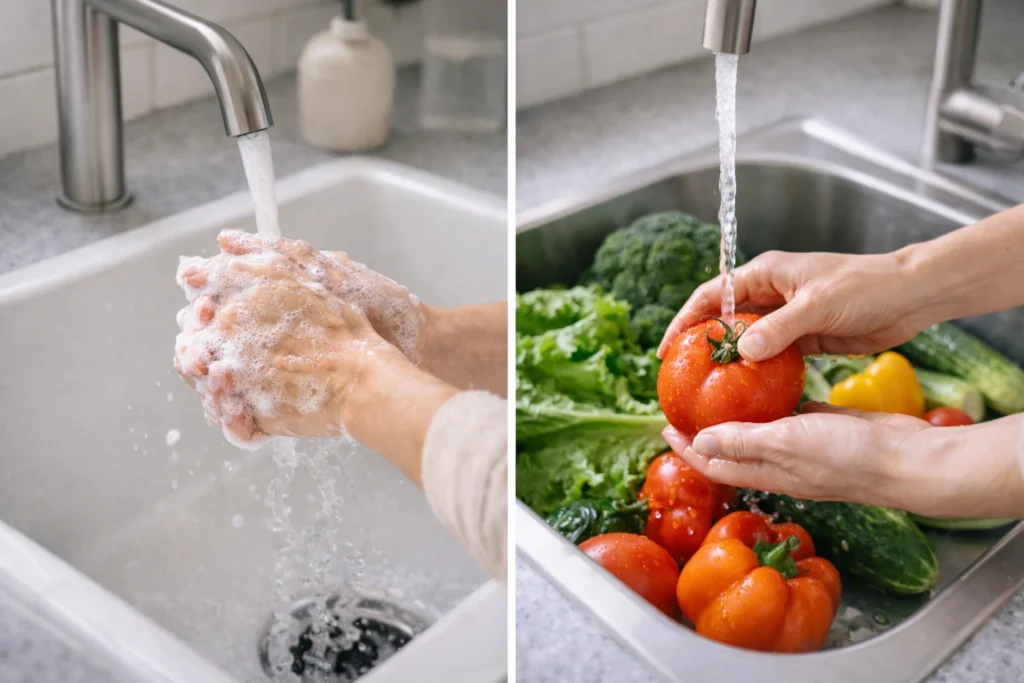
A simple step-by-step process can make cleaning produce quick and effective.
1. Wash your hands first
Before touching fruits or vegetables, wash your hands with soap and water for at least 20 seconds. Clean hands help prevent transferring germs to food.
2. Rinse under cool running water
Hold produce under running tap water. The flowing water helps remove dirt and surface particles.
3. Gently rub the surface
Use your hands to rub the fruit or vegetable while rinsing. This helps loosen soil and debris that may stick to the skin.
4. Use a produce brush for firm foods
For foods with thicker skins—like potatoes, cucumbers, or melons—a clean produce brush can help scrub the surface.
5. Dry with a clean cloth or paper towel
Patting produce dry can remove additional surface microbes and moisture.These simple steps are commonly recommended by food safety experts because they are effective, affordable, and easy to follow in everyday kitchens.
Should You Use Vinegar or Baking Soda?
Vinegar or baking soda soaking methods may help reduce certain microbes or surface residues on produce. However, they are optional. For most fruits and vegetables, rinsing under running water is usually enough.
Some people prefer soaking produce for extra cleaning. Two common household methods include vinegar solutions and baking soda solutions.
Vinegar soak
A mixture of water and white vinegar may help reduce some microbes on the surface of fruits and vegetables. After soaking for a few minutes, the produce should be rinsed thoroughly with clean water.
Baking soda soak
Some research suggests baking soda solutions may help break down certain pesticide residues on the outer surface of produce. Foods are usually soaked briefly and then rinsed well.
Here is a simple comparison of common cleaning methods:
| Cleaning Method | How It Works | Best For |
|---|---|---|
| Running water | Removes dirt and surface germs | Most produce |
| Vinegar soak | Mild acidity may reduce microbes | Apples, grapes |
| Baking soda soak | Helps break down some pesticide residue | Firm fruits |
Even when using soaking methods, rinsing produce with clean running water afterward is still important.
How to Clean Different Types of Produce
Different fruits and vegetables have different textures. Because of this, the cleaning method may vary slightly depending on the type of produce.
Soft fruits
Examples include berries, cherries, and grapes. Soft fruits should be rinsed gently under cool running water just before eating. Avoid soaking them for long periods because they absorb water easily and may spoil faster.
For berries, place them in a colander and rinse lightly while moving them gently with your hands.
Firm produce
Examples include apples, cucumbers, potatoes, and carrots. Firm fruits and vegetables benefit from gentle rubbing while rinsing under running water. A clean produce brush can help remove dirt from rough surfaces like potatoes or carrots.
Even if you plan to peel the produce, washing it first is still important. Dirt or bacteria on the skin could transfer to the inside when cutting.
Leafy greens
Examples include lettuce, spinach, kale, and cabbage. Leafy vegetables can trap soil and small particles between layers. To clean them properly, separate the leaves and rinse them individually under running water.
You can also place the leaves in a bowl of clean water and gently move them around to loosen dirt. Then rinse them once more and dry using a salad spinner or a clean kitchen towel.
What Not to Use When Washing Produce
Experts recommend avoiding soap, bleach, or household detergents when washing fruits and vegetables. These products are not designed for food and may leave chemical residues.
Although it may seem like soap would clean produce more effectively, most dish soaps and cleaning agents are not meant to be ingested. They can leave traces that are difficult to rinse away completely.
Food safety specialists generally advise using plain running water instead.
Commercial produce washes are also widely available, but research has shown that they are not necessarily more effective than water for removing surface contaminants. Keeping the process simple often works best.
Should You Wash Fruits Before Storing Them?
Washing fruits and vegetables before storing them is usually not recommended because extra moisture can shorten shelf life.
When produce stays wet in the refrigerator, moisture can encourage mold growth or cause fruits and vegetables to spoil more quickly.
A better approach is to wash produce right before eating, cooking, or preparing it. This keeps food fresh longer while still maintaining good hygiene.
However, if produce appears very dirty, lightly rinsing and drying it thoroughly before storage may be helpful.
Simple Kitchen Habits That Improve Food Safety
Small daily habits in the kitchen can also help keep fruits and vegetables safe to eat. Consider these practical food safety tips:
- Wash hands before and after handling produce
- Clean cutting boards regularly
- Use separate cutting boards for raw meat and vegetables
- Rinse knives and utensils between tasks
- Store produce in clean containers in the refrigerator
- Discard fruits or vegetables that show signs of spoilage
These simple steps help reduce the spread of germs in the kitchen and make meal preparation safer for the whole family.
Expert Insight on Washing Produce
Food safety agencies and nutrition experts commonly recommend proper washing techniques as part of everyday food safety practices.
Research on food handling has shown that rinsing produce under running water can remove soil, bacteria, and some pesticide residues from the surface of fruits and vegetables. Because fresh produce is often eaten raw, these cleaning steps help lower the risk of foodborne illness.
Public health guidance from food safety organizations often emphasizes practical habits such as handwashing, using clean utensils, and rinsing produce thoroughly before preparation.
While washing cannot eliminate every microorganism, these routine practices help reduce contamination and support safer home cooking.
FAQs:
Do you need to wash fruits with peels?
Yes. Even if you plan to peel fruits like bananas, oranges, or melons, washing the outside first is recommended. Bacteria on the surface could transfer to the inside when cutting or peeling.
How long should you rinse fruits and vegetables?
Most produce only needs a few seconds under cool running water while gently rubbing the surface. The goal is to remove visible dirt and surface residue.
Does washing produce remove pesticides?
Washing fruits and vegetables can reduce some pesticide residue on the surface, but it may not remove everything. Peeling certain produce may remove additional residue if desired.
Should organic fruits and vegetables be washed?
Yes. Organic produce should also be washed. Even without synthetic pesticides, organic fruits and vegetables can still carry dirt, bacteria, or natural residues from the farm environment.
Preparing fresh fruits and vegetables at home does not need to be complicated. Simple habits—like rinsing produce under running water, cleaning kitchen tools, and washing hands—can make everyday meals cleaner and safer for everyone at the table.








Leave a comment