



You’re sitting at your desk, scrolling through emails, when suddenly your chest feels tight. Your heart starts racing, your thoughts won’t stop, and even making a simple decision feels impossible.
Maybe this happens before an important meeting, while stuck in traffic, or during an argument you didn’t see coming. In that moment, the first question on everyone’s mind is, “How can I feel calm right now?”
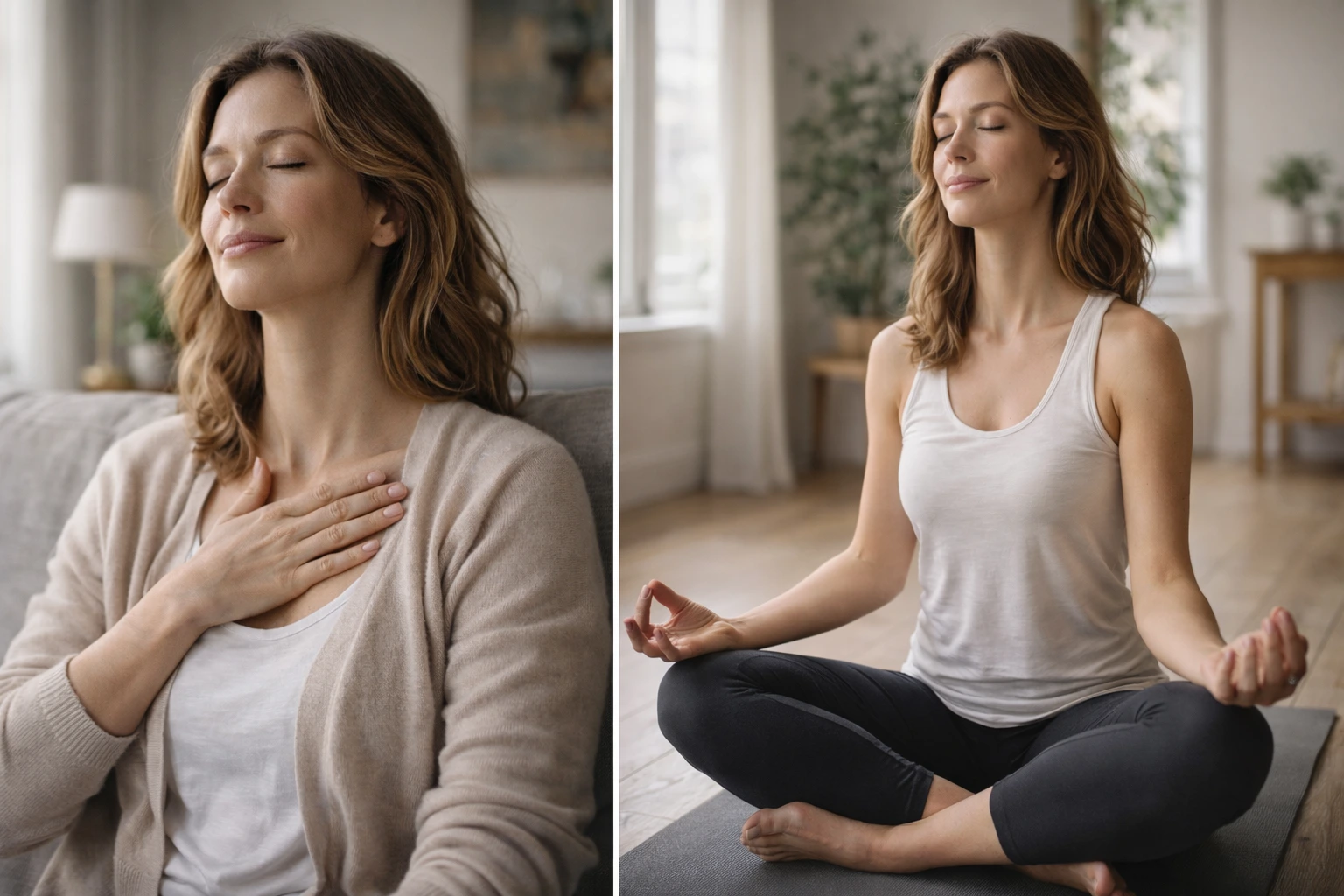
Some people instinctively close their eyes and try to meditate. Others just take a deep breath—or a few. Both approaches are commonly recommended, but they work in very different ways. Understanding which approach actually helps when anxiety hits can make a big difference.
If your goal is instant relief, deep breathing works the fastest. Within seconds, it can slow your heart rate, relax your muscles, and help your racing thoughts start to settle.
Meditation works a little differently. It’s more effective for long-term stress control. Over time, it helps build emotional strength, but it usually takes a few minutes before you start to feel its effects.
Why Anxiety Shows Up in the Body First
To understand this, it helps to look at what anxiety actually does in your body.
Most people think anxiety starts in the mind, but it actually begins in the body. When you feel stressed, your nervous system switches into “fight-or-flight” mode.
During this time, your heart beats faster, your breathing becomes shallow, and your muscles start to tighten.
Even if there’s no real danger, your body reacts as if there is. That’s why calming your body often helps your thoughts settle as well. And this is where deep breathing can make a real difference.
How Deep Breathing Works So Quickly
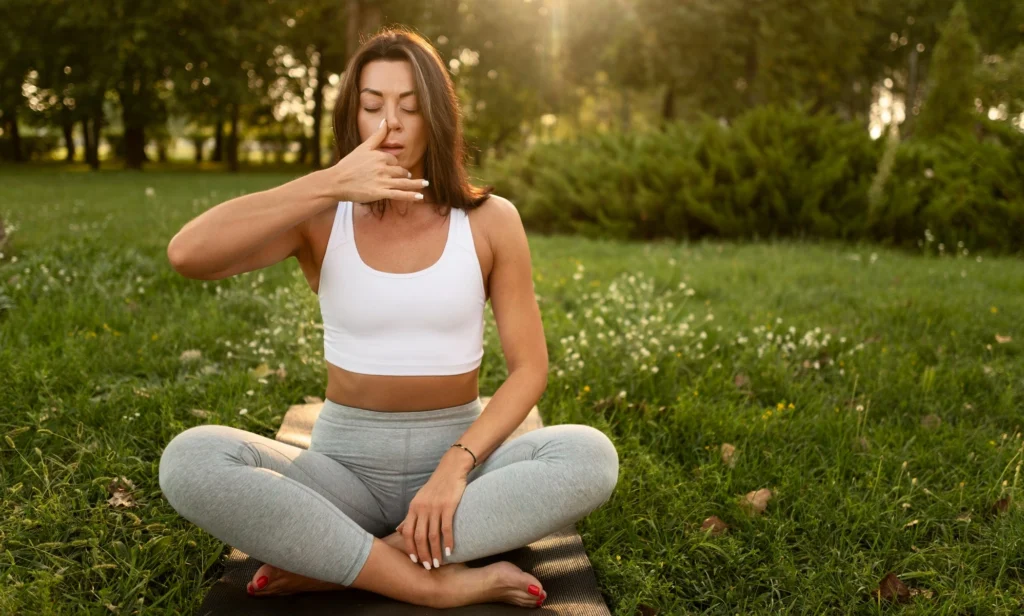
Deep breathing (also called diaphragmatic or belly breathing) sends a direct signal to your nervous system that it’s safe to relax.
As a result, your heart rate begins to return to normal, your muscles loosen, and your mind gradually starts to calm down.
One highly effective technique is cyclic sighing. Here’s how to do it: Inhale deeply through your nose, take a short second inhale, and then slowly exhale through your mouth.
Repeat this 2–3 times. This pattern helps release tension from your lungs and sends strong calming signals to your body.
Another popular method is box breathing, often used by athletes and even Navy SEALs.
In this method, you inhale, hold, exhale, and hold again for equal counts—usually 4–4–4–4 seconds. It gives your mind something simple to focus on, which helps break the cycle of racing thoughts.
Why Meditation Feels Slower at First
Meditation works in a different way. Instead of directly calming the body, it trains your mind to observe thoughts without reacting to them.
Over time, this can reduce anxiety, improve focus, and strengthen emotional control.
But if your heart is already racing in the moment, meditation can feel difficult. Sitting still and closing your eyes may even make your thoughts seem louder at first. That’s because meditation is a skill—it takes consistent practice to see real results.
Think of it this way: meditation is long-term training, while deep breathing is a fast reset.
Comparison between Deep Breathing vs Meditation: At a Glance
Here’s a clear comparison:
| Feature | Deep Breathing | Meditation |
|---|---|---|
| Speed of relief | Seconds to 1 minute | Several minutes or more |
| Best for | Sudden anxiety, panic, stress spikes | Daily stress management, long-term calm |
| Effort required | Very low | Medium, requires focus |
| Environment | Anywhere | Best in quiet spaces |
| Long-term benefits | Moderate | Strong, lasting emotional resilience |
When to Use Deep Breathing
Deep breathing is most helpful when anxiety feels physical and urgent.
Use it when:
- Your heart suddenly starts racing
- You feel overwhelmed in public
- You’re about to speak or perform
- You’re in the middle of a stressful situation
Even a few slow, intentional breaths can quickly calm your system. That’s why it fits easily into everyday situations when you don’t have time to sit quietly and meditate.
When Meditation Is Most Helpful
Meditation is not designed to calm you instantly. Instead, its benefits grow gradually with regular practice. Over time, it helps your mind become steadier and less reactive to stress.
As you stay consistent, you may start to notice:
- Lower levels of everyday stress
- Stronger control over emotions
- Fewer racing or repetitive thoughts
- Better concentration and mental clarity
It can be especially useful for people who deal with frequent anxiety, as it teaches the brain to respond more calmly to stressful situations.
What Science Says About Feeling Calm
Research shows that slow, controlled breathing can ease anxiety more quickly than meditation in the moment.
This is because breathing has a direct effect on your autonomic nervous system. When you slow your breath, your body moves away from a high-alert state and shifts into a more relaxed, balanced mode.
Meditation works differently. It gradually reshapes how your brain reacts to stress. With consistent practice, your responses become calmer—but this change builds over time, not instantly. Both methods are effective, but they work on different timelines.
Why Meditation Can Feel Challenging at First
If meditation hasn’t worked for you right away, that’s completely normal. In the beginning, sitting quietly can make your thoughts seem louder or more distracting. It might even feel like your mind is busier than usual.
This happens because you’re becoming more aware of your thoughts—not because meditation is failing. The goal isn’t to stop thinking, but to notice thoughts without getting caught up in them.
With regular practice, your mind becomes more settled, and stressful situations start to feel easier to handle.
Why Using Both Techniques Works Best
You don’t need to depend on a single approach. In fact, combining deep breathing and meditation often gives the best results.
A simple approach could be:
- In stressful moments: use deep breathing to calm your body quickly
- Later on, practise meditation to build long-term mental strength
Many forms of meditation actually begin with breathing exercises. This helps relax the body first, making it easier to focus and stay present.
A Simple Breathing Exercise You Can Try Anywhere
If you need quick relief, try this easy technique:
- Take a deep breath in through your nose
- Add a short second inhale at the top
- Slowly breathe out through your mouth
- Repeat 2–3 times
It takes less than a minute, and many people feel a clear sense of relief almost immediately.
A More Realistic Way to Think About Anxiety Relief
There isn’t one single solution that works for every situation. Anxiety can show up in different ways, and each moment may need a different response.
Sometimes you need to calm your body right away. Other times, you need to build long-term mental strength.
Deep breathing works like a quick reset.
Meditation acts as long-term training.
Understanding this difference helps you use both tools more effectively.
Common Mistakes to Avoid
- Expecting meditation to calm you instantly during intense stress
- Overlooking deep breathing because it seems too simple
- Being inconsistent with both practices
The truth is, both techniques are powerful when used properly. In some moments, simply slowing your breathing can make the biggest difference.
Creating a Routine That Actually Works
You don’t need long sessions or complicated methods to see results.
Spending just 5–10 minutes a day on meditation, along with using breathing exercises when needed, can significantly improve how you handle stress.
Small habits done consistently are often more effective than occasional long efforts. Over time, they help you stay calmer and more in control in everyday situations.
Key Takeaway
- Feeling anxious right now? Start by slowing your breath—it’s quick, simple, and effective.
- Looking for long-term emotional balance? Add a short daily meditation practice.
- Using both together gives you tools for immediate relief as well as lasting calm.
Remember, small steps done consistently create the biggest change.
FAQs:
Does deep breathing really calm anxiety quickly?
Yes, in many cases it does. Slow and deep breathing helps relax your body within seconds. It slows your heart rate and makes your mind feel more stable, especially during sudden stress or panic.
Is meditation better than deep breathing for anxiety?
Both are helpful, but they work differently. Deep breathing is better for quick relief, while meditation is more useful for long-term mental calm and emotional control when practised regularly.
How long does it take for meditation to reduce anxiety?
Meditation may take a few minutes to feel calming in the moment. However, the bigger benefits usually come after practising it daily for a few weeks.
Can I use deep breathing and meditation together?
Yes, you can. Many people use deep breathing to calm down quickly and then practise meditation later to improve overall mental health. Using both can give better results over time.






Leave a comment