




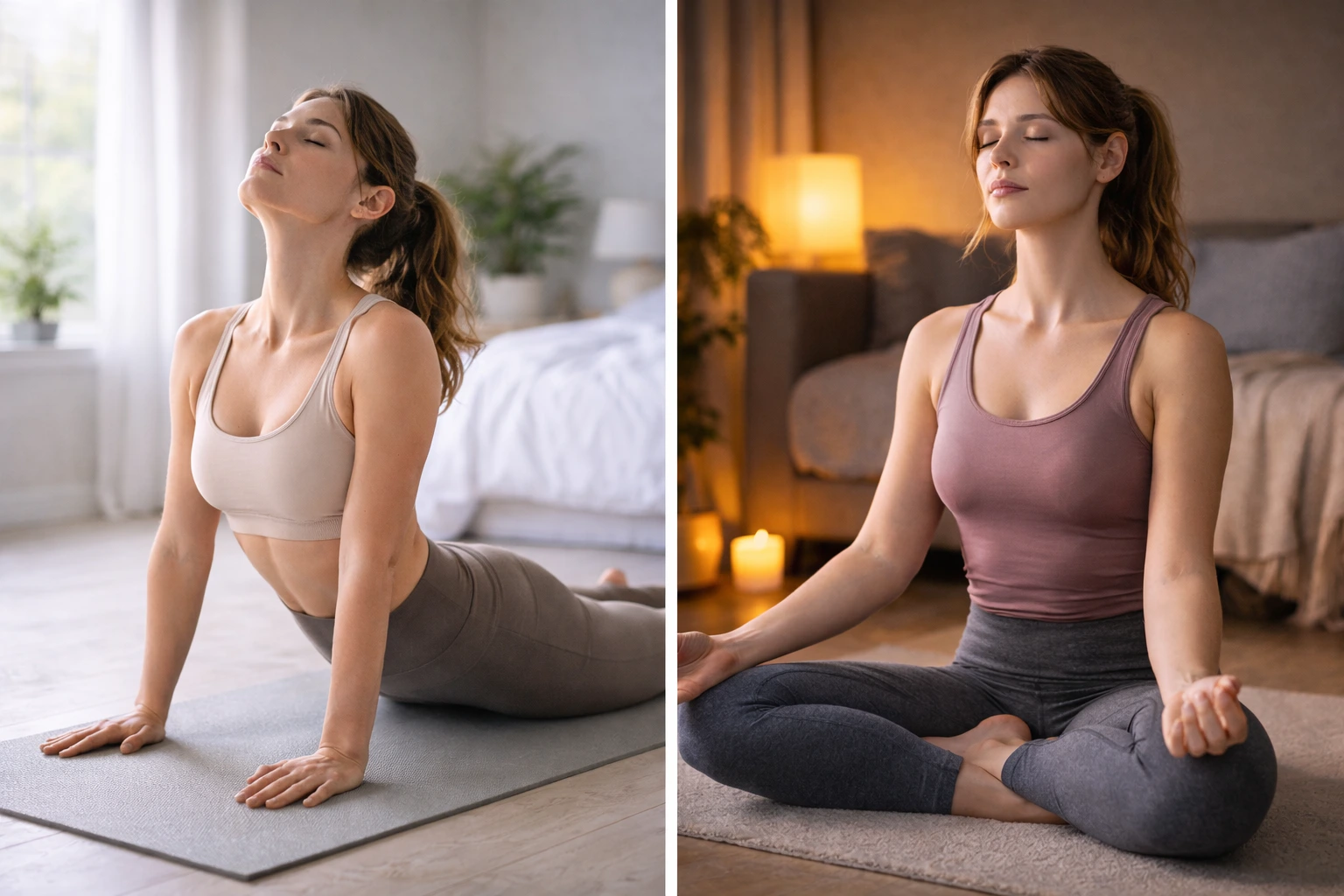
You’ve probably faced this situation at some point. One day, you decide that you’ll start doing yoga daily, and then you set an alarm at night. But when you wake up in the morning, your body feels tight, and your energy is low, so you skip it. Then you think you’ll do it in the evening. But by the time evening comes, you’re already tired. Result? You never actually start yoga.
This isn’t a discipline problem. This is a problem of understanding the right timing.
The truth is, your body reacts differently at different times of the day. And if you understand this difference, yoga can become both easier and more effective for you.
The body responds better to morning yoga for energy and focus, and to evening yoga for relaxation and flexibility. The best time depends on your goal, but consistency matters the most.
Why Timing Matters More Than You Think
Most people think yoga is just an activity that can be done anytime. But that’s not how the body works.
In the morning, your body is coming out of rest mode. Your muscles are tight, your joints feel stiff, and your mind is slow. But there’s one positive thing—your body is naturally ready to activate.
In the evening, your body has already moved throughout the day. Muscles are warm, flexibility improves, and your mind starts shifting toward a relaxed state.
That’s why the same yoga session feels completely different in the morning and evening.
Key Difference Between Morning and Evening Yoga
The main difference isn’t the poses—it’s the purpose. Morning yoga activates you. It gives you energy, improves focus, and provides a strong start to your day so you can perform better throughout it.
Evening yoga slows you down. It releases stress, relaxes muscles, and calms the mind. Gradually, it prepares you for sleep. If you want to understand this more clearly, here’s a simple comparison:
Morning Yoga vs Evening Yoga (Simple Comparison)

| Aspect | Morning Yoga | Evening Yoga |
|---|---|---|
| Main Goal | Gets your body active and ready | Helps your body unwind and relax |
| Energy Effect | Increases alertness and energy | Slows down energy and calms you |
| Mental State | Improves clarity and focus | Promotes a peaceful mindset |
| Physical Impact | Prepares your body for daily tasks | Releases built-up tension from the day |
| Muscle Condition | Gently loosens tight muscles | Allows deeper relaxation in warm muscles |
| Sleep Support | Supports better routine habits | Directly helps improve sleep quality |
Simple way to understand:
Morning yoga = Energy + Clarity
Evening yoga = Relaxation + Recovery
When Does the Body Respond Better?
This depends on your goal. If you want a strong start to your day, better focus, and higher energy, then morning yoga is the best choice.
If you want to reduce stress, relax your body, and improve sleep, then evening yoga is more effective. That’s why the best approach is to choose a time based on your needs and routine.
How Morning Yoga Affects the Body and Mind
Morning yoga works like a natural activation system. At first, the body feels stiff, but when you start with slow movements, the muscles gradually begin to open. Blood circulation improves, and you start feeling fresh.
Over time, this habit stabilizes your energy levels and reduces your dependence on caffeine throughout the day.
Mentally, it also has a strong impact. You begin your day in a calm and focused state, which directly improves productivity.
If you’re starting morning yoga, these styles work best:
- Sun Salutations (to activate the body)
- Hatha Yoga (slow and controlled practice)
- Vinyasa Flow (light energy and movement)
Why the Body Responds Strongly to Morning Yoga
The impact of morning yoga isn’t limited to energy—it internally resets your body. When you practice in the morning, blood flow increases and the brain receives fresh oxygen.
This reduces mental fatigue and naturally improves focus.
Another important factor is metabolism. Morning practice puts your body into “active mode,” allowing you to use energy more efficiently throughout the day.
But one important thing to remember—muscles are stiff in the morning. That’s why starting slow is essential.
For a better experience:
- Start with gentle stretching
- Maintain a slow pace
- Avoid sudden deep stretches
This approach reduces the risk of injury and allows the body to open naturally.
How Evening Yoga Affects Stress and Sleep
Evening yoga works like a recovery mode for the body. Throughout the day, your body accumulates stress and tension, which is often felt in the shoulders, neck, and back.
When you practice yoga in the evening, your body is already warm. This makes stretching easier and helps you relax muscles more deeply.
The most important benefit is mental relaxation. Slow breathing and calm movements relax your nervous system and reduce stress.
If you have sleep issues, evening yoga can help a lot because it brings the body into a naturally calm state.
Best styles for evening:
- Yin Yoga (deep stretch)
- Restorative Yoga (full relaxation)
- Slow Hatha Yoga (light movement)
Why the Body Responds Better in the Evening
The effects of evening yoga are often more noticeable because the body is already in an active state.
Due to movement throughout the day, body temperature increases. This provides a natural advantage—muscles become more flexible and resistance decreases. That’s why you can perform deeper stretches more comfortably in the evening.
At the same time, this practice calms the nervous system. It releases accumulated stress and brings the body into a relaxation mode.
However, one common mistake people make is doing high-intensity yoga at night.
For better results:
- Choose slow and calming poses
- Avoid intense flows
- Do light stretching before bedtime?
Morning vs Evening Flexibility and Performance
Flexibility feels different at both times. In the morning, your body is tight, so poses require more effort. But this improves long-term flexibility.
In the evening, your body is already warm, so you can stretch more comfortably. This doesn’t mean one is better—it just means the body is in a different state.
When Morning Yoga Is the Better Choice
Morning yoga is best for people who want to bring discipline into their lives. It gives you a structured start and improves daily productivity. If you’re working on weight management, morning yoga can indirectly help by activating metabolism.
Choose morning yoga if:
- You want to build a routine
- You feel low energy in the morning
- You want to improve focus
- You want to develop a healthy lifestyle
When Evening Yoga Works Better
Evening yoga is perfect for people who want to release the stress of the day. It’s especially useful for those with desk jobs or who experience body stiffness. If you have sleep problems, evening yoga can be an effective solution.
Choose evening yoga if:
- You feel stressed
- Your body feels tight
- You want to improve sleep
- You prefer slow and calm activities
Real-Life Use Cases
In real life, everyone’s schedule is different, so the best time for yoga also varies.
For office workers, evening yoga may be better because they need stress relief.
For students, morning yoga improves focus and concentration.
For beginners, evening yoga feels easier because the body is already warm. And for busy people, morning yoga is often the best option because there are fewer distractions.
Deep Benefits Comparison
Morning yoga gives your day a positive direction. It builds energy, focus, and discipline. Evening yoga helps your body recover. It reduces stress and improves sleep. Both are powerful in their own ways.
What Research and Experts Suggest
According to research, yoga is beneficial at any time because it reduces stress, improves mood, and supports overall health. Some studies also show that morning yoga improves focus, while evening yoga improves sleep quality.
However, experts agree on one thing—consistency is the most important factor.
What New Research and Data Clearly Show
So far, we’ve looked at the basic understanding, but when recent research and expert insights are considered, one thing becomes very clear—timing matters, but it is purpose-based.
According to reports, morning yoga activates the body and boosts metabolism. It improves blood circulation and clears the mind, helping you start your day better.
On the other hand, evening yoga works like a natural recovery tool for the body. The stress accumulated throughout the day begins to release. Because body temperature is already higher, muscles stretch more easily.
Research also suggests that evening yoga is more effective for deeper relaxation and better sleep quality, while morning yoga improves focus and mental clarity.
Tips to Get Better Results
If you want maximum benefits from yoga, there are some simple habits you need to follow. First, start with a short duration. Understand your body. If you feel stiffness, start slow. If you feel tired, choose relaxing yoga.
For better results:
- Practice at the same time
- Focus on breathing
- Avoid heavy meals
- Follow a simple routine
Common Mistakes to Avoid
Many people fail to progress due to small mistakes. Doing yoga in the morning without a warm-up increases the risk of injury.
Doing intense yoga in the evening can disturb sleep, and comparing yourself to others creates unnecessary pressure.
To avoid these mistakes:
- Follow your own pace
- Don’t expect quick results
- Stay consistent
- Choose the right intensity
Who Should Be Careful
Yoga is generally safe, but some people should take extra care. If you have an injury or chronic pain, start with gentle yoga. People with low blood pressure may feel dizziness in the morning.
Those with sleep issues should avoid intense yoga at night, and beginners should always start with the basics.
A Simple Rule Most People Ignore
Many people spend so much time trying to find the perfect time that they never actually start yoga. But experts follow a simple rule—“The best time is the time you can stay consistent with.” Whether you choose morning or evening, if you don’t practice regularly, you won’t see results.
That’s why, more than perfect timing, what matters is:
- Regular practice
- A simple routine
- Long-term consistency
Conclusion
Morning yoga and evening yoga are both powerful in their own way—the difference lies in their impact.
Morning yoga gives you energy, focus, and a strong start to the day, while evening yoga releases stress, relaxes the body, and helps improve sleep.
If you want to make your day productive, morning yoga is the better choice. If you want to balance fatigue and stress from the day, evening yoga is more effective.
But the most important thing is that consistency matters more than perfect timing. The time you can follow regularly is the best time for you.
In the end, the real benefits of yoga come when you turn it into a habit—whether it’s at sunrise or sunset.
FAQs:
How much time should I spend on yoga each day?
You don’t need long sessions to see results. Practising for around 15 to 30 minutes daily can be effective if you stay consistent.
Why does my body feel tight when I do yoga in the morning?
After a full night of rest, the body hasn’t been very active, which can make muscles and joints feel tight. Starting with gentle movements helps your body gradually loosen up.
Is it okay to do yoga right before going to sleep?
Yes, practising yoga at night is fine, but it’s better to stick with slow and calming styles such as Yin or Restorative yoga. High-intensity sessions close to bedtime may interfere with sleep.
Which time is more effective for yoga if my goal is weight management?
Practicing yoga in the morning can be helpful for weight management because it kickstarts your metabolism and keeps your body more active throughout the day.
Should I practice yoga in the morning or in the evening?
The right time depends on what you need. Morning sessions are great for boosting energy, sharpening focus, and building consistency, while evening sessions are more useful for relaxing the body, reducing stress, and supporting better sleep.









Leave a comment